Oscar Concessao, an alumnus of the OU Master of Urban Design program, and his wife Ponni Concessao recently designed the Telangana State Secretariat, the largest state capitol in India. Their firm, OCI Architects, won a national competition held by the Telangana government and was chosen out of a large pool of accomplished firms, also making Ponni the first woman architect in India to design a State Secretariat.

Oscar and Ponni Concessao.
The Concessaos founded OCI Architects in 1996, shortly after completing school in the United States and returning to their hometown of Chennai, India. Their firm has received widespread recognition for its innovative designs, and has won over 150 international, national and state awards. They have designed a large variety of projects at universities, hospitals, government state buildings and now, the largest state capitol in India.
Their firm completed the State Secretariat in just two years, despite the struggles brought about by the COVID-19 pandemic. They utilized local materials and a blend of Eastern and Western cultures to reflect the heritage and traditions of the local Telanagana people in their design. The 1.2 million-square-foot building received a Green Gold rating from the Indian Green Building Council, which recognizes the project’s national excellence.
Featured Image: Exterior view of the Telangana State Secretariat.
Gibbs College is pleased to present the exhibition 200 Digital Drawings by Professor Tiziana Proietti, currently on display in the Gould Hall Living Room.
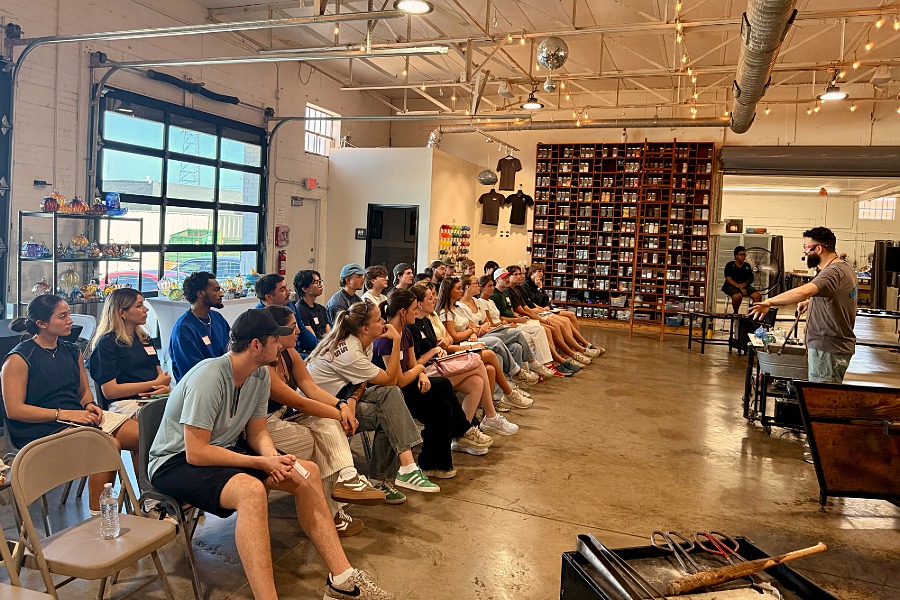
Gibbs College of Architecture Professors Amber Brown and Amy Leveno led 29 students to Dallas, Texas, in September for a learning experience as part of their Design 7 Studio course.
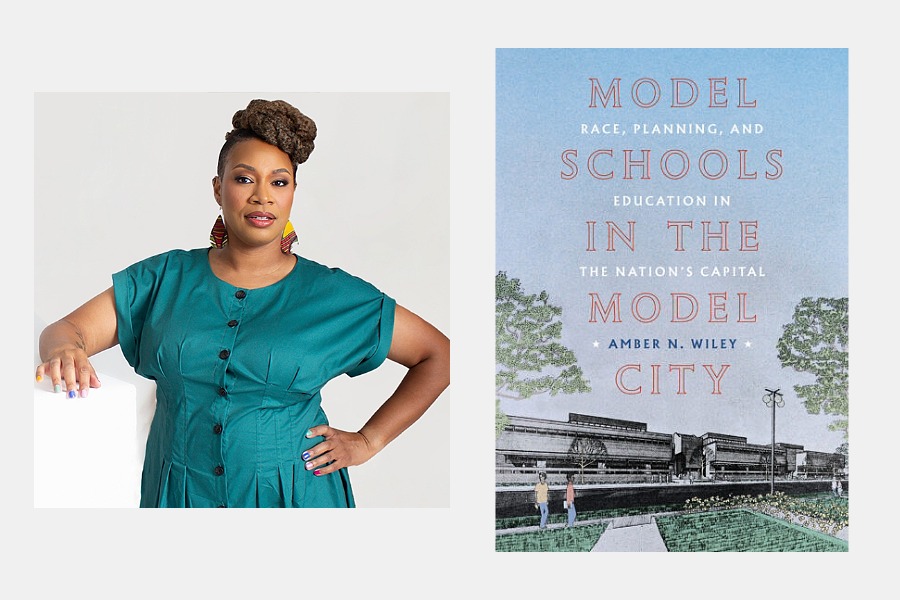
Christopher C. Gibbs College of Architecture professor and Institute for Quality Communities Director Dr. Amber N. Wiley’s book, Model Schools in the Model City: Race, Planning, and Education in the Nation’s Capital, has received two major honors from the Urban History Association.