The University of Oklahoma Health Campus anchors Project 200’s commitment to improving health outcomes through discovery, translation, and precision medicine at scale. Oklahoma’s high burden of chronic disease, health disparities, and rural and underserved populations create both urgency and opportunity, positioning OU as one of the most consequential places in the nation to advance precision medicine, prevention, and new models of care. By recruiting nationally competitive research leaders and teams, OU will build integrated, disease-focused research engines that move seamlessly from molecular discovery to clinical trials, health systems implementation, and population-level impact.

The Stephenson Cancer Center is already changing healthcare outcomes for Oklahomans right at home. Expanding this research ecosystem with a focus on reducing incidence, improving early detection, and delivering more effective, personalized therapies for cancers that disproportionately affect Oklahomans, will give more and more Oklahomans the strongest possible fighting chance against cancer, no matter where they live in the state.

OU’s diabetes efforts have a core mission in understanding, preventing and treating diabetes and metabolic disease, some of the most pressing and costly health challenges facing Oklahomans and the nation. Through the Harold Hamm Diabetes Center OU will advance solutions to reduce disease burden and improve long-term outcomes.
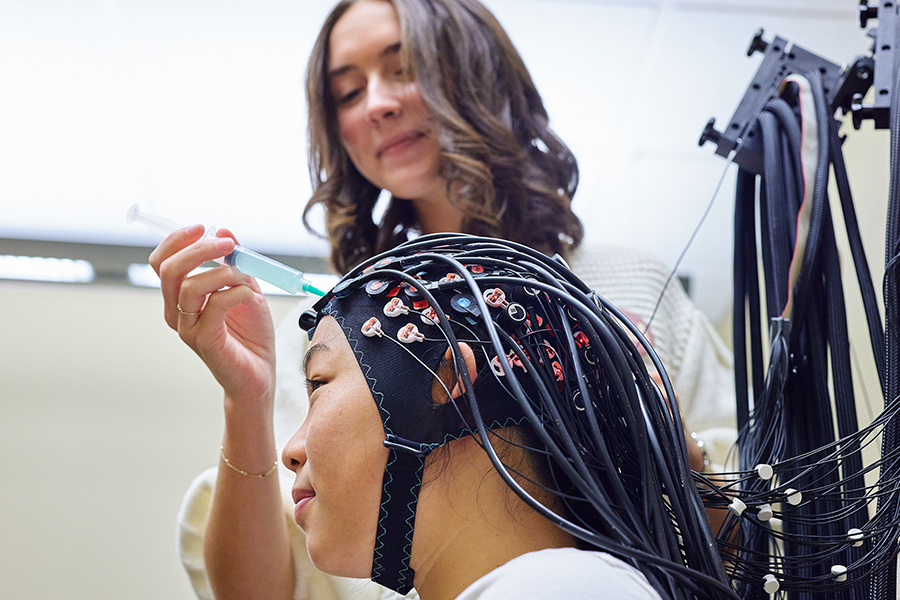
Through a new Neuroscience Institute and Initiative, OU will advance discovery and translation across the full spectrum of brain health, addressing neurological and psychiatric conditions that profoundly affect quality of life, productivity, and health equity.

OU will lead in identifying and addressing the biological, social, environmental, and systemic drivers of chronic disease and bridge precision medicine with public health to improve outcomes at population scale.

OU will expand its capacity to rapidly translate discovery into patient benefit by building an integrated, next-generation clinical trials and translational research ecosystem. Key to this initiative is the creation of an integrated Clinical Trials Office and recruitment of investigators focused on Clinical Trials.
.jpg)
OU will expand across the Health Campus in additional priority areas aligned with the strategic plans of each of the colleges (Allied Health, Dentistry, Graduate, Medicine, Nursing, Pharmacy, Public Health)
Cross-campus initiatives at OU unite biomedical data science and AI, molecular and cellular biology, and engineering to accelerate discovery, enable precision healthcare, and develop next-generation diagnostics, therapies, and technologies for all Oklahomans.
From strengthening severe-weather preparedness to advancing national security, MITRE and the University of Oklahoma (OU) are joining forces to tackle some of the nation’s most critical challenges.
Research published today in Cell identifies three small subclusters of cells driving pancreatic cancer-induced cachexia, a muscle-wasting and fat-loss condition that makes patients less tolerant of cancer treatment. The study, led by the University of Oklahoma, holds significant promise for the development of therapeutics to target these subclusters.
At OU Health Stephenson Cancer Center at the University of Oklahoma, enrollment is underway for the Vanguard Study, which is evaluating whether multi-cancer detection tests can find cancer at an earlier stage than is currently possible.
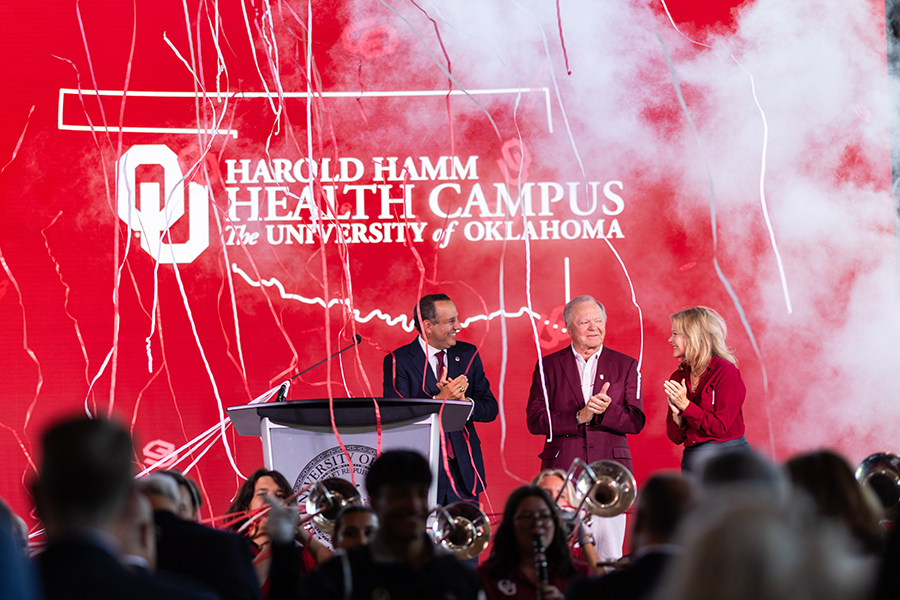
The University of Oklahoma today announced an historic $150 million gift from Harold Hamm, the largest single gift in university history, to lift the health of Oklahoma by advancing health education, research and discovery, strengthening the state’s health care workforce and accelerating the pursuit of breakthroughs against Oklahoma’s critical public health challenges.
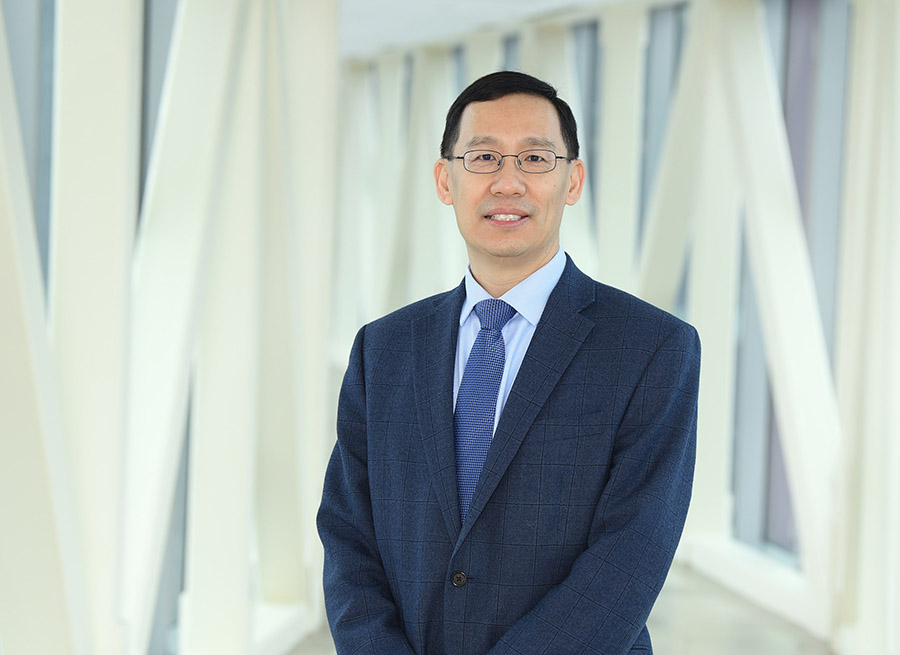
Min Li, Ph.D., George Lynn Cross Research Professor of Medicine, Surgery and Cell Biology at the University of Oklahoma College of Medicine and Associate Director for Global Oncology at OU Health Stephenson Cancer Center, has been named president of the International Association of Pancreatology.
A new University of Oklahoma study will examine whether targeted social media messages can give parents the information they need to help prevent their children from vaping nicotine and cannabis.
A University of Oklahoma researcher has received a five-year, $2 million grant from the National Cancer Institute to investigate how pancreatic cancer uses cholesterol to survive chemotherapy.
New research from the University of Oklahoma, published in Cell Death & Differentiation, demonstrates how an aggressive form of breast cancer co-opts the body’s own immune system to attract nerves that fuel tumor growth.
University of Oklahoma College of Medicine researcher Jody Summers, Ph.D., has long hypothesized that inflammation plays a role in the development of myopia, or nearsightedness, in which close-up vision is clear but distance vision is blurry. Her laboratory experiments have been convincing, and now she has preliminary human data to support the theory.
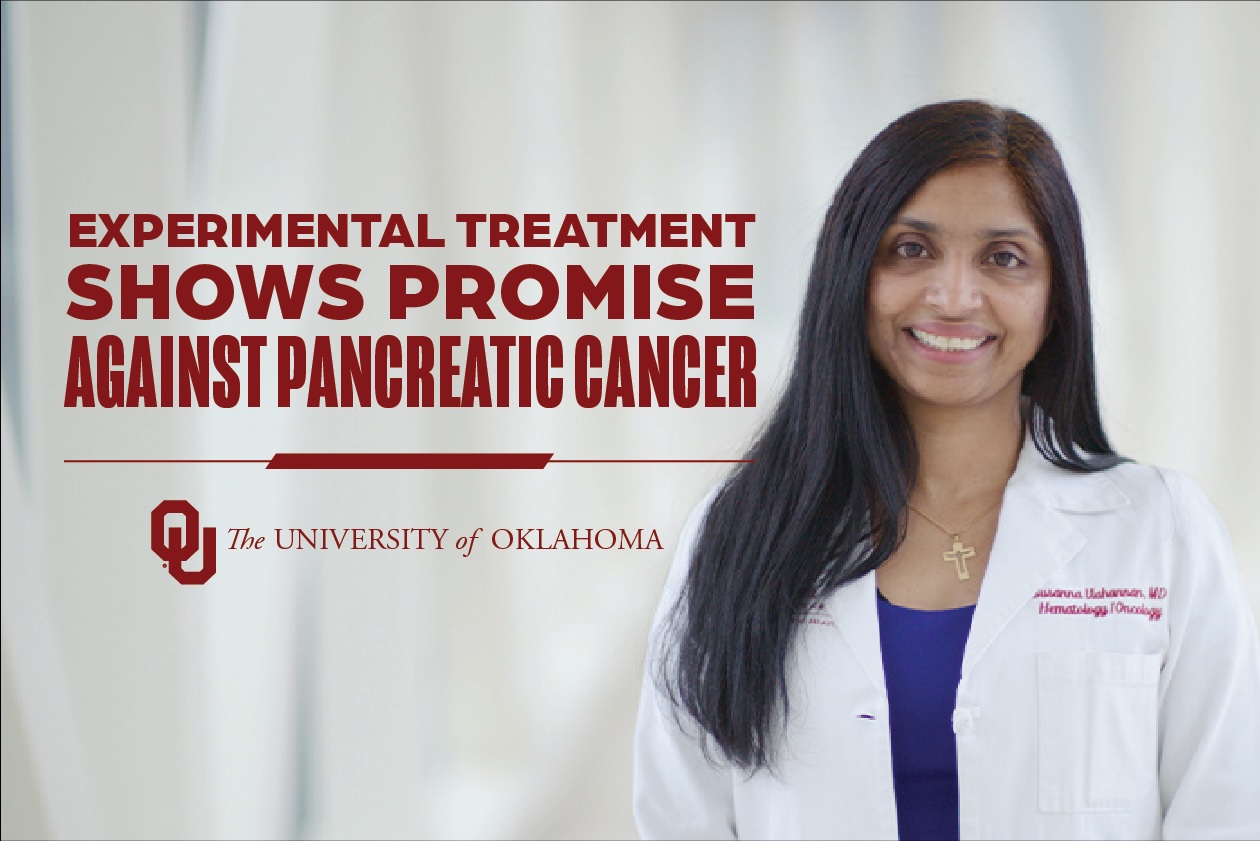
An experimental treatment strategy for metastatic pancreatic cancer may help patients live longer by making tumors more visible to the immune system, according to a study published in Nature Medicine. OU Health Stephenson Cancer Center enrolled patients on the clinical trial, which studied a new drug called quemliclustat.