
The Student Research Symposium and Expo will be held on Friday, March 13, 2026 at the Oklahoma Memorial Union on the OU Norman Campus.
This event includes a poster session for students to showcase their research, awards for poster presentations, a variety of short courses and the opportunity for students to network with potential employers. This event is open to both undergraduate and graduate students.
This project is supported by a grant from the AAPG Foundation
Registration for this event is FREE!
All registrations include one (1) Short Course, one (1) entry into the poster competition and networking.

Please note: we do not offer any travel grants or other financial assistance.
Title | Instructor |
|---|---|
| Short Course 1: The Role of Structural Geology in Oil and Gas, Critical Minerals, Carbon Capture, and Geothermal | Molly Turko, Devon Energy |
| Short Course 2: Source to Sink: Interpreting Paleoclimate and Paleotectonics from Sediments and Sedimentary Rocks | Mike Soreghan, Professor, University of Oklahoma |
| Short Coures 3: Well Log Analysis Fundamentals: Pitfalls and Perfection | Ming Suriamin, Oklahoma Geological Survey |
| Short Course 4: Practical Seismic Interpretation | Abidin Caf, Devon Energy |
Understanding the impact of faults and fractures is vital to a variety of industries including petroleum, carbon capture, geothermal, and mining. This short course introduces participants to the basics of fracture mechanics and the role of mechanical stratigraphy. By understanding the relationship between faults/fractures and stress, we can start to predict trends in a basin related to the tectonic history. We’ll look at things like fault damage zones and fault geometries, and how these can be used to predict areas of enhanced fracturing and the impact on fluid flow. Lastly, we will discuss what it means for a fault/fracture to be critically stressed and the importance of having a trap and seal in faulted and fractured reservoirs. This short course will include several quizzes and exercises to help establish these vital concepts in hopes that the participants will leave with a better understanding of fault and fracture mechanics.
This course is designed for students interested in the concept of source-to-sink in sedimentary geology and how it might be useful to infer past climate change and tectonic processes from sedimentary rocks. The course is designed at an accessible level for upper-level undergraduates and graduate students who are not sedimentary geologists—but are interested in the topic—or sedimentary geologists who are just beginning their research. The material will be presented through lectures, and also hands-on exercises, to provide some practical experience. Students should bring a laptop, and if possible have Google Earth Pro installed, but no other materials are required.
This short course is designed to address the mistakes that practitioners commonly encounter when they interpret well logs, errors that can quietly propagate into biased porosity estimates, incorrect water saturations, and ultimately flawed pay calls. Instead of relying on idealized textbook examples, the course uses real-world, imperfect log suites to teach participants how to recognize and correct common “gotchas” before proceeding to any substantive petrophysical interpretation. Emphasis is placed on a practical, repeatable workflow for log QC and interpretation, with particular focus on unit awareness, curve conditioning, normalization, and defensible assumptions.
The course covers the fundamentals of the most commonly used logs (gamma ray, resistivity, density–neutron, sonic, and caliper), and may also include additional measurements, such as NMR, image logs, and other specialized logs, IF time permits. However, each topic is framed through the lens of a typical failure mode: what the issue looks like on log tracks, why it occurs (acquisition, borehole environment, or processing), how it biases interpretation outputs, and how it can be prevented or mitigated using a concise checklist. Representative examples include neutron unit and matrix-scale confusion (limestone vs sandstone vs dolomite scaling; v/v versus percent; legacy curve mnemonics), density unit mishandling and inappropriate matrix density assumptions, improper gamma ray or resistivity normalization across wells and tool vintages, depth mismatches between logging passes, failure to account for caliper-derived borehole conditions, invasion effects, shoulder-bed and thin-bed averaging, uncritical mixing of log vintages, and reliance on default Archie parameters without calibration.
By the end of the course, participants who have limited prior exposure to log analysis, will be able to (1) quickly triage a log suite for usability, (2) apply robust preprocessing steps (including unit checks, curve conditioning, normalization, and depth alignment), (3) compute baseline interpretations (Vsh, porosity, Rw, Sw, and net pay/NTG) while avoiding common traps, and (4) document assumptions and uncertainty in a manner that is auditable and decision-ready.
This short course introduces the fundamentals of 3D seismic interpretation, including horizon mapping, seismic-to-well ties, time-to-depth conversion, and some of the advanced quantitative methods applied to oil and gas exploration and development, CCUS, and geothermal site characterization. The course is delivered primarily through hands-on exercises using commercial interpretation software. It is designed for geoscience students seeking to enhance their geophysical skill set

During registration, you will be prompted to submit an abstract. Abstracts are only required for those who are participating in the poster contest.
All posters will be evaluated using the following criteria:
Monetary prizes will be awarded to the top 4 presenters in each category.
The prize money for this event is generously sponosored by the Oklahoma Geological Foundation.
The Student Research Symposium and Expo will be held Friday, March 13, 2026.
Sarkeys Energy Center (SEC) is located at:
100 E. Boyd Street
Norman, OK 73019
Oklahoma Memorial Union (OMU) is located at:
900 Asp Avenue
Norman, OK 73019
Time | Event | Location | |
|---|---|---|---|
| 8:30 AM - 9:00 AM | Check in for Short Courses and Light Breakfast | SEC 714 | |
| 9:00 AM - 12:00 PM | Short Courses | Various Rooms in SEC | |
| 12:30 PM - 1:30 PM | Lunch | OMU Ballroom | |
| 1:30 PM - 2:30 PM | Group 1 Poster Presentations | OMU Ballroom | |
| 2:30 PM - 3:30 PM | Group 2 Poster Presentations | OMU Ballroom | |
| 3:30 PM - 5:00 PM | Awards Reception | OMU Ballroom |
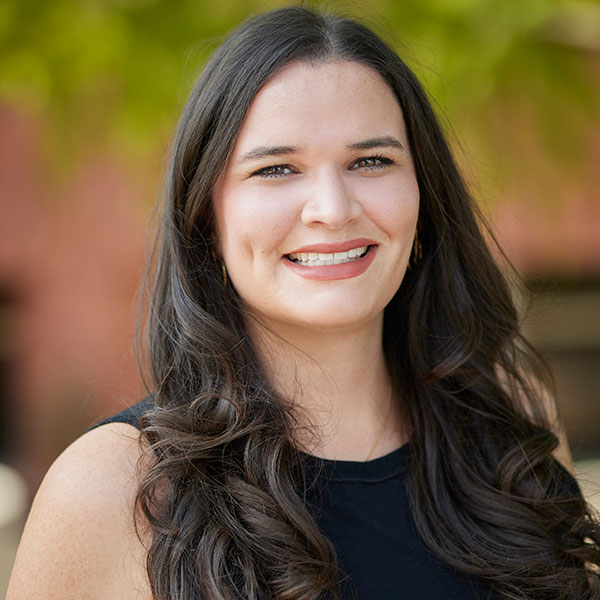
Senior Student Program Coordinator


