NEWS


NORMAN, OKLA. – U.S. News and World Report ranked the University of Oklahoma 106th among the best schools for engineering graduate programs, climbing four spots from 110th last year.
“The Gallogly College of Engineering is dedicated to achieving excellence in all we do, from the quality of education our students receive to the ground-breaking research done by our faculty and staff. We are thrilled to see that excellence reflected in our increased ranking,” said Gallogly College of Engineering Dean John Klier.
Placement for systems engineering climbed eleven points, from No. 59 to No. 48. Placement for chemical engineering also climbed, from No. 72 to No. 62 in the nation. In the categories of mechanical engineering, environmental and environmental health engineering, computer engineering and astronautical engineering, OU ranked among the top 100 graduate programs.
View the complete list of U.S. News and World Report’s best engineering schools.
About the University of Oklahoma
Founded in 1890, the University of Oklahoma is a public research university located in Norman, Oklahoma. As the state’s flagship university, OU serves the educational, cultural, economic and health care needs of the state, region and nation. OU was named the state’s highest-ranking university in U.S. News & World Report’s most recent Best Colleges list. For more information about the university, visit ou.edu.
The University of Oklahoma has received a transformative gift from Jon and Shannon McCartney, which will name the McCartney Family Tunnel of Champions, the McCartney Family Gate of the Gaylord Family - Oklahoma Memorial Stadium and the McCartney Family Grand Lecture Hall in the Michael F. Price College of Business. The gift will also support the Inspiring Champions and the Athletic Director’s Discretionary Fund, in addition to establishing the McCartney DFW Career Trek program at Price College.
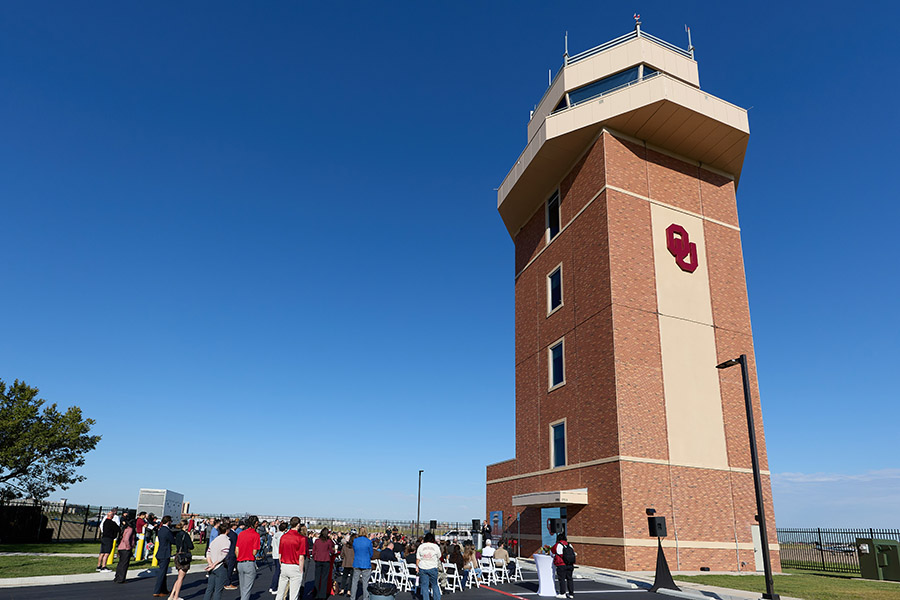
The University of Oklahoma today celebrated the opening of a new air traffic control tower at the OU Max Westheimer Airport. Standing 106 feet tall, more than double the current 52-foot facility, the new tower will modernize air traffic control operations and improve safety for pilots and students operating in the airspace.
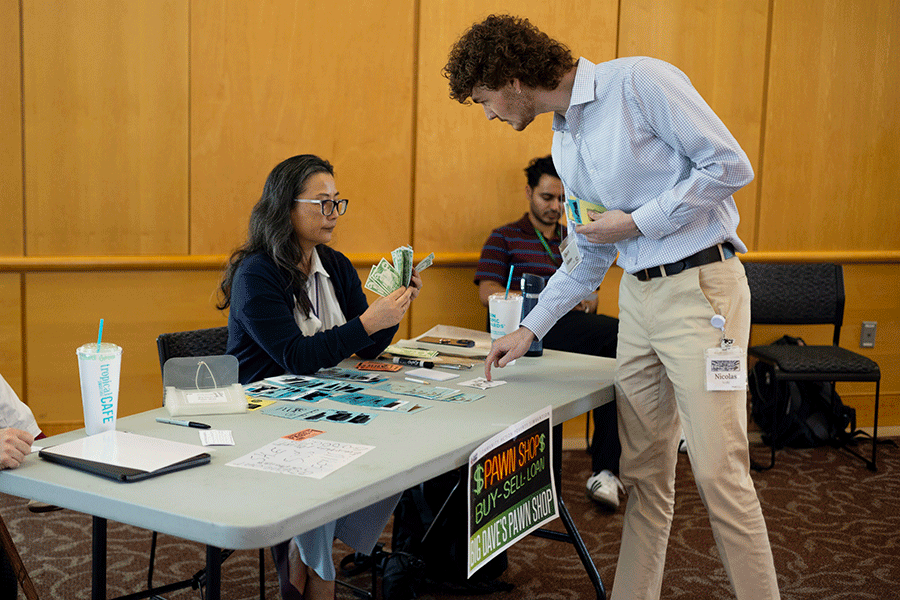
Do I buy groceries or pay the electric bill? Should I pawn some of my belongings to afford my prescription? My child is sick, so I will have to miss work to take care of him. Those are just a few of the difficult choices that OU-Tulsa health professional students confronted during the Community Access to Resources Experience. The role-playing activity challenged students to navigate the financial, family and other pressures that can affect a person’s health and ability to follow medical advice. Held annually during the SCM Institute orientation week, the experience is designed to generate understanding and build empathy.