NEWS

NORMAN, OKLA. – Kaleb Briscoe, Ph.D., an assistant professor at the University of Oklahoma Jeannine Rainbolt College of Education, was recently invited to the White House for a workshop to present her research and speak in a panel discussion. The event included dozens of experts, policymakers and legislators discussing issues surrounding racially charged hate crimes.
The workshop was organized by the White House Office of Science and Technology Policy, National Security Council and the Domestic Policy Council, with support and leadership from the U.S. National Science Foundation, the National Institute of Justice, and the National Institutes of Health, and was conducted in response to the administration’s goal to “improve awareness of hate and bias-related incidents experienced by a diverse array of communities across the country.” Over two days, the workshop covered four broad themes, with Briscoe speaking on the topic of recognizing and advancing emerging themes in bias and discrimination.

Briscoe provided a nuanced view of the effort to ensure the safety of Black students across the country against what she coined “racialized incidents,” as well as the growing rate of hate crimes on college campuses in recent years – 59.1% of hate crimes committed in 2022 were motivated by race, ethnicity or ancestry according to the U.S. Department of Justice.
The workshop included experts describing research related to communities, youth, criminal justice, and campus constituents, to name a few. “You saw depth and breadth across studies and presentations,” said Briscoe. “You saw different people use different methodological and theoretical techniques or speak on different issues. It really gave you a big picture understanding of what is happening nationally surrounding procedures and policies of hate crimes.”
“I appreciated that the United States government wants to move the needle on the issues of race and racism,” she added. “These discussions on a national level and among campus leaders are necessary to enact change and move us to a better place.”
Briscoe is a leading expert in her field and has received funding to support her research from the Spencer Foundation, NASPA–Student Affairs Administrators in Higher Education, and ACPA–College Student Educators International. Briscoe's research on racialized incidents and hate crimes can be found in the Journal of Higher Education, Journal of College Student Development, and the Journal of Diversity in Higher Education.

About the University of Oklahoma
Founded in 1890, the University of Oklahoma is a public research university located in Norman, Oklahoma. As the state’s flagship university, OU serves the educational, cultural, economic and health care needs of the state, region and nation. OU was named the state’s highest-ranking university in U.S. News & World Report’s most recent Best Colleges list. For more information about the university, visit ou.edu.
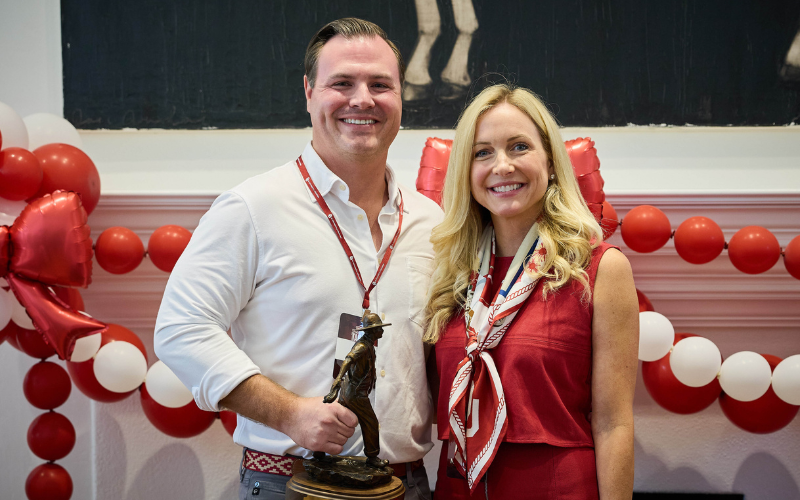
The University of Oklahoma has received a transformative gift from Jon and Shannon McCartney, which will name the McCartney Family Tunnel of Champions, the McCartney Family Gate of the Gaylord Family - Oklahoma Memorial Stadium and the McCartney Family Grand Lecture Hall in the Michael F. Price College of Business. The gift will also support the Inspiring Champions and the Athletic Director’s Discretionary Fund, in addition to establishing the McCartney DFW Career Trek program at Price College.
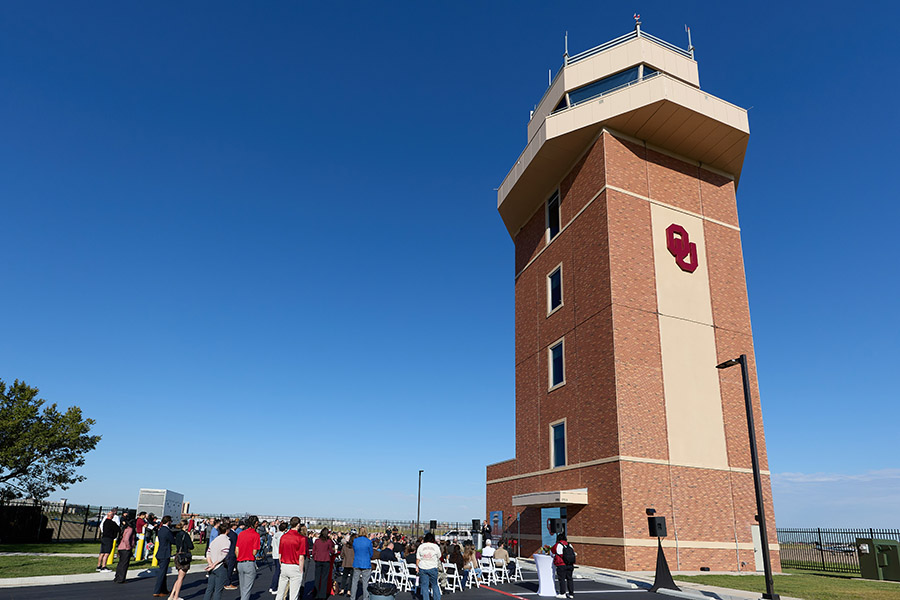
The University of Oklahoma today celebrated the opening of a new air traffic control tower at the OU Max Westheimer Airport. Standing 106 feet tall, more than double the current 52-foot facility, the new tower will modernize air traffic control operations and improve safety for pilots and students operating in the airspace.
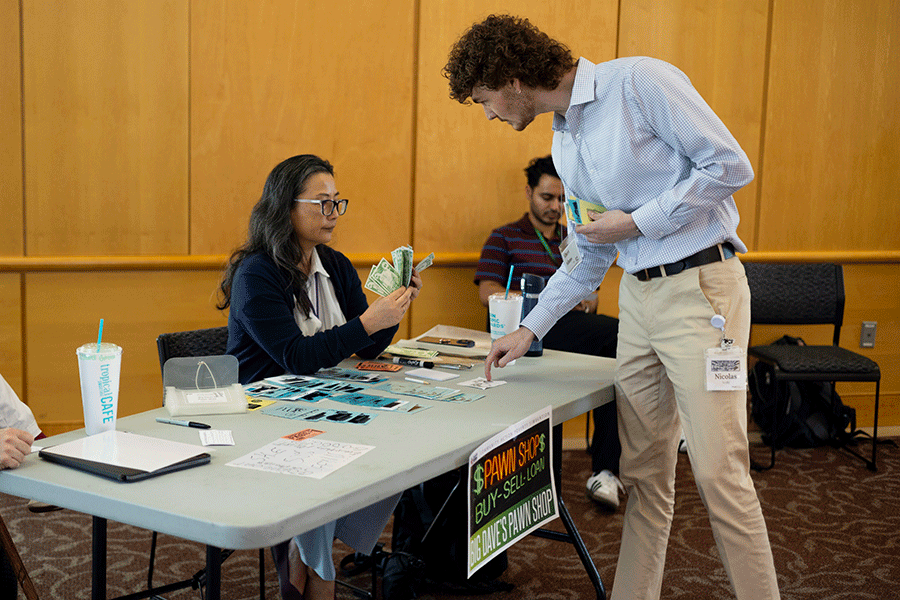
Do I buy groceries or pay the electric bill? Should I pawn some of my belongings to afford my prescription? My child is sick, so I will have to miss work to take care of him. Those are just a few of the difficult choices that OU-Tulsa health professional students confronted during the Community Access to Resources Experience. The role-playing activity challenged students to navigate the financial, family and other pressures that can affect a person’s health and ability to follow medical advice. Held annually during the SCM Institute orientation week, the experience is designed to generate understanding and build empathy.