NEWS


NORMAN, OKLA. – Researchers at the University of Oklahoma have received a $1.4 million grant from the U.S. Department of Transportation and Federal Aviation Administration to examine and offer suggestions about the training U.S. air traffic controllers receive during their classroom, simulation and field-training learning experiences.
Led by Eric Day, Ph.D., professor of psychology in the Dodge Family College of Arts and Sciences, this project will conduct focus groups, in-person interviews and laboratory research into complex skill acquisition and performance adaptation. The findings will inform future experiences of air traffic controllers during their academy and field training.
“Throughout our project, we will examine the learning process of air traffic controller trainees with the goal of improving their performance, especially in handling stressful situations,” Day said. “Their job is challenging, and they go through very intense training with many real-world simulations. It can be overwhelming, especially when scenarios don’t go as the trainee expected.”
In the laboratory, the team will measure the electrical activity of trainees’ brains and hearts in a noise-canceling room while they participate in a video game learning environment. The video game will be challenging and require each participant to pay close attention to on-screen events that shift quickly. The goal is to measure adaptive learning, or a person’s ability to adjust to a changing environment, which is crucial for air traffic controllers in times of unexpected circumstances.
“We’ll track their brain activity and heart rate while they play game after game. Then suddenly, we will surprise some participants by making the game harder, if not overwhelming, by dramatically changing the scenario or environment,” he said. “If we can match brainwave patterns and heart rates to specific learning strategies as they adapt to the new situations, then we can address how adaptive performance is related to learning and resilience in times of distress.”
To accomplish their research, Day’s team will include both graduate and undergraduate students. Both will be intricately involved in the laboratory research and engage with the focus groups and interviews.
“Four to five graduate students will work on this project: two on the applied research side and at least two on the laboratory side. We will also involve up to two dozen undergrads to help with data collection,” he said. “These experiences are essential to our mission as a research university. It's training the next generation of scientists, and we couldn't do what we do without their help.”
If successful, this project could impact the future training of the more than 14,000 U.S. air traffic controllers who handle nearly 16.5 million flights each year.
“I’m really excited about this project,” Day said. “We’ve been involved with the FAA for years, but this opportunity to conduct research that can help provide real-world solutions and give students hands-on experience is special.”
About this project
The project is led by Eric Day alongside co-investigators Michael Wenger, a professor of psychology and cellular and behavioral neurobiology, and Dingjing Shi, an assistant professor of psychology. All three are faculty affiliates of the Health Promotion Research Center at OU’s Health Sciences Center. "Leveraging EEG and ECG to Examine the Stress Response, Self-regulation, and Distress Mitigation in Complex Skill Learning" is funded by a $1,412,349 DOT-FAA grant, MOA 6973GH-24-H-00002, with support from OU’s Center for Applied Social Research. It began in March 2024 and is expected to conclude in March 2027.
About the University of Oklahoma
Founded in 1890, the University of Oklahoma is a public research university located in Norman, Oklahoma. As the state’s flagship university, OU serves the educational, cultural, economic and health care needs of the state, region and nation. OU was named the state’s highest-ranking university in U.S. News & World Report’s most recent Best Colleges list. For more information about the university, visit ou.edu.
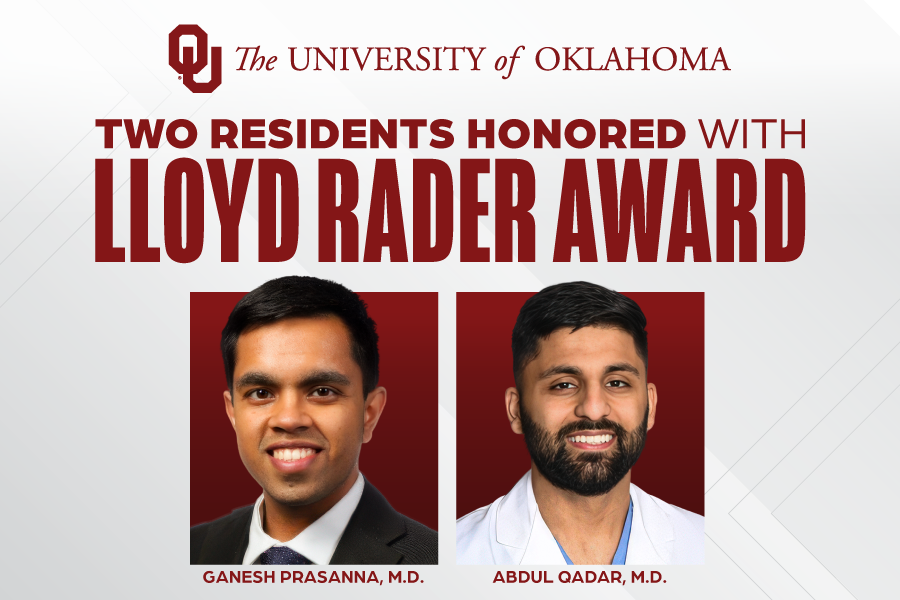
The University of Oklahoma College of Medicine has honored two residents with the Lloyd Rader Award, which recognizes outstanding clinical and research achievements in residency.
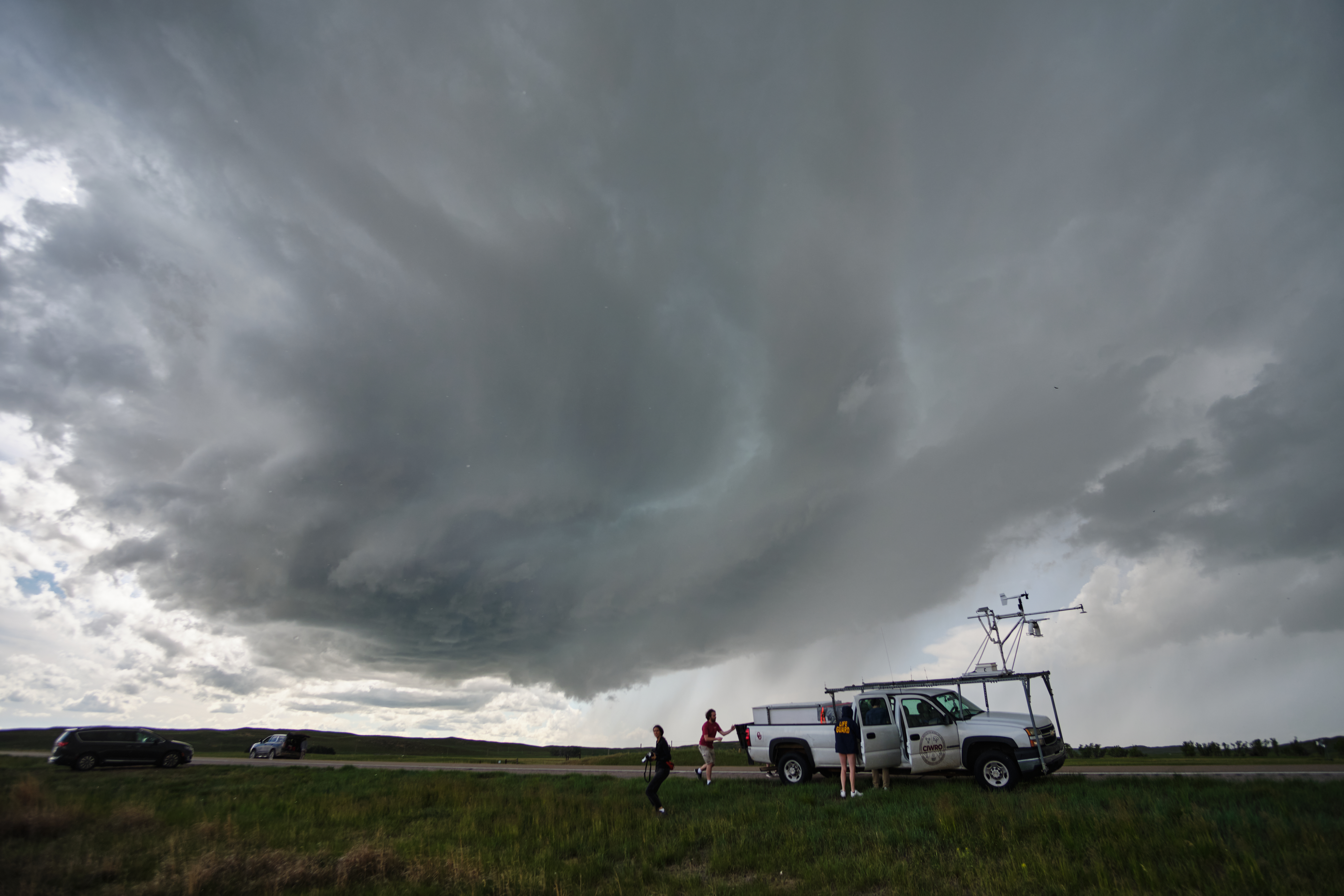
The University of Oklahoma will receive up to $220 million over five years from the U.S. Department of Commerce and the National Oceanic and Atmospheric Administration to continue the life-saving weather research led by the OU-NOAA Cooperative Institute for Severe and High-Impact Weather Research and Operations, extending a nearly 50-year partnership that has helped give Americans earlier, more accurate weather warnings
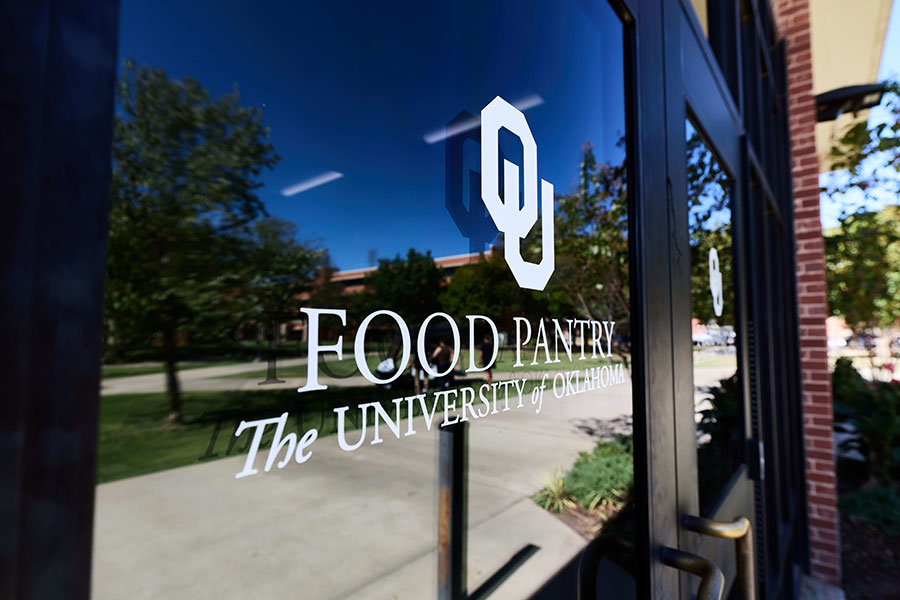
The OU Food Pantry won the annual Red River Food Fight, collecting 31,815.9 pounds of shelf-stable food and drinks to top UT Outpost’s 22,567 pounds. OU has won the competition four years in a row.