NEWS


NORMAN, Okla. — Anna Hyslop, an Economics and Global Energy, Environment and Resources student, was recently named a 2024 Udall Scholar. She is one of 55 recipients nationwide for the prestigious undergraduate scholarship.
"I am incredibly honored to have received the Udall Scholarship,” Hyslop said. “Working on climate and energy solutions within the Norman community has undoubtedly redefined my career trajectory, and I am so grateful to the University of Oklahoma for supporting me in my endeavors. I am excited to continue advancing equitable climate solutions during the remainder of my undergraduate education here at OU."
The Udall Scholarship, named for Morris K. Udall and Stewart L. Udall, is sponsored by the Udall Foundation and recognizes student leaders in environmental, Tribal public policy and health care fields. The foundation’s programs promote leadership, education, collaboration and conflict resolution.
Two other OU students received honorable mentions after being finalists for the award: Emily Black, a junior from the Dodge Family College of Arts and Sciences, and Savannah Slayton, a junior from the Dodge Family College of Arts and Sciences. Both students are also in the Honors College.
About the University of Oklahoma
Founded in 1890, the University of Oklahoma is a public research university located in Norman, Oklahoma. As the state’s flagship university, OU serves the educational, cultural, economic and health care needs of the state, region and nation. OU was named the state’s highest-ranking university in U.S. News & World Report’s most recent Best Colleges list. For more information about the university, visit ou.edu.
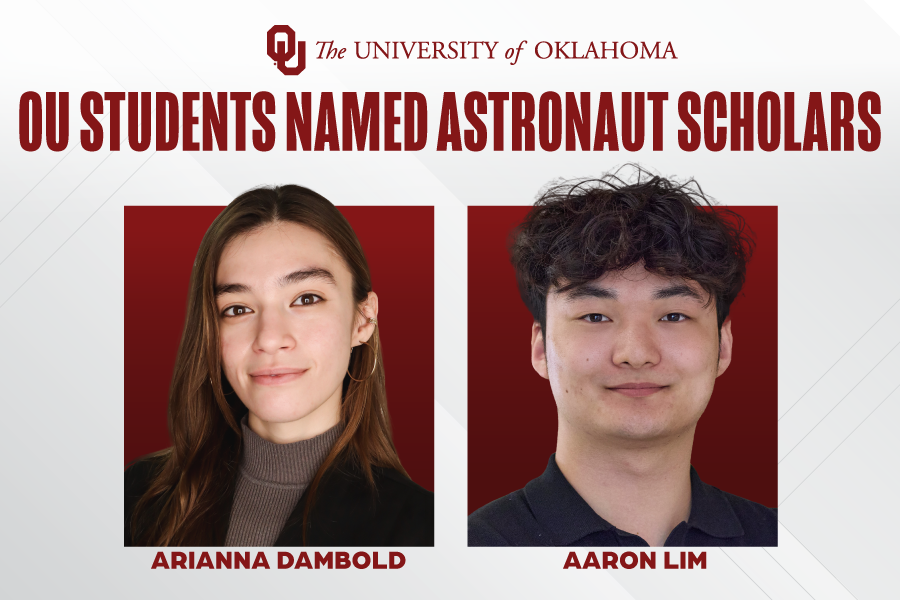
The Astronaut Scholarship Foundation recently named Arianna Dambold and Aaron Lim as members of its 2026 class of Astronaut Scholars. The prestigious awards are given to junior and senior-year college students pursuing degrees in STEM and aims to support the next generation of explorers and innovators.
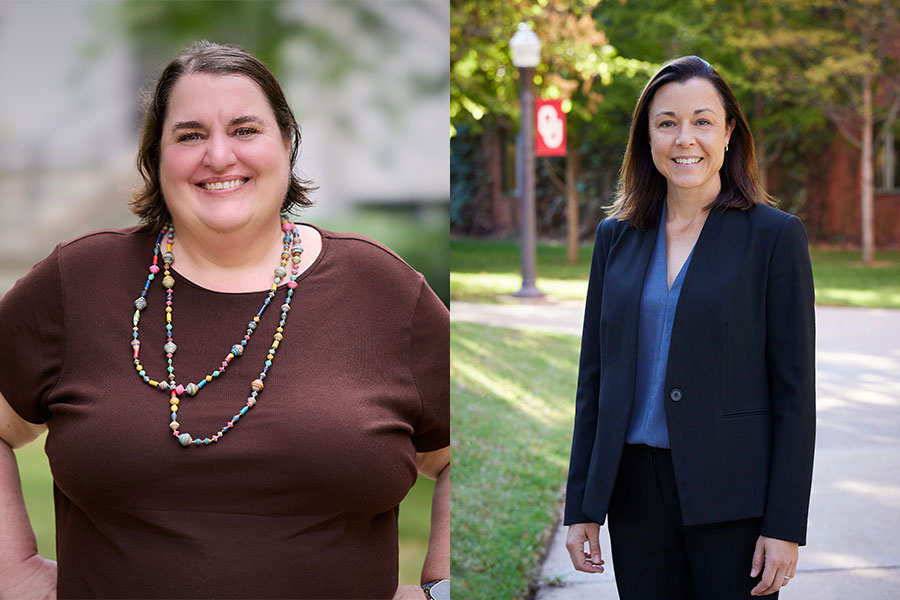
Zermarie Deacon, Ph.D., and Deonnie Moodie, Ph.D., have each been named a 2026-2027 Fulbright U.S. Scholar by the U.S. Department of State and the Fulbright Foreign Scholarship Board. These prestigious fellowships support research and development opportunities abroad.
As childhood obesity and diabetes continue to rise worldwide, a researcher at the University of Oklahoma is investigating whether a simple addition to a breastfeeding mother’s diet – chia seeds – could help lower a child’s future risk of these conditions while improving the mother’s own health.