NEWS


OKLAHOMA CITY – Pregnant women with chronic conditions like obesity and diabetes face a significantly higher risk of delivering preterm babies. These babies, especially those born very early, often experience serious health complications at birth – many of which can persist into adulthood, creating a cycle of poor health that can be difficult to interrupt.
To address some of the most complex questions in neonatal medicine, the University of Oklahoma Health Sciences established the Oklahoma Preterm Infant Biorepository, called HEROES. The biorepository is home to an ever-growing collection of biospecimens and clinical data from prematurely born infants and their mothers.
With its next phase of growth, funded by the Presbyterian Health Foundation in Oklahoma City, the biorepository will evolve into HEROES-X, with “X” signifying expanded enrollment and integrated data. This expansion will broaden enrollment beyond very preterm infants (those born at 22-32 weeks) to include late preterm (33-37 weeks) and full-term births, creating a comprehensive developmental continuum. HEROES-X will incorporate body composition analysis, human milk macronutrient profiling and detailed maternal health metrics (body mass index, gestational weight gain, chronic conditions) to elucidate how early-life growth patterns shape long-term health outcomes.
“Thus far, we’ve enrolled nearly 77 mothers and babies and collected more than 1,500 samples,” said Hala Chaaban, M.D., a professor of neonatal-perinatal medicine at the OU College of Medicine. “Our goal is to reach 250 participants as we work to better understand why some babies develop conditions like necrotizing enterocolitis, retinopathy of prematurity and lung disease. We aim to identify biomarkers and risk factors that will enable us to test and intervene early for babies most at risk.”
This expansion aligns with broader initiatives, including the “First 1,000 Days” project led by the OU Health Harold Hamm Diabetes Center and the OU College of Medicine’s Department of Pediatrics, Section of Pediatric Endocrinology. Together, these programs follow infants from birth through early childhood, linking maternal health, human milk composition and infant growth trajectories to lifelong health outcomes.
“We know the period from conception through a child’s second birthday – the first 1,000 days – shapes the foundation for lifelong health,” said Trent Tipple, M.D., professor and chief of the Section of Neonatal-Perinatal Medicine in the Department of Pediatrics, OU College of Medicine. “Expanding the biorepository closes an important gap and allows us to link each stage of development for long-term care and discovery.”
Researchers also plan to sharpen their focus on how maternal health influences infant outcomes. Chronic conditions like obesity and diabetes not only increase the chances of preterm birth but are also associated with a greater likelihood of babies developing obesity and Type 2 diabetes later in life. Oklahoma has one of the highest rates of maternal obesity and diabetes in the nation.
Through the HEROES-X project, Presbyterian Health Foundation funding supports pilot project grants to early-career researchers. This type of funding is critical because it serves as a bridge until researchers can earn independent funding from the National Institutes of Health and other funding organizations for larger-scale research efforts.
Additionally, the expanded Oklahoma Preterm Infant Biorepository will help create new interdisciplinary collaborations with other colleges, such as the Fran and Earl Ziegler OU College of Nursing, which offers a neonatal nurse practitioner training program.
“We have tremendous potential on the OU Health Sciences campus to collaborate across disciplines for both research and the creation of a clinical pipeline to meet our needs as the state’s largest high-risk pregnancy and neonatal intensive care program,” Tipple said.
About the University of Oklahoma
Founded in 1890, the University of Oklahoma is a public research university with campuses in Norman, Oklahoma City and Tulsa. As the state’s flagship university, OU serves the educational, cultural, economic and health care needs of the state, region and nation. In Oklahoma City, OU Health Sciences is one of the nation’s few academic health centers with seven health profession colleges located on the same campus. OU Health Sciences serves approximately 4,000 students in more than 70 undergraduate and graduate degree programs spanning Oklahoma City and Tulsa and is the leading research institution in Oklahoma. For more information about OU Health Sciences, visit www.ouhsc.edu.
A newly funded study at the University of Oklahoma aims to increase prostate-specific antigen (PSA) screening among Black men in Oklahoma, who die from prostate cancer at rates two to four times higher than other racial groups.
Young adults who want to quit vaping may turn to social media for support, but keeping them engaged with digital cessation programs over time can be challenging. A University of Oklahoma researcher is testing whether adding support from trained peers can help keep young adults engaged as they try to quit vaping.
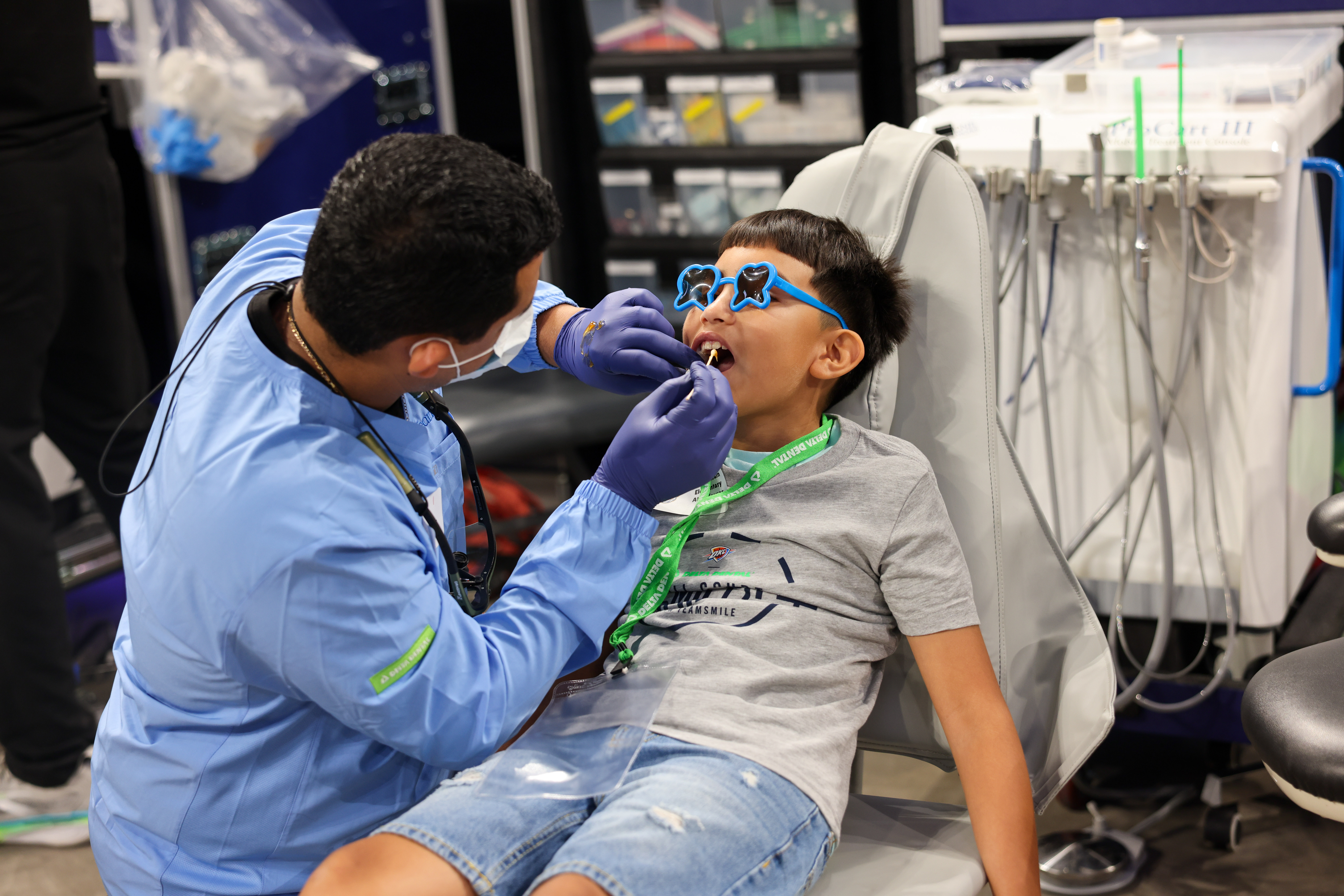
For 259 third- and fourth-graders from Oklahoma City Public Schools, a trip to the Paycom Center recently came with something more than a chance to see the home of the Oklahoma City Thunder. During the inaugural Full Court Smiles event, the students received $82,315 in free dental care from faculty, residents and students from the University of Oklahoma College of Dentistry and other dental professionals.