NEWS


NORMAN, OKLA. – Motolani Adedipe, Ph.D., associate professor in the Department of Family and Preventive Medicine at the University of Oklahoma Health Sciences Center, has been awarded a Fulbright U.S. Scholar award to South Korea through the U.S.-Korea Presidential STEM Initiative.
Beginning this month, Adedipe will live in Seoul while conducting research at Seoul National University Hospital. Her Fulbright project, “Enhancing Prostate Cancer Survivorship in South Korea: A Mixed Methods, Community-Engaged Approach,” focuses on improving quality of life for prostate cancer survivors. She will also lecture at the university’s College of Medicine on digital health innovation and community-engaged research methods.
“My work has always focused on equity in survivorship,” Adedipe said. “This Fulbright allows me to expand that mission to a new cultural context while fostering global collaboration.”
At OU, Adedipe leads the Multidisciplinary Health Outcomes Research and Economics (MORE) Lab. In partnership with clinicians, Black prostate cancer survivors and research collaborators, she co-developed the SAFECaP app – a digital health tool that supports symptom tracking and care decision-making and is currently in clinical trials.
While the app won’t be implemented in Korea, Adedipe says its core principles – cultural humility, equity and community partnership – will guide her Fulbright work.
“Survivorship is a human experience. The most impactful science begins with listening,” she said. “This Fulbright award reflects not only my research but the voices of the survivors and community leaders who continue to shape it.”
A Nigerian-born, U.S.-trained scientist, Adedipe first encountered Korean culture through a graduate school friendship and became fluent in the language through years of mostly independent study. Her research focuses on health disparities, quality of life outcomes and digital tools that amplify the voices of marginalized individuals.
“Dr. Adedipe’s Fulbright award is a remarkable achievement that reflects her outstanding scholarship, innovative approach to research and commitment to improving health outcomes,” said Gary E. Raskob, Ph.D., senior vice president and provost of OU Health Sciences. “Her work will strengthen global collaborations and bring valuable insights back to Oklahoma, advancing our mission to improve the lives of people in our state and around the world.”
About the University of Oklahoma
Founded in 1890, the University of Oklahoma is a public research university located in Norman, Oklahoma. As the state’s flagship university, OU serves the educational, cultural, economic and health care needs of the state, region and nation. For more information about the university, visit www.ou.edu.
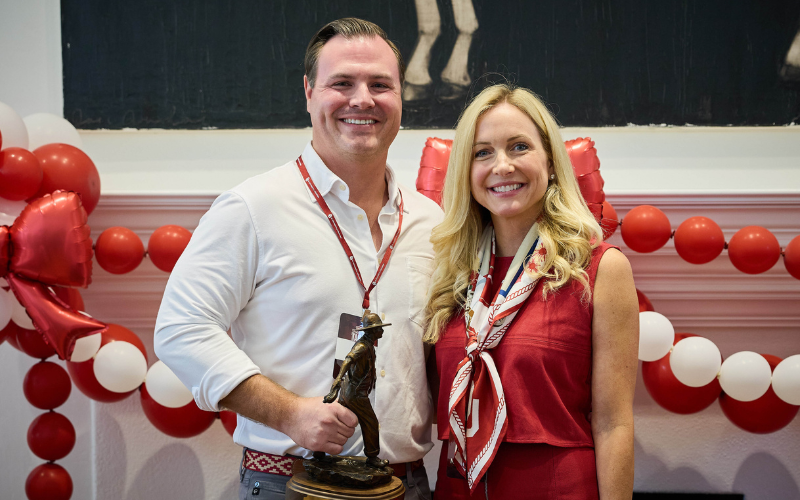
The University of Oklahoma has received a transformative gift from Jon and Shannon McCartney, which will name the McCartney Family Tunnel of Champions, the McCartney Family Gate of the Gaylord Family - Oklahoma Memorial Stadium and the McCartney Family Grand Lecture Hall in the Michael F. Price College of Business. The gift will also support the Inspiring Champions and the Athletic Director’s Discretionary Fund, in addition to establishing the McCartney DFW Career Trek program at Price College.
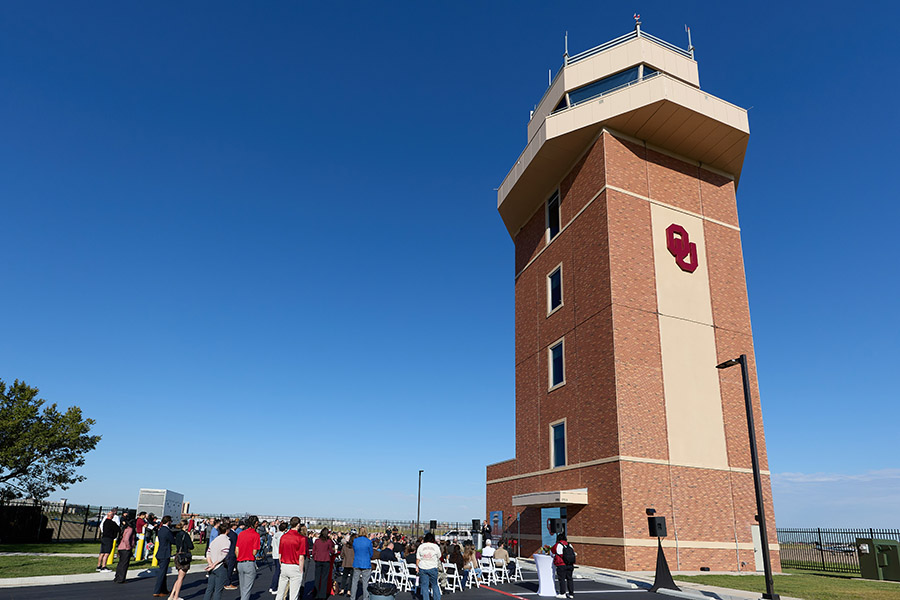
The University of Oklahoma today celebrated the opening of a new air traffic control tower at the OU Max Westheimer Airport. Standing 106 feet tall, more than double the current 52-foot facility, the new tower will modernize air traffic control operations and improve safety for pilots and students operating in the airspace.
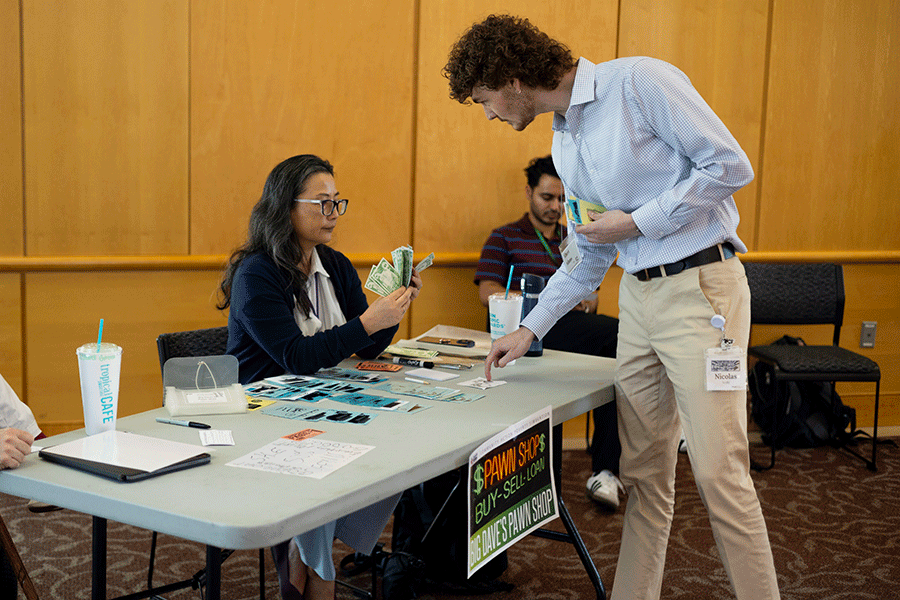
Do I buy groceries or pay the electric bill? Should I pawn some of my belongings to afford my prescription? My child is sick, so I will have to miss work to take care of him. Those are just a few of the difficult choices that OU-Tulsa health professional students confronted during the Community Access to Resources Experience. The role-playing activity challenged students to navigate the financial, family and other pressures that can affect a person’s health and ability to follow medical advice. Held annually during the SCM Institute orientation week, the experience is designed to generate understanding and build empathy.