NEWS


NORMAN, OKLA. – The University of Oklahoma announced today a new partnership with TimelyCare to offer students free access to mental health support, medical care and basic needs assistance. The partnership is an extension of campus health and counseling center resources, with a goal of improving student well-being, engagement and retention.
Through TimelyCare, an app downloaded to students’ phones or other devices, OU students can now select from a wide-ranging menu of virtual care options from licensed physicians and counselors in all 50 states, at no cost and without the barrier of traditional insurance, including:
Additionally, faculty and staff have access to support that empowers them to guide students to TimelyCare resources to help students achieve a sense of well-being, live healthier lifestyles and improve their mental health.
“At the University of Oklahoma, our goal is to ensure students have access to the mental health resources they need, when they need them,” said David Surratt, Ed.D., vice president for Student Affairs and dean of students. “Our partnership with TimelyCare provides an important layer of support, expanding access to care around the clock while complementing the work of our on-campus counseling centers. We remain committed to fostering a university environment where every student feels supported in their well-being.”
The partnership with TimelyCare allows University of Oklahoma to deliver a hybrid model of care in collaboration with on-campus resources. Benefits to students include:
Mental health directly impacts student retention and academic performance.
“With more than seven out of 10 students reporting that they experience mental health challenges such as stress, anxiety or depression, expanded access to virtual health and well-being interventions like TimelyCare has never been more important,” said Luke Hejl, CEO and co-founder of TimelyCare. “Ultimately, supporting students, educators, and staff means providing access to care whenever and wherever they need it.”
For more information, please visit ou.edu/studentaffairs/resources/timelycare.
About the University of Oklahoma
Founded in 1890, the University of Oklahoma is a public research university located in Norman, Oklahoma. As the state’s flagship university, OU serves the educational, cultural, economic and health care needs of the state, region and nation. For more information about the university, visit www.ou.edu.
About TimelyCare
TimelyCare is the most trusted virtual health and well-being solution for learning communities, offering personalized, clinically proven care that fosters student success and delivers life-changing outcomes. Through a seamless, easy-to-access platform, TimelyCare provides a comprehensive range of services—including a crisis line, mental health counseling, on-demand emotional support, medical care, psychiatric care, health coaching, success coaching, basic needs assistance, faculty and staff guidance, peer support, and self-guided wellness tools. In partnership with more than 400 campus wellness teams, TimelyCare ensures that millions of students have direct, anytime access to high-quality care. Recognized as a Princeton Review Top 5 Need to Know Organization for Mental Health Awareness, TimelyCare drives measurable improvements in depression and anxiety, empowering students on their wellness journey and supporting healthier learning environments.
The University of Oklahoma has received a transformative gift from Jon and Shannon McCartney, which will name the McCartney Family Tunnel of Champions, the McCartney Family Gate of the Gaylord Family - Oklahoma Memorial Stadium and the McCartney Family Grand Lecture Hall in the Michael F. Price College of Business. The gift will also support the Inspiring Champions and the Athletic Director’s Discretionary Fund, in addition to establishing the McCartney DFW Career Trek program at Price College.
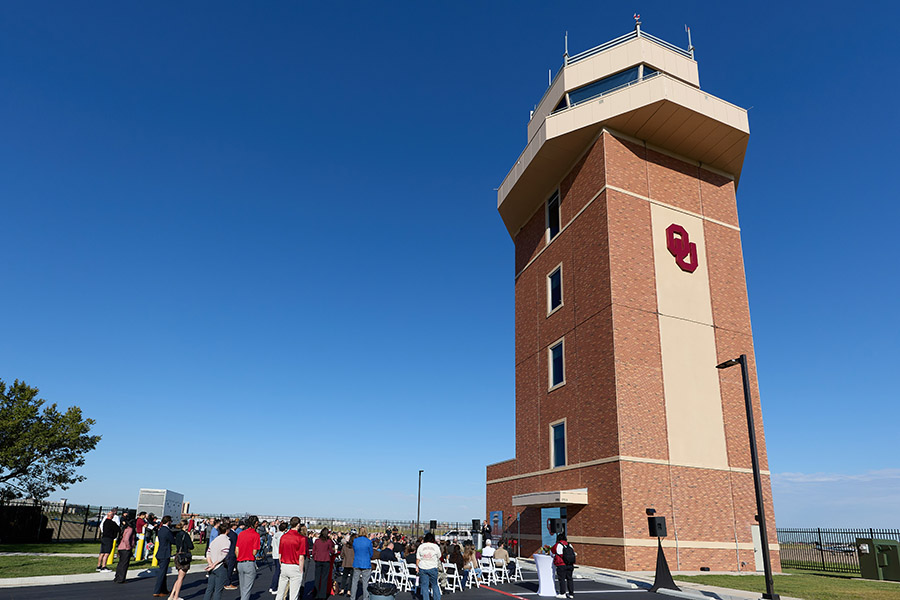
The University of Oklahoma today celebrated the opening of a new air traffic control tower at the OU Max Westheimer Airport. Standing 106 feet tall, more than double the current 52-foot facility, the new tower will modernize air traffic control operations and improve safety for pilots and students operating in the airspace.
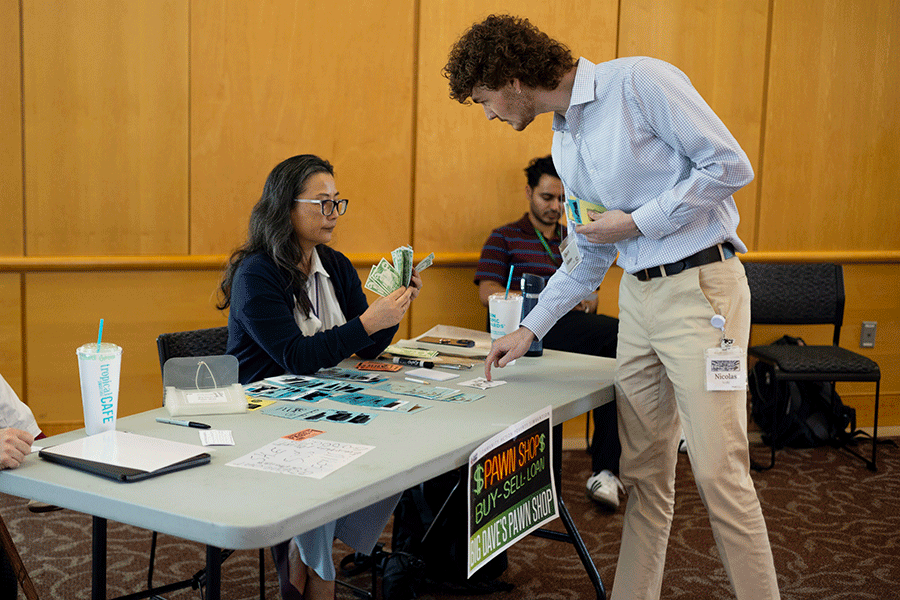
Do I buy groceries or pay the electric bill? Should I pawn some of my belongings to afford my prescription? My child is sick, so I will have to miss work to take care of him. Those are just a few of the difficult choices that OU-Tulsa health professional students confronted during the Community Access to Resources Experience. The role-playing activity challenged students to navigate the financial, family and other pressures that can affect a person’s health and ability to follow medical advice. Held annually during the SCM Institute orientation week, the experience is designed to generate understanding and build empathy.