NEWS


Date
Media Contact
Kat Gebauer
kathryngebauer@ou.edu
NORMAN, OKLA. – University of Oklahoma students will take part in a new five-year project to address important challenges across the state of Oklahoma. Leveraging principles from engineering, chemistry, and physics, enhanced by business acumen and strategic communication skills, the team will translate their fundamental discoveries to prepare a new generation of leaders to support Oklahoma’s prosperity.
The project is led by a multidisciplinary team of OU researchers from six different departments – School of Sustainable Chemical, Biological and Materials Engineering, Stevenson School of Biomedical Engineering, Homer L. Dodge Department of Physics and Astronomy, and Department of Chemistry and Biochemistry, Gaylord College of Journalism and Mass Communication, and the Department of Psychology and funded by a $3 million grant from the U.S. National Science Foundation Research Traineeship Program (NSF NRT).
The twelve OU faculty members, including Alberto Striolo, Ph.D., professor and Asahi Glass Chair in Chemical Engineering at OU, who serves as a principal investigator for the project, will guide students enrolled in the doctoral materials science and engineering program at OU to address transdisciplinary emergent challenges, including those due to heavy metal ion contamination, and to promote materials innovations critical to supporting energy, health care, aerospace and agriculture aspects of the state’s economy.
“The students at the University of Oklahoma are extremely talented and discover new materials and new phenomena,” Striolo said. “This program will facilitate not only the discovery efforts but also the translation of those results into advancements for the community at large. Working together within the university, and with our industrial partners, we will establish a model that will benefit the state, the region and ultimately the nation.”
Expertise in industrial psychology, business acumen, and mass communication will allow the NSF NRT “Diana” students to secure productive internships offered by industrial collaborators, both local and global, in health, energy, consumer products and advanced materials sectors.
Integral to the NRT Diana’s strategic plans, Katerina Tsetsura, Ph.D., professor of strategic communication at the Gaylord College of Journalism and Mass Communication and senior personnel on the project, will ensure that future leaders learn how to explain their research findings to non-scientific audiences.
“Learning strategic communication skills will help students to explain how their advanced research can improve the state’s economy,” Tsetsura said. “With the rise of social media, we have many opportunities to share impactful stories and showcase how scientific advances make a difference in our everyday lives. From more efficient detergents to more reliable and long-lasting construction materials and cheaper energy, the innovations of material scientists and engineers open up exciting possibilities to improve the lives of all Oklahomans.”
“This project will ensure that the homegrown professionals are well prepared for the challenges of the next decade and can clearly explain their achievements to all citizens, regardless of their prior knowledge about modern chemistry,” added Sarah Breen, Ph.D., associate professor of biomedical engineering at OU and co-PI on the Diana project.
The NSF NRT Diana grant will support 20 domestic students over five years. The program will offer fundamental training in chemical engineering, entrepreneurial training, and industrial mentorship and internship opportunities.
Diana’s trainees will translate fundamental discoveries into practical advancements that address the region's needs and benefit the state of Oklahoma. The Diana project will also leverage the ART Academy, complementing another OU-led NSF grant, “ART: Intensifying Translation of Research in Oklahoma (InTRO).”
About the University of Oklahoma
Founded in 1890, the University of Oklahoma is a public research university located in Norman, Oklahoma. As the state’s flagship university, OU serves the educational, cultural, economic and health care needs of the state, region and nation. For more information about the university, visit www.ou.edu.
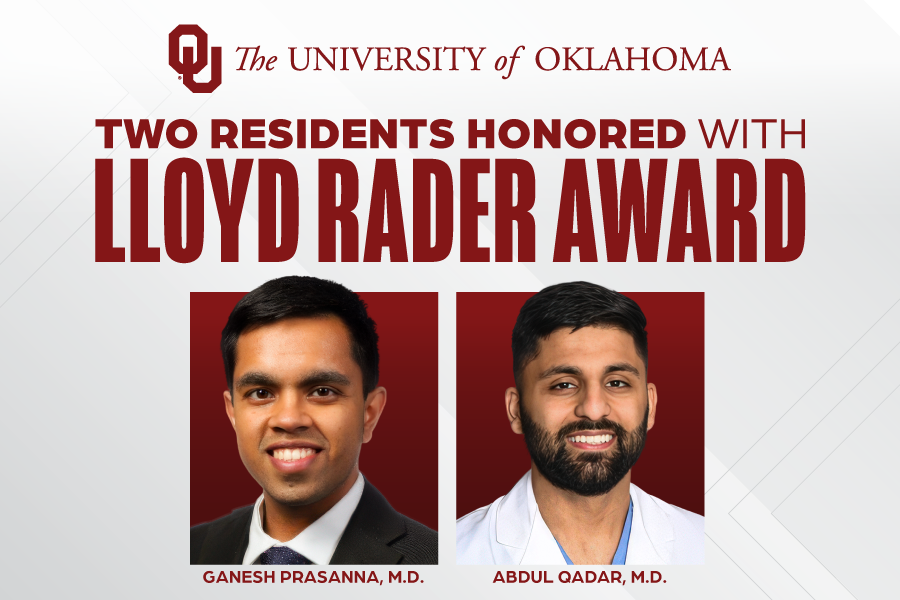
The University of Oklahoma College of Medicine has honored two residents with the Lloyd Rader Award, which recognizes outstanding clinical and research achievements in residency.
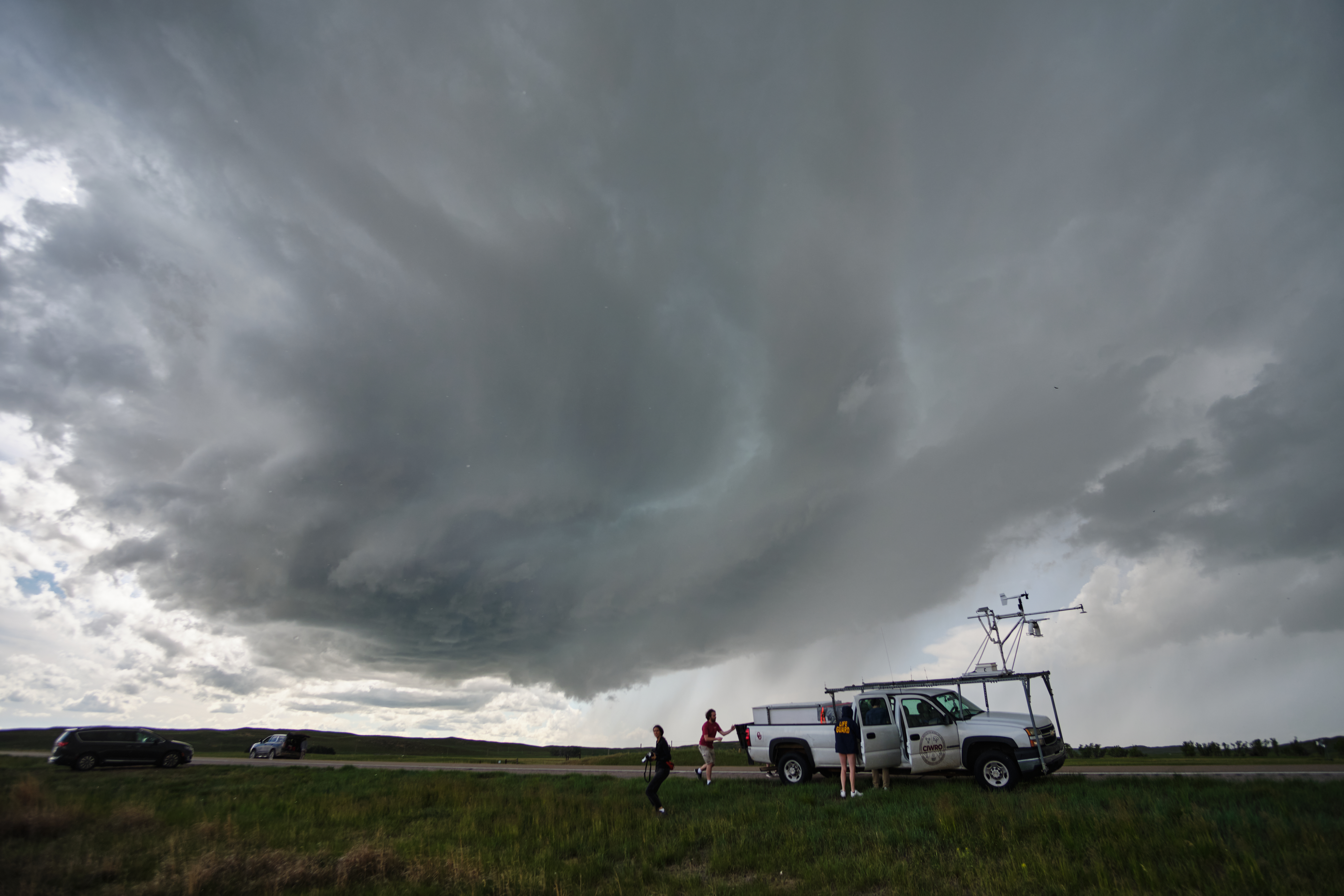
The University of Oklahoma will receive up to $220 million over five years from the U.S. Department of Commerce and the National Oceanic and Atmospheric Administration to continue the life-saving weather research led by the OU-NOAA Cooperative Institute for Severe and High-Impact Weather Research and Operations, extending a nearly 50-year partnership that has helped give Americans earlier, more accurate weather warnings
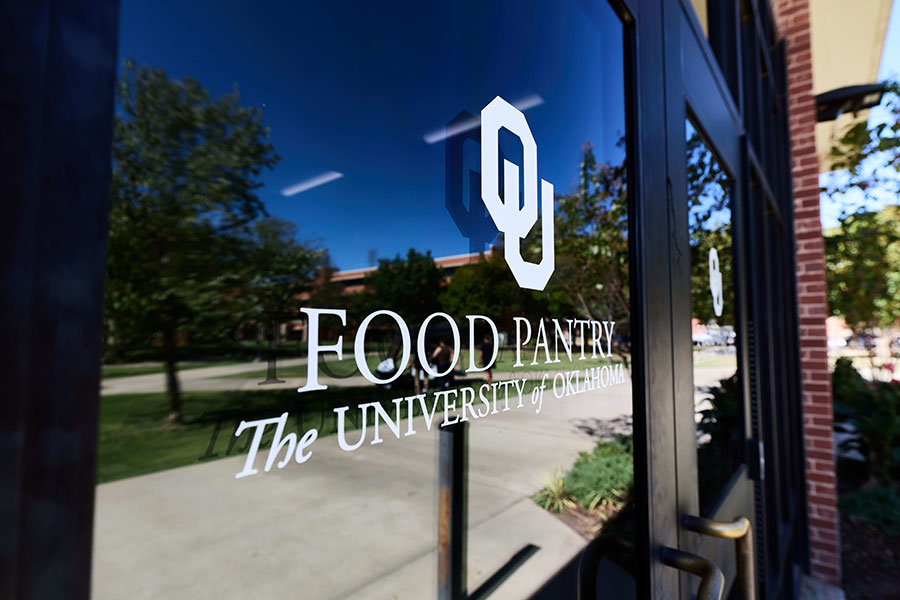
The OU Food Pantry won the annual Red River Food Fight, collecting 31,815.9 pounds of shelf-stable food and drinks to top UT Outpost’s 22,567 pounds. OU has won the competition four years in a row.