NEWS


NORMAN, OKLA. – A group of seniors from the University of Oklahoma School of Meteorology dedicated their fall semester to researching explainable artificial intelligence and tornadogenesis – the conditions that can lead to the formation of tornadoes.
The four-student team: Evan White, Andrew Muehr, Victor Tiradoegas and Gabriel Cenker came together in their senior capstone course with varying familiarity with AI applications for meteorology.
Muehr had already published a paper on the topic of supercell simulations but was new to AI, while Evan White had created a machine learning model and could apply explainable AI techniques to the model to understand how AI was ‘thinking.’ Tiradoegas was interested in the convergence of topics.
“I’ve always been interested in supercell tornado dynamics, and I’m really into computer science and AI,” he said. “When we were being divided into our research groups in the original research class, I thought, okay, this could be a cool thing to look at.”
“It was a natural blending of several different areas of experience,” Muehr added.
The group was advised by Aaron Hill, Ph.D., an assistant professor in the School of Meteorology. Hill’s research exists at the intersection of AI and weather. He studies how AI can be used to build products and information to assist operational forecasters. Recently, he’s started venturing into this burgeoning field of using AI to understand meteorology and weather prediction problems. He leads the CHAOS research group in the School of Meteorology, where he and his team study Convection and weather Hazards with Artificial intelligence, Observations and Simulations.
For their capstone project, the students examined what makes strong updrafts, or upward-moving air, at low levels and see if AI could explain the physical reasoning behind why updrafts strengthen or weaken.
“Right now, there are all these theories about tornadogenesis and where vorticity comes from, but no matter what theory you’re looking at, all of them require a strong updraft just above the ground,” Muehr said.
The students ran 1,800 simulations for their project, of which between 900 and 1,000 produced storms. Then, they chose approximately 700 of those for the AI model’s training dataset. Finally, they applied an explainable AI model.
Hill describes explainable AI as a way to diagnose what a model is doing. “Models are generally known as black boxes – we can’t really open them up like a numerical weather prediction model,” he said.
Some of their results were intuitive, while others were more surprising.
“We found that some of the more classic variables, like mesocyclone strength, didn’t seem super connected to low-level updraft strength. Instead, variables like precipitation mixing ratios seemed very important for low-level updraft strengthening, which we didn’t expect,” Muehr said.
Muehr said their findings generally indicated that ice aloft – ice crystals forming higher in the atmosphere – was important for low-level updraft strengthening. The students suspect this is because larger updrafts at mid- and upper-levels, specifically those levels that produce more precipitation, might be associated with a greater chance of low-level updraft strengthening. More research will be needed to determine if these are connected or if there is only an association between these variables.
The students hope to continue to examine these questions through an AI lens, perhaps using different microphysical schemes than they used in their capstone project or adding more information to the model to see what further information they can glean.
To learn more about students and research in the School of Meteorology, visit ou.edu/ags/meteorology.
About the University of Oklahoma
Founded in 1890, the University of Oklahoma is a public research university located in Norman, Oklahoma. As the state’s flagship university, OU serves the educational, cultural, economic and health care needs of the state, region and nation. For more information about the university, visit www.ou.edu.
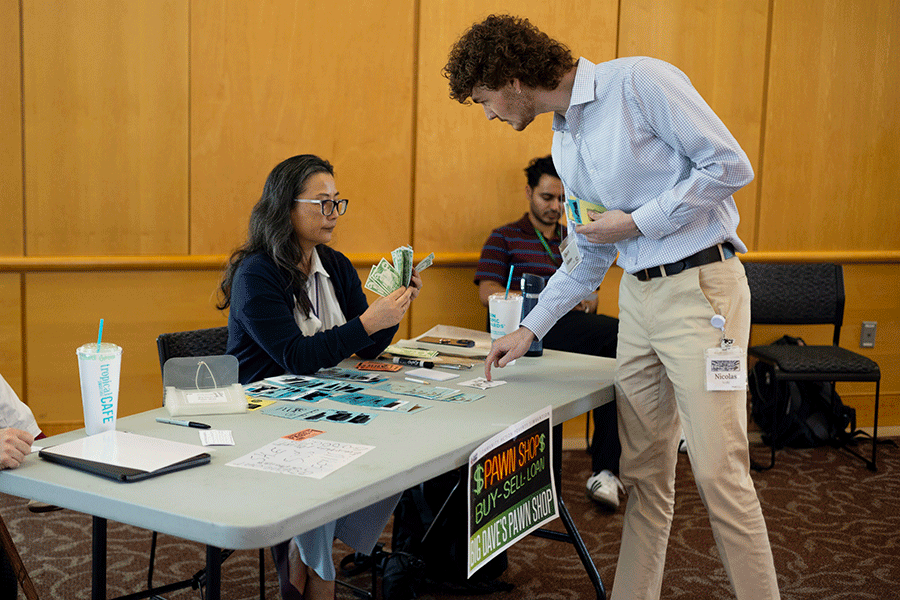
Do I buy groceries or pay the electric bill? Should I pawn some of my belongings to afford my prescription? My child is sick, so I will have to miss work to take care of him. Those are just a few of the difficult choices that OU-Tulsa health professional students confronted during the Community Access to Resources Experience. The role-playing activity challenged students to navigate the financial, family and other pressures that can affect a person’s health and ability to follow medical advice. Held annually during the SCM Institute orientation week, the experience is designed to generate understanding and build empathy.
Thanks to more than $5 million in funding through a National Institutes of Health initiative, the University of Oklahoma's College of Nursing will support four maternal health research projects over the next four years.
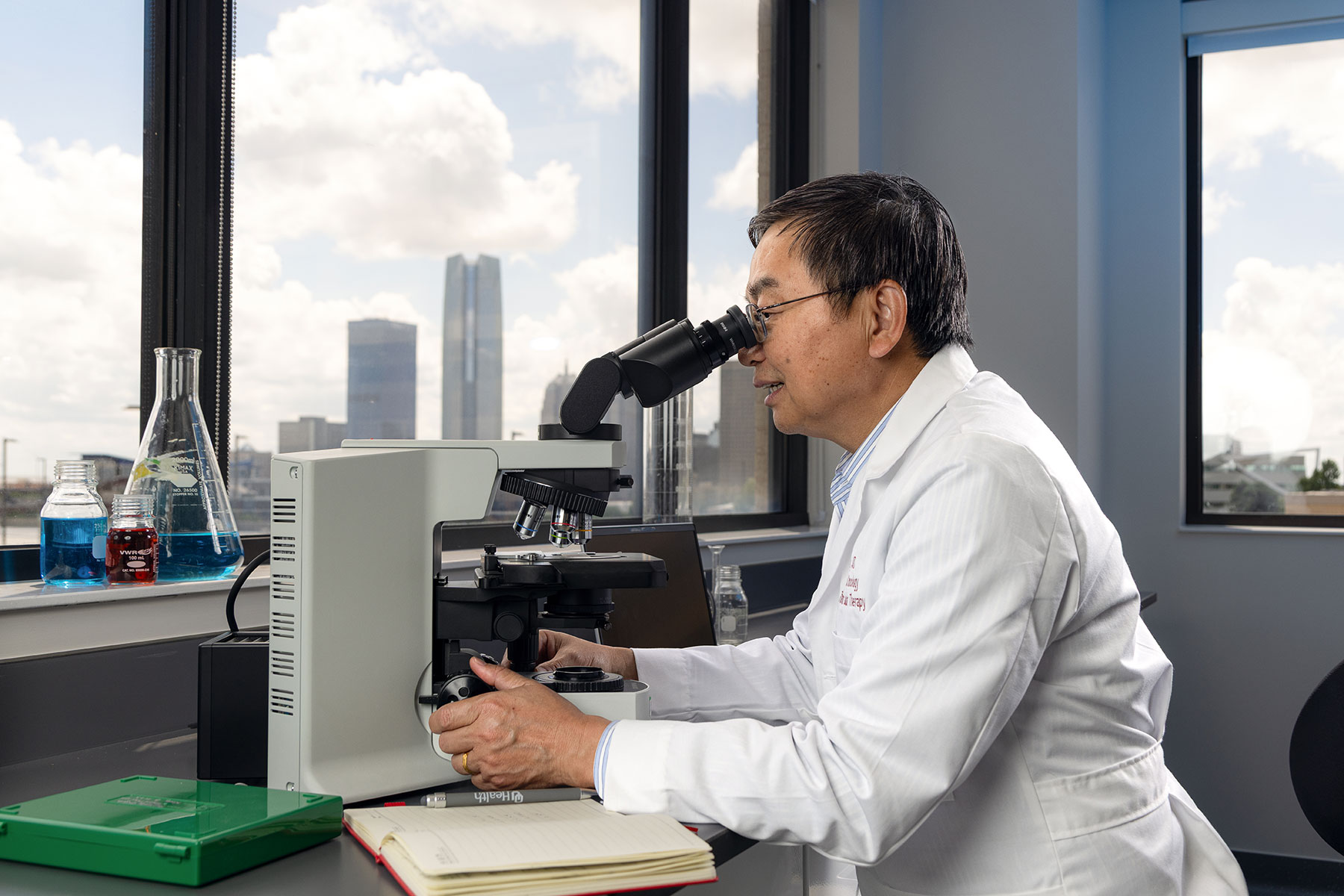
A University of Oklahoma physician-researcher recently received $2.9 million in funding from the National Cancer Institute to study whether RedHill Biopharma’s drug opaganib, given after CAR T-cell therapy, can help the immune cells fight cancer more effectively.