NEWS


NORMAN, OKLA. – Quantum light sources are fickle. They can flicker like stars in the night sky and can fade out like a dying flashlight. However, newly published research from the University of Oklahoma proves that adding a covering to one of these light sources, called a colloidal quantum dot, can cause them to shine without faltering, opening the door to new, affordable quantum possibilities.
Quantum dots, or QDs, are so small that if you scaled up a single quantum dot to the size of a baseball, a baseball would be the size of the Moon. QDs are used in a variety of products, from computer monitors and LEDs to solar cells and biomedical engineering devices. They are also used in quantum computing and communication.
A research study led by OU Assistant Professor Yitong Dong demonstrates that adding a crystalized molecular layer to QDs made of perovskite neutralizes surface defects and stabilizes the surface lattices. Doing so prevents them from darkening or blinking.
“In quantum computing, you must be able to control how many photons are emitted at any given time,” he said. “QDs are notoriously unstable, so we worked to create a crystal covering that could stabilize their quantum emissions. This material is ideal because it is inexpensive to use and scale and is efficient at room temperature.”

Quantum dots have historically had several problems. First, their surfaces can easily become defective. These defects can cause the QDs to fail, often after only 10-20 minutes of use. The crystal coverings deployed by Dong and his collaborators extend the continuous photon emission of QDs to more than 12 hours without any decay, and virtually no blinking.
Second, single photon emitters have traditionally operated at extremely low cryogenic temperatures. In fact, they typically require liquid helium at -452 degrees Fahrenheit, making them impractical for most real-world applications. This research, however, demonstrates that perovskite QDs achieve nearly 100% efficiency at room temperature. This breakthrough makes them significantly easier, cheaper and more appealing to use.
“Although there has been real interest in the exotic optical properties of this material, the sophistication needed to fabricate a single photon emitter was cost-prohibitive,” Dong said. “But since perovskite QDs can be used at normal temperatures and synthesized for very little cost, we believe they could become the photonic chip light source for future quantum computing and quantum communication devices.”
According to Dong, these findings pave the way for future quantum emitter designs that extend beyond this specific material or molecular structure.
“In my opinion, our research has profound implications for the quantum field,” he said. “We’ve found a way to stabilize these QDs using organic and inorganic molecular crystals, opening the door for others to explore the fundamental optical properties and fundamental physics of these materials. It’s really exciting.”
Learn more about this project and about Dong’s prior optoelectronic research, which was funded by the U.S. Department of Energy.
About the project
“Towards non-blinking and photostable perovskite quantum dots” is published in the journal Nature Communications, DOI no. 10.1038/s41467-027-55619-7. OU postdoc Chenjia Mi and graduate student Gavin Gee served as co-lead authors of this paper in collaboration with Northwestern University. Dong is an assistant professor in the OU Department of Chemistry and Biochemistry, Dodge Family College of Arts and Sciences. The research was funded, in part, by the U.S. Department of Energy, Office of Science, Basic Energy Science, Award no. DE-SC0024441.
About the University of Oklahoma
Founded in 1890, the University of Oklahoma is a public research university located in Norman, Oklahoma. As the state’s flagship university, OU serves the educational, cultural, economic and health care needs of the state, region and nation. For more information about the university, visit www.ou.edu.
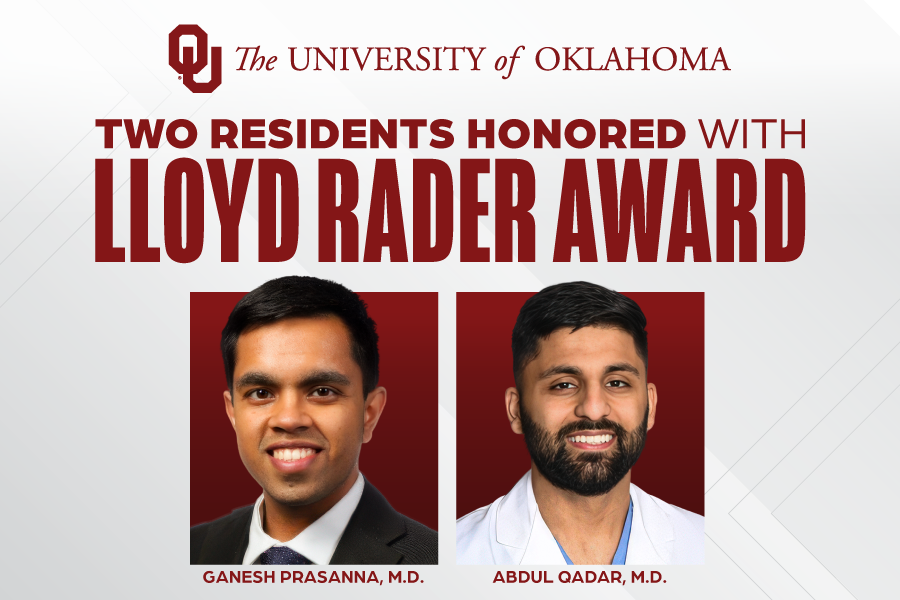
The University of Oklahoma College of Medicine has honored two residents with the Lloyd Rader Award, which recognizes outstanding clinical and research achievements in residency.
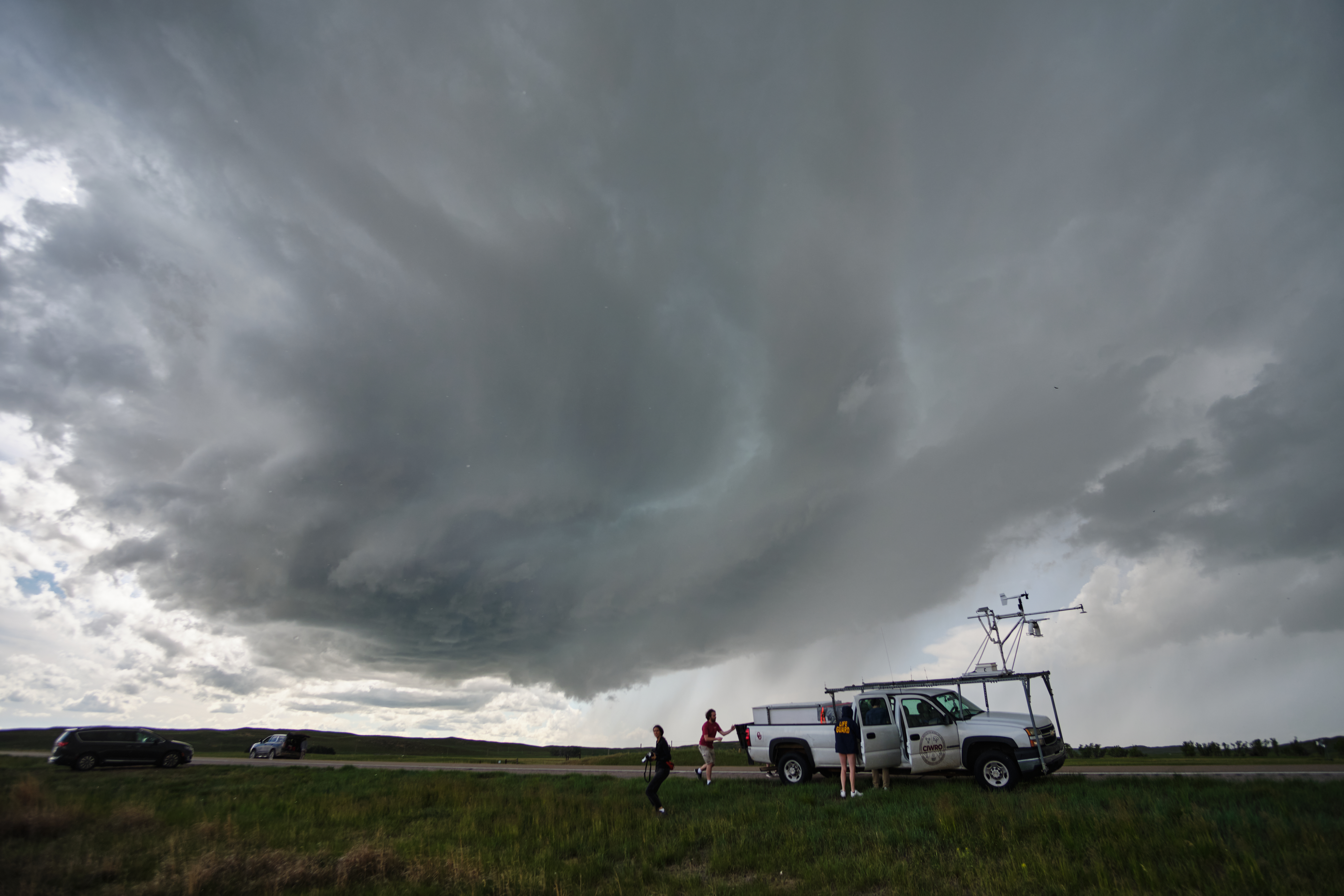
The University of Oklahoma will receive up to $220 million over five years from the U.S. Department of Commerce and the National Oceanic and Atmospheric Administration to continue the life-saving weather research led by the OU-NOAA Cooperative Institute for Severe and High-Impact Weather Research and Operations, extending a nearly 50-year partnership that has helped give Americans earlier, more accurate weather warnings
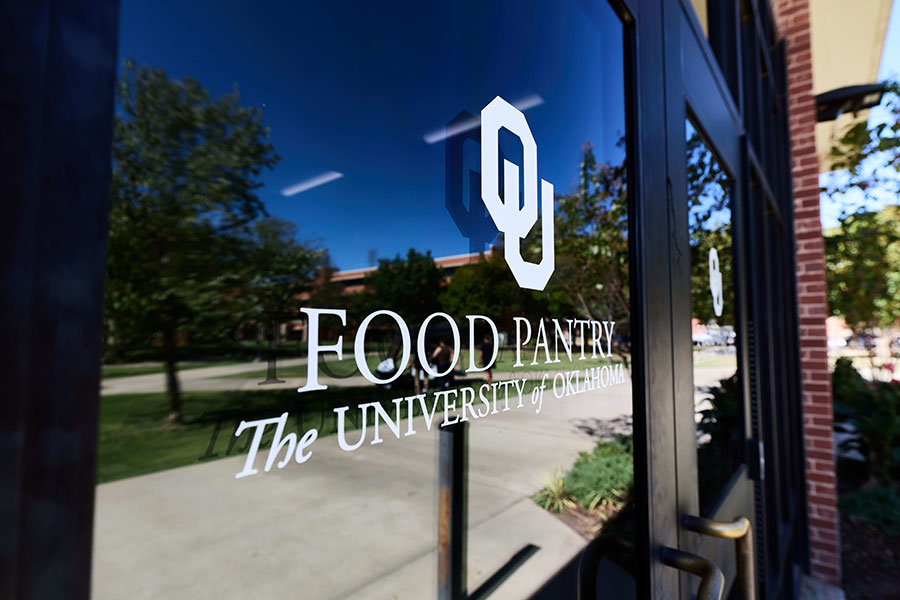
The OU Food Pantry won the annual Red River Food Fight, collecting 31,815.9 pounds of shelf-stable food and drinks to top UT Outpost’s 22,567 pounds. OU has won the competition four years in a row.