NEWS


OKLAHOMA CITY, OKLA. – In June, Huxing Cui, Ph.D., joined the OU Health Harold Hamm Diabetes Center as associate professor in the OU College of Medicine, Department of Cell Biology. Prior to joining the OU Health campus, Cui was most recently an associate professor of neuroscience and pharmacology at the University of Iowa.
“Dr. Cui is one of only a handful of neuroscientists worldwide capable of mapping the brain regions that control appetite and body weight,” said HHDC Director Jacob Friedman, Ph.D. “The systems he investigates are highly complex and integral to understanding how feedback in select neurons can regulate signals that control metabolism. He is at the cutting edge of new science that will help the HHDC and other investigators reach deeper into mechanisms for blood glucose and body weight. We are extremely pleased that he has joined the OU School of Medicine.”
As part of his research, Cui will work to better understand how the brain helps regulate aspects such as body weight and blood sugar. He will be working to help OU grow its research on how the brain affects the body’s metabolism. He will partner with others to study parts of brain cells that may play a role in these processes, which could help discover new ways to treat obesity and diabetes.
“Through fostering interdisciplinary collaborations, mentoring the next generation of scientists, and integrating cutting-edge tools from neuroscience and metabolism research, I hope to build new research strengths at OUHSC and contribute impactful discoveries to combat obesity and related metabolic diseases,” said Cui.
Cui received his Ph.D. in psychiatry and neurology from Kobe University Graduate School of Medicine in Kobe, Japan. He then completed postdoctoral work at the Bioscience Institute in Osaka, the University of Texas Southwestern Medical Center in Dallas, and in the Department of Psychiatry at the University of Iowa Carver College of Medicine. He joined the faculty at the University of Iowa in 2016.
About the University of Oklahoma
Founded in 1890, the University of Oklahoma is a public research university located in Norman, Oklahoma. As the state’s flagship university, OU serves the educational, cultural, economic and health care needs of the state, region and nation. For more information about the university, visit www.ou.edu.
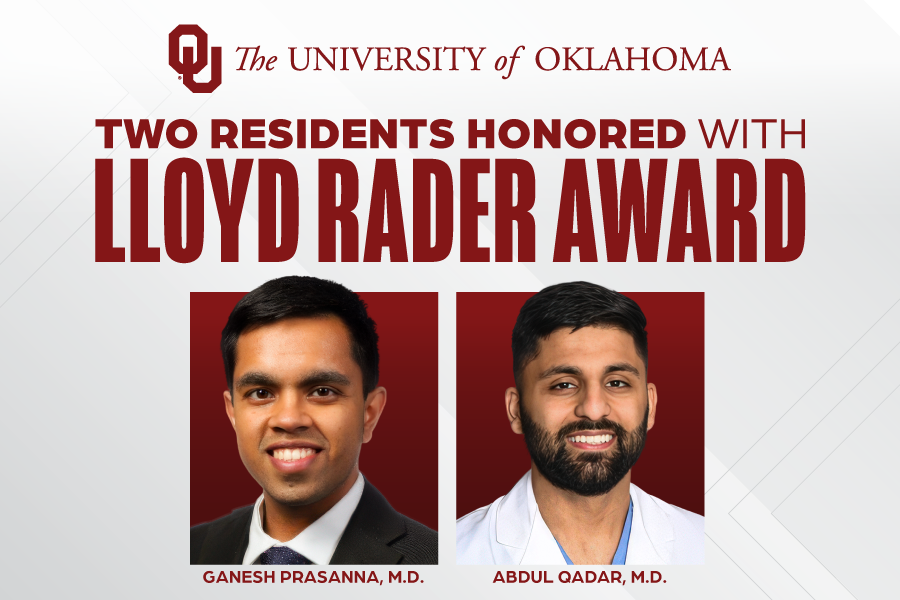
The University of Oklahoma College of Medicine has honored two residents with the Lloyd Rader Award, which recognizes outstanding clinical and research achievements in residency.
The University of Oklahoma will receive up to $220 million over five years from the U.S. Department of Commerce and the National Oceanic and Atmospheric Administration to continue the life-saving weather research led by the OU-NOAA Cooperative Institute for Severe and High-Impact Weather Research and Operations, extending a nearly 50-year partnership that has helped give Americans earlier, more accurate weather warnings
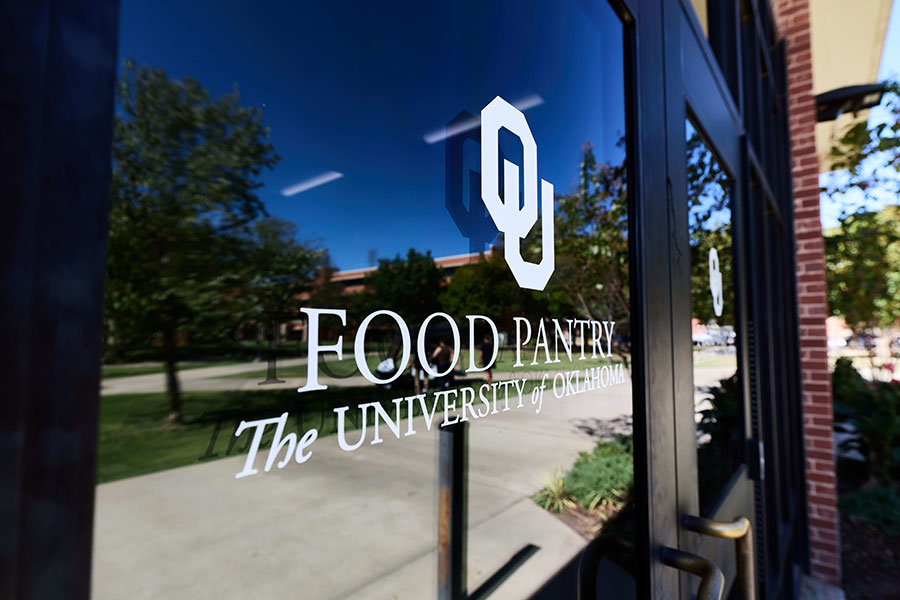
The OU Food Pantry won the annual Red River Food Fight, collecting 31,815.9 pounds of shelf-stable food and drinks to top UT Outpost’s 22,567 pounds. OU has won the competition four years in a row.