NEWS


NORMAN, OKLA. – Marcela Loría-Salazar, an assistant professor in the University of Oklahoma’s School of Meteorology, has been appointed to a National Academies of Sciences, Engineering, and Medicine committee to address one of today’s most pressing environmental challenges: improving how the United States studies, models and responds to fire and smoke behavior from prescribed burns.
Loría-Salazar is one of just 14 scientists selected from a national pool of more than 150 candidates for the National Academies’ initiative, "Optimizing Research on Experimental Prescribed Fires to Improve Understanding of Wildland Fire and Smoke Behavior." Her appointment represents not only a personal milestone, but also a broader shift for OU’s meteorology program toward a more expansive role in air quality and atmospheric composition research.
“The School of Meteorology has long been known for its expertise in severe storms and convection,” she said. “But this selection shows we are now taking the lead in atmospheric composition science, in research that’s critical to national health and climate resilience.”
Originally from Costa Rica, Loría-Salazar brings over 15 years of experience in aerosol science, studying tiny atmospheric particles that can dramatically influence climate and public health. Her research focuses on smoke from wildfires and prescribed burns, and how aerosol properties impact everything from air quality to cloud formation and long-term climate patterns.
“Air pollution from aerosols kills more people globally than hunger, war or natural disasters,” Loría-Salazar said. “Wildfire smoke is made up of particles that are so small they can bypass the body's natural defenses, increasing the risk of cardiovascular disease, neurological disorders and even infertility. That’s why this work matters.”
The National Academies committee will examine how experimental fire research and federal data collection efforts can be better integrated, with the goal of improving the reliability of fire and smoke models. The panel will identify gaps in current knowledge, evaluate modeling tools, and recommend best practices for data interoperability and coordination among agencies like the National Oceanic and Atmospheric Administration, the U.S. Forest Service, National Park Service, and even NASA.
“Right now, the fire science community lacks standardized systems for collecting and analyzing data,” she explained. Unlike the tornado Enhanced Fujita Scale or the Saffir-Simpson Hurricane Wind Scale, we don’t have unified fire indexes, emissions inventories for fuel and smoke, consistent prescribed or wild fire data collection, or consistent models. We need a foundational framework for understanding how fires start, how smoke spreads, and how these events affect health, ecosystems, and the economy.”
Loría-Salazar had a unique perspective that stood out in the selection process. She is a researcher in the central U.S., working in close collaboration with Tribal Nations, and focused on smoke from prescribed, wild, and ceremonial fire science.
“Most fire research is centered in the western United States. But prescribed fires are also a major concern in the Midwest and Southeast. I chose to come to OU because I wanted to bring that expertise where it was needed most,” she said.
Her service on the committee is expected to last 12 to 18 months, culminating in a final report that will inform federal fire and smoke policy nationwide. Though her role is advisory, the committee’s findings will be disseminated to Congress and relevant agencies as a roadmap for future fire management and environmental health strategies.
“This is an extraordinary recognition of Dr. Loría-Salazar’s expertise,” said Robert Palmer, dean of the OU College of Atmospheric and Geographic Sciences. “Her leadership on this committee reinforces OU’s national role in atmospheric research that extends far beyond severe weather.”
Learn more about research from the OU School of Meteorology.
About the University of Oklahoma
Founded in 1890, the University of Oklahoma is a public research university located in Norman, Oklahoma. As the state’s flagship university, OU serves the educational, cultural, economic and health care needs of the state, region and nation. For more information about the university, visit www.ou.edu.
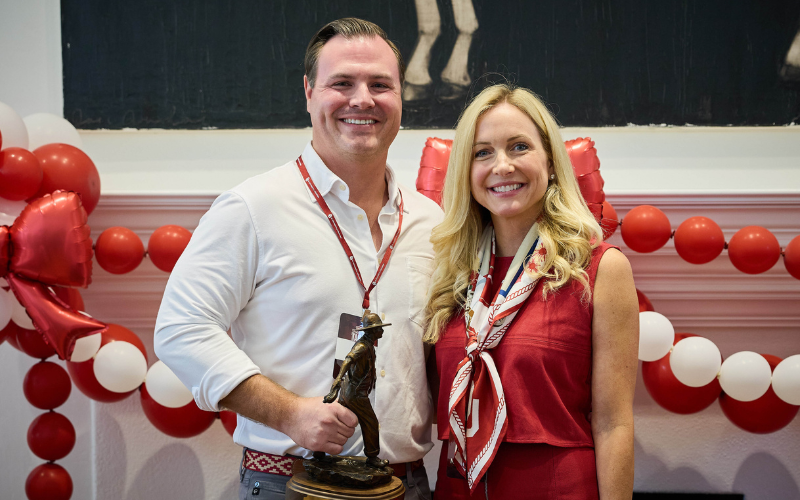
The University of Oklahoma has received a transformative gift from Jon and Shannon McCartney, which will name the McCartney Family Tunnel of Champions, the McCartney Family Gate of the Gaylord Family - Oklahoma Memorial Stadium and the McCartney Family Grand Lecture Hall in the Michael F. Price College of Business. The gift will also support the Inspiring Champions and the Athletic Director’s Discretionary Fund, in addition to establishing the McCartney DFW Career Trek program at Price College.
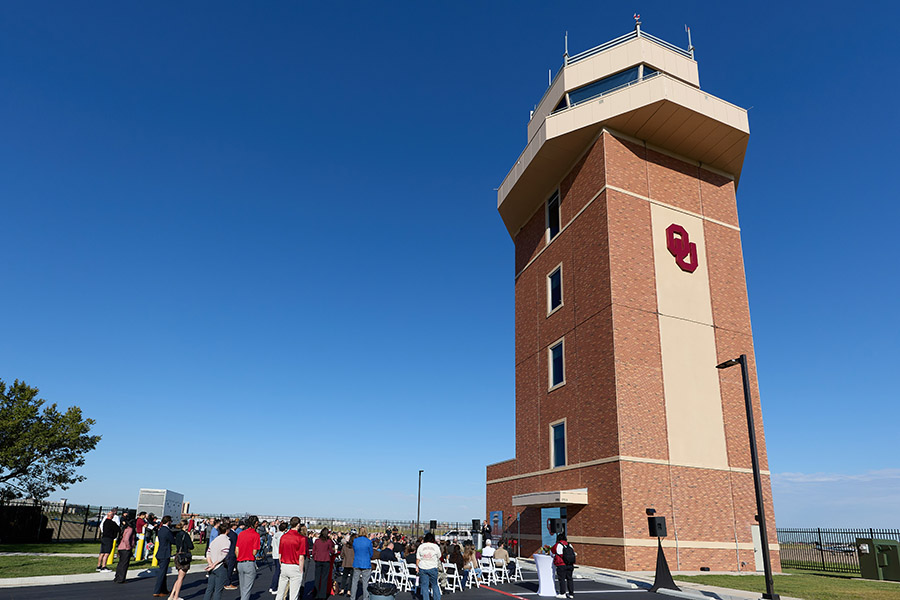
The University of Oklahoma today celebrated the opening of a new air traffic control tower at the OU Max Westheimer Airport. Standing 106 feet tall, more than double the current 52-foot facility, the new tower will modernize air traffic control operations and improve safety for pilots and students operating in the airspace.
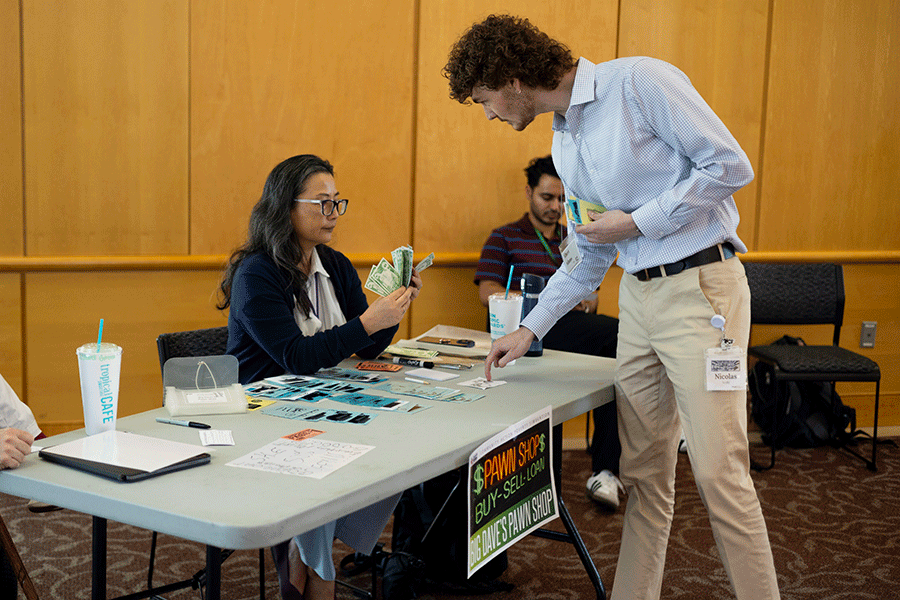
Do I buy groceries or pay the electric bill? Should I pawn some of my belongings to afford my prescription? My child is sick, so I will have to miss work to take care of him. Those are just a few of the difficult choices that OU-Tulsa health professional students confronted during the Community Access to Resources Experience. The role-playing activity challenged students to navigate the financial, family and other pressures that can affect a person’s health and ability to follow medical advice. Held annually during the SCM Institute orientation week, the experience is designed to generate understanding and build empathy.