NEWS


NORMAN, OKLA. – Two researchers from the University of Oklahoma are partnering with Oklahoma start-up Xironetic to develop innovative methods for neurosurgical guidance, visualization and training.
David R. Miller, Ph.D., an assistant professor at the Stephenson School of Biomedical Engineering, has developed a method for visualizing blood flow and tissue perfusion during brain surgery for which Christopher Graffeo, M.D., M.S., a neurosurgeon at the University of Oklahoma College of Medicine, is leading the testing. Graffeo is optimistic that the technology may help identify and prevent complications such as stroke before they arise.
In 2022, Xironetic, founded by OU College of Medicine surgeon Christian El-Amm, M.D., gained FDA clearance for its first device, IntraOpVSP. This device uses three-dimensional holographic overlays viewed through an augmented reality headset to enhance intraoperative visualization. Graffeo is assessing IntraOpVSP across a wide range of clinical applications aimed at improving procedural safety and enhancing trainee learning opportunities.
Jeff Potts, Ph.D., Chief Technology Officer at Xironetic explains that one such application is the insertion of an external ventricular drain (EVD) catheter. This standard and lifesaving procedure is usually performed “blind” at the bedside, without imaging guidance.
“Even though EVD placement is a very common and safe procedure, errors are not rare, and repeat attempts are often needed, especially in patients with abnormal anatomy due to their disease,” Graffeo said. “We do these procedures blind, and so the potential for anything from a minor misplacement that compromises function to a major issue such as bleeding or injury to the brain is feasible. The overall complication rate is realistically about 1%, but it’s also the single most common procedure we do in neurosurgery, so on a long enough timeline, those unfortunate cases accrue.
“Real-time navigation guided by augmented reality would be a total game changer, and our hope is that we can significantly reduce the risk of EVD placement by integrating IntraOpVSP,” he added.
Miller and Potts are also working on integrating their technology to enable blood flow visualizations through an augmented reality device. Together with Graffeo, they are applying for a National Institute of Health grant that promotes partnerships between academia and industry to address important clinical problems.
Miller says the team is “optimistic about the potential for these technologies to significantly impact neurosurgical operations, with benefits including reduced complications, improved efficiency and, most importantly, enhanced patient safety.”
About the University of Oklahoma
Founded in 1890, the University of Oklahoma is a public research university located in Norman, Oklahoma. As the state’s flagship university, OU serves the educational, cultural, economic and health care needs of the state, region and nation. For more information about the university, visit www.ou.edu.
The University of Oklahoma has received a transformative gift from Jon and Shannon McCartney, which will name the McCartney Family Tunnel of Champions, the McCartney Family Gate of the Gaylord Family - Oklahoma Memorial Stadium and the McCartney Family Grand Lecture Hall in the Michael F. Price College of Business. The gift will also support the Inspiring Champions and the Athletic Director’s Discretionary Fund, in addition to establishing the McCartney DFW Career Trek program at Price College.
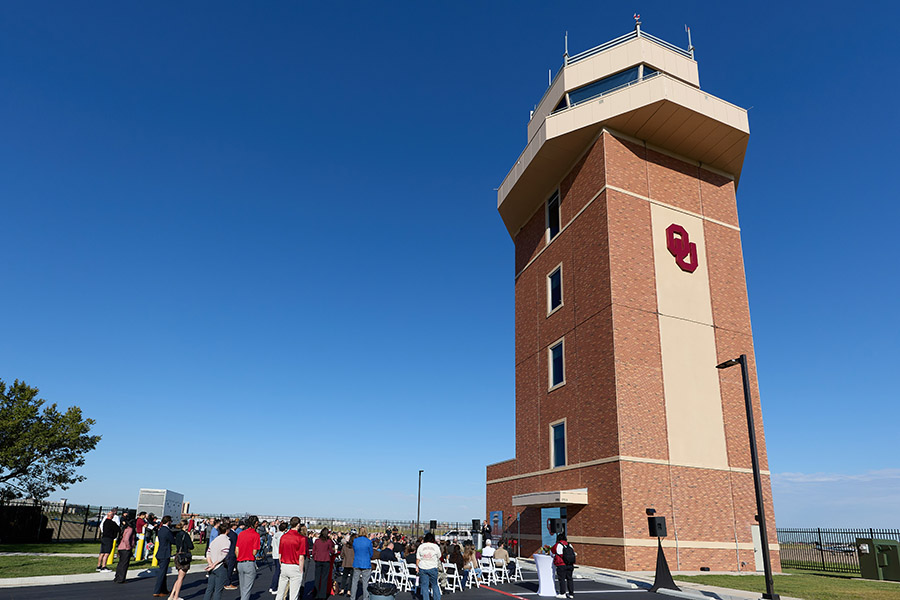
The University of Oklahoma today celebrated the opening of a new air traffic control tower at the OU Max Westheimer Airport. Standing 106 feet tall, more than double the current 52-foot facility, the new tower will modernize air traffic control operations and improve safety for pilots and students operating in the airspace.
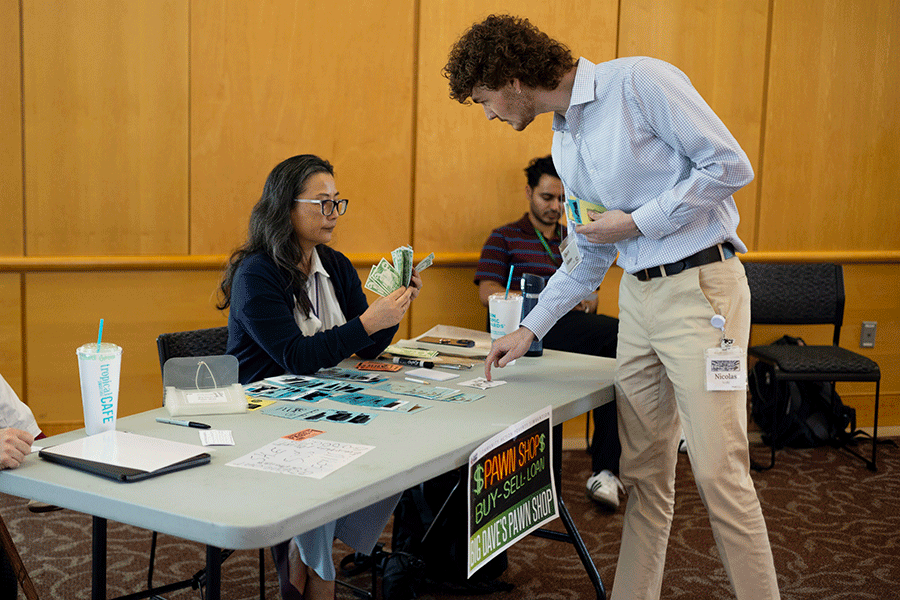
Do I buy groceries or pay the electric bill? Should I pawn some of my belongings to afford my prescription? My child is sick, so I will have to miss work to take care of him. Those are just a few of the difficult choices that OU-Tulsa health professional students confronted during the Community Access to Resources Experience. The role-playing activity challenged students to navigate the financial, family and other pressures that can affect a person’s health and ability to follow medical advice. Held annually during the SCM Institute orientation week, the experience is designed to generate understanding and build empathy.