NEWS


NORMAN, OKLA. – Architecture students at the University of Oklahoma had an experience they’re unlikely to forget. They created toys for people who are blind or visually impaired.
Under the guidance of Tamar Zinguer, an associate professor in the Christopher C. Gibbs College of Architecture, and in collaboration with the nonprofit NewView Oklahoma, 17 students in the Architecture in Play course designed and fabricated construction toys that focused on tactile and haptic elements instead of the traditional visual elements.
“I gave my students a project to design and make working prototypes of their toy ideas,” she said. “We had sessions where they played with each other’s toys and critiqued them like an architectural review. They determine if they’re playful, which is sometimes very hard to do on your own.”
Zinguer, who is an architect and architectural historian, is also the author of Architecture in Play: Intimations of Modernism in Architectural Toys. The book, which is about the construction of toys over the past 200 years, was the basis for this semester’s seminar. She also took inspiration from the 19th century educator Maria Montessori, who designed toys for kindergarten children to develop their sense of touch.
According to Zinguer, most toys appeal to the visual sense by being colorful and shiny. To challenge her students, she removed that idea from the equation to see what could be playful in the haptic sense. By partnering with NewView Oklahoma, the state’s largest employer of people with low vision, the students received real-world, first-hand feedback about their designs.
“The toys took many different shapes,” she said. “One allowed users to make traditional architecture models using Tinker Toy-style pieces. Another had magnetic blocks, similar to dice, that had Braille letters instead of numbers. Each piece connected magnetically with others to make words. There was also a student who created small blocks wrapped in Velcro that allowed users to build their own structures. Every design was different.”
Each toy was designed and prototyped by the students, sometimes requiring woodworking and construction skills. One student even hand-carved wooden pieces based on the idea of Japanese joinery.
“Dr. Zinguer’s Architecture in Play course introduced students to a learning environment where various sensory interactions and haptic communication were explored outside the typical classroom setting,” said Division of Architecture Director Dan Butko. “Toys for the Blind was the result of iterative constructs from kits of parts that informed both designers and users of common architectural principles such as spatial relationships, enclosure, rhythm and pattern. Through primary tactile means, users interlocked shapes of various materials, allowing each user to choose their own unique playful combinations.”
After receiving feedback from participants from NewView Oklahoma and making any needed adjustments to their toys, the students presented their final project to the OU architecture faculty. Twelve faculty members, including Dean Hans Butzer and Associate Dean for Research and External Engagement Angela Person, joined the students in Gould Hall for their review.
“They wore blindfolds and had 10-15 minutes to try each toy,” Zinguer said. “The students loved seeing their professors blindfolded, and the professors loved seeing how engaged the students were during the play session. These moments of sharing, of playing, were very impactful for both the professors and the architecture students. It was engaging, intellectual and even emotional."


About the University of Oklahoma
Founded in 1890, the University of Oklahoma is a public research university located in Norman, Oklahoma. As the state’s flagship university, OU serves the educational, cultural, economic and health care needs of the state, region and nation. For more information about the university, visit www.ou.edu.
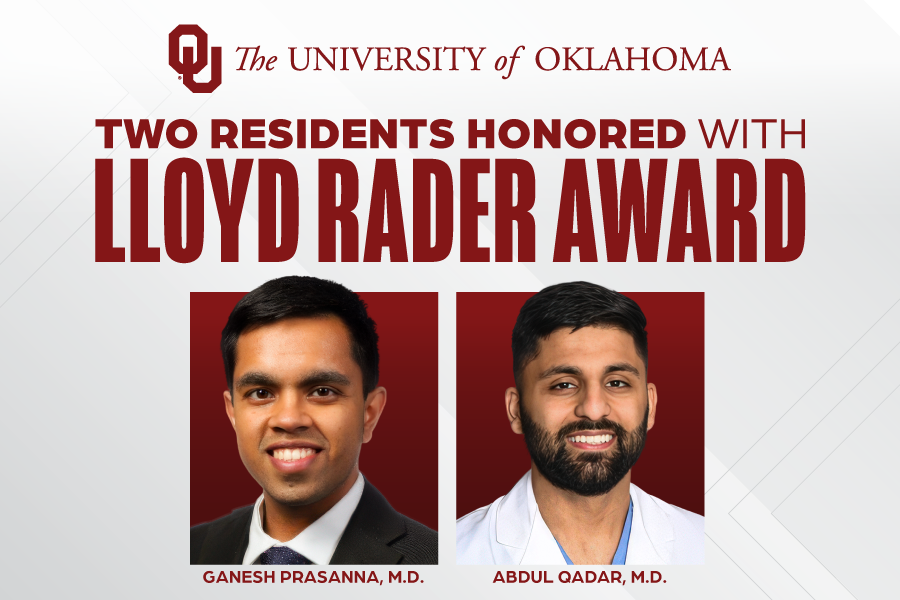
The University of Oklahoma College of Medicine has honored two residents with the Lloyd Rader Award, which recognizes outstanding clinical and research achievements in residency.
The University of Oklahoma will receive up to $220 million over five years from the U.S. Department of Commerce and the National Oceanic and Atmospheric Administration to continue the life-saving weather research led by the OU-NOAA Cooperative Institute for Severe and High-Impact Weather Research and Operations, extending a nearly 50-year partnership that has helped give Americans earlier, more accurate weather warnings
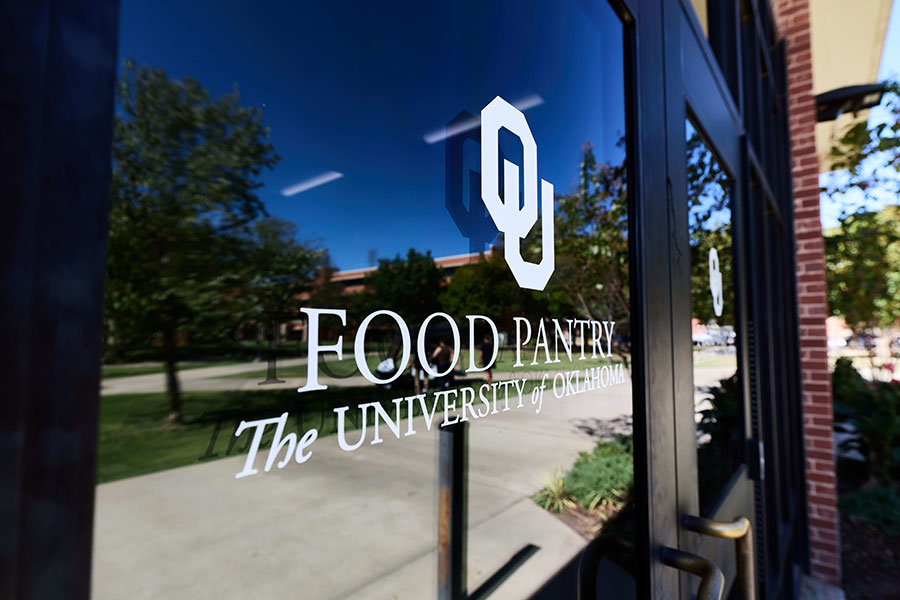
The OU Food Pantry won the annual Red River Food Fight, collecting 31,815.9 pounds of shelf-stable food and drinks to top UT Outpost’s 22,567 pounds. OU has won the competition four years in a row.