NEWS


GUYMON, Okla. – As part of their mission to expand access to oral health care across Oklahoma, the University of Oklahoma College of Dentistry and the Oklahoma Dental Foundation (ODF) have launched a mobile dental clinic in Guymon, offering services for patients of all ages. The clinic, a key program of ODF, is stationed in the parking area of Memorial Hospital of Texas County.
The Oklahoma Panhandle, like other areas of the state, has a shortage of dentists. Expanding access to oral health care is an important step toward improving the health of Oklahomans.
“Access to oral health care is essential to overall health, yet too many Oklahomans live in areas where dental services are limited or unavailable,” said Paul Mullasseril, D.D.S., dean of the OU College of Dentistry. “Our mobile dental clinic allows us to bring care directly to Texas County and surrounding areas, improving oral health outcomes and advancing our mission to serve all Oklahomans.”
The mobile clinic – called MobileSmiles – is equipped to provide dental cleanings, X-rays, fillings, extractions, fluoride varnish and sealants. No patient will be turned away from MobileSmiles for financial reasons; however, both private insurance and Medicaid will be accepted. Patients needing more specialized services may be referred to OU College of Dentistry clinics in Oklahoma City or Tulsa, where they may also use private insurance or Medicaid or may be treated at a reduced rate.
“The Oklahoma Dental Foundation is committed to ensuring that every Oklahoman, no matter their ZIP code, has access to quality dental care,” said John Wilguess, ODF executive director. “Through this groundbreaking partnership with the OU College of Dentistry, we are not only expanding care for underserved patients but also shaping the next generation of dentists who will continue this mission.”
OU College of Dentistry fourth-year dental students will provide patient care under the supervision of an adjunct faculty member with the OU College of Dentistry, a dentist based in Guymon. Students will receive course credit for their rotations with the mobile unit. The rotations also provide students with an opportunity to experience dental care in small communities.
According to an article in the Journal of Dental Education, studies have shown that dental students familiar with rural practice are more likely to practice in small towns. In addition, the average income of dentists in rural areas is increasing, according to an American Dental Association study.
“We hope that these experiences inspire some of our students to return to rural areas after graduation,” Mullasseril said. “Rural dentists have the unique privilege of expanding access to care and improving lives in places where their skills are needed the most.”
Ensuring Oklahomans can receive health care close to home is a primary aim of OU’s Lead On, University Strategic Plan. As the only dental school in Oklahoma, the OU College of Dentistry plans to expand its dental services to all corners of the state.
“Oklahoma ranks poorly in oral health, and lack of access to dental care is a major factor,” said Gary Raskob, Ph.D., senior vice president and provost of the OU Health Campus. “Rural Oklahomans deserve access to state-of-the-art services, and we are proud to partner with the Oklahoma Dental Foundation to make that possible.”
About the University of Oklahoma
Founded in 1890, the University of Oklahoma is a public research university located in Norman, Oklahoma. As the state’s flagship university, OU serves the educational, cultural, economic and health care needs of the state, region and nation. For more information about the university, visit www.ou.edu.
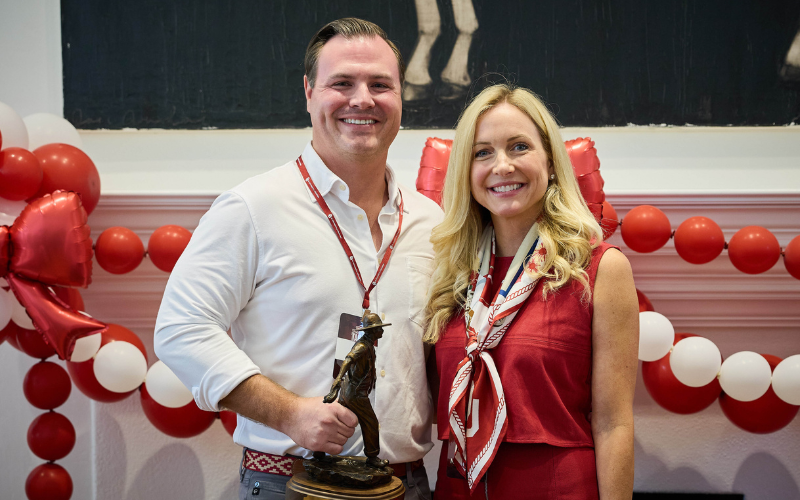
The University of Oklahoma has received a transformative gift from Jon and Shannon McCartney, which will name the McCartney Family Tunnel of Champions, the McCartney Family Gate of the Gaylord Family - Oklahoma Memorial Stadium and the McCartney Family Grand Lecture Hall in the Michael F. Price College of Business. The gift will also support the Inspiring Champions and the Athletic Director’s Discretionary Fund, in addition to establishing the McCartney DFW Career Trek program at Price College.
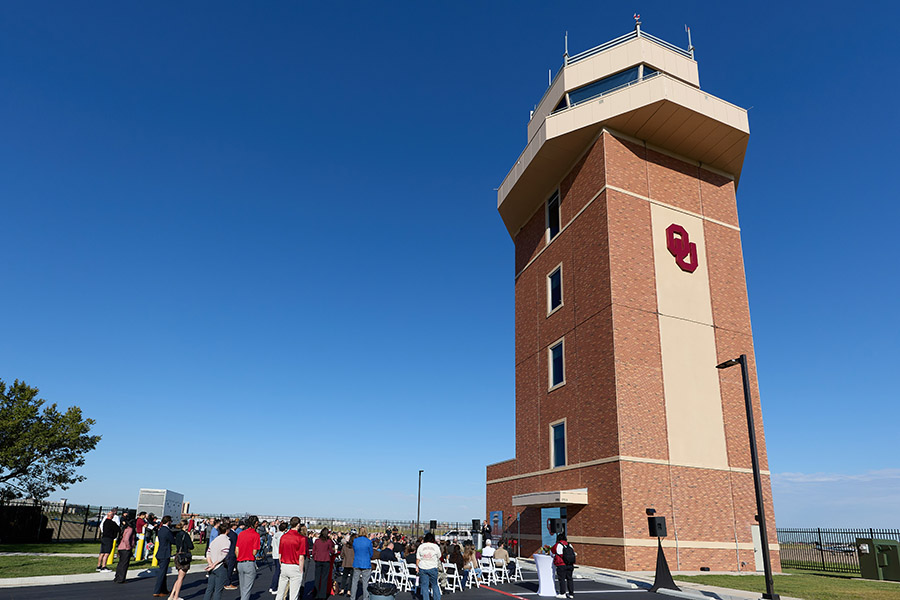
The University of Oklahoma today celebrated the opening of a new air traffic control tower at the OU Max Westheimer Airport. Standing 106 feet tall, more than double the current 52-foot facility, the new tower will modernize air traffic control operations and improve safety for pilots and students operating in the airspace.
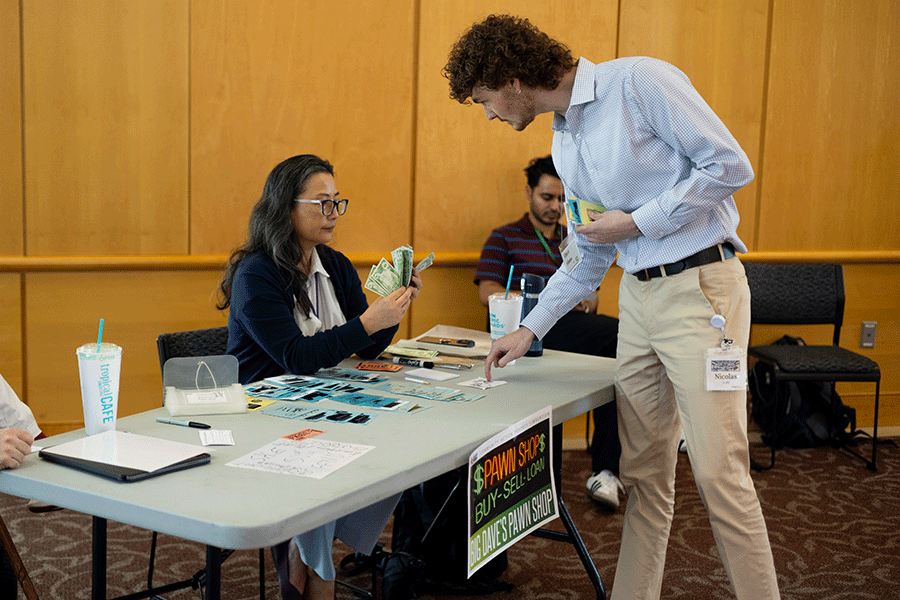
Do I buy groceries or pay the electric bill? Should I pawn some of my belongings to afford my prescription? My child is sick, so I will have to miss work to take care of him. Those are just a few of the difficult choices that OU-Tulsa health professional students confronted during the Community Access to Resources Experience. The role-playing activity challenged students to navigate the financial, family and other pressures that can affect a person’s health and ability to follow medical advice. Held annually during the SCM Institute orientation week, the experience is designed to generate understanding and build empathy.