NEWS


OKLAHOMA CITY – National Institutes of Health Director Jay Bhattacharya visited the OU Health Stephenson Cancer Center on Friday, Aug. 29, to tour the facility and discuss the university’s efforts to improve health outcomes across the state. Bhattacharya was joined by the NIH Acting Director for Legislative Policy and Analysis, members of the Oklahoma Congressional Delegation and University of Oklahoma leadership.
“We are thrilled to welcome Director Bhattacharya to the University of Oklahoma and showcase the incredible momentum we've built as the state’s leading academic health system,” said Gary Raskob, Senior Vice President and Provost, OU Health Sciences. “Partnership is essential to create lasting change for Oklahoma, and today's visit demonstrates our shared commitment with the NIH to advance discoveries, expand access and improve lives across our state for generations to come.”
Lifting the health of Oklahoma is a key component of the “Lead On, University: The Next Phase” Strategic Plan. Despite ranking 49th nationally in overall health outcomes, Oklahoma has seen significant progress since the creation of OU Health in June 2021. The academic health system has grown from $1.5 billion to $3 billion in three years, with $52 million invested in life-saving research last year alone. University and NIH leaders also discussed the importance of continued research funding to drive discoveries and improve health outcomes statewide. OU currently educates approximately 80% of Oklahoma's healthcare workforce and has doubled nursing graduates while increasing medical education capacity. By expanding the Stephenson Cancer Center to both Tulsa and Norman, OU Health now treats one in four Oklahomans with cancer, up from one in six.
The day began with a luncheon and roundtable discussion, followed a tour of the Stephenson Cancer Center, presentations on various facets of the University of Oklahoma healthcare system and presentations on NIH-funded research projects.
Director Bhattacharya's visit highlights the critical partnership between OU and the NIH as the university pursues ambitious goals to improve the state's health, including reducing cancer mortality by 10% and doubling the number of patients enrolled in clinical trials.
About the University of Oklahoma
Founded in 1890, the University of Oklahoma is a public research university with campuses in Norman, Oklahoma City and Tulsa. As the state’s flagship university, OU serves the educational, cultural, economic and health care needs of the state, region and nation. In Oklahoma City, OU Health Sciences is one of the nation’s few academic health centers with seven health profession colleges located on the same campus. OU Health Sciences serves approximately 4,000 students in more than 70 undergraduate and graduate degree programs spanning Oklahoma City and Tulsa and is the leading research institution in Oklahoma. For more information about OU Health Sciences, visit www.ouhsc.edu.
The University of Oklahoma has received a transformative gift from Jon and Shannon McCartney, which will name the McCartney Family Tunnel of Champions, the McCartney Family Gate of the Gaylord Family - Oklahoma Memorial Stadium and the McCartney Family Grand Lecture Hall in the Michael F. Price College of Business. The gift will also support the Inspiring Champions and the Athletic Director’s Discretionary Fund, in addition to establishing the McCartney DFW Career Trek program at Price College.
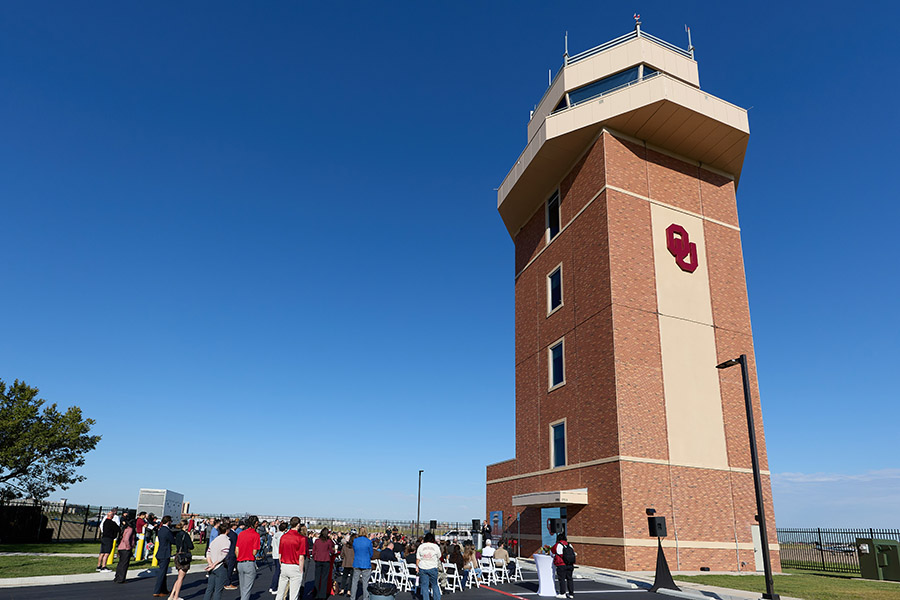
The University of Oklahoma today celebrated the opening of a new air traffic control tower at the OU Max Westheimer Airport. Standing 106 feet tall, more than double the current 52-foot facility, the new tower will modernize air traffic control operations and improve safety for pilots and students operating in the airspace.
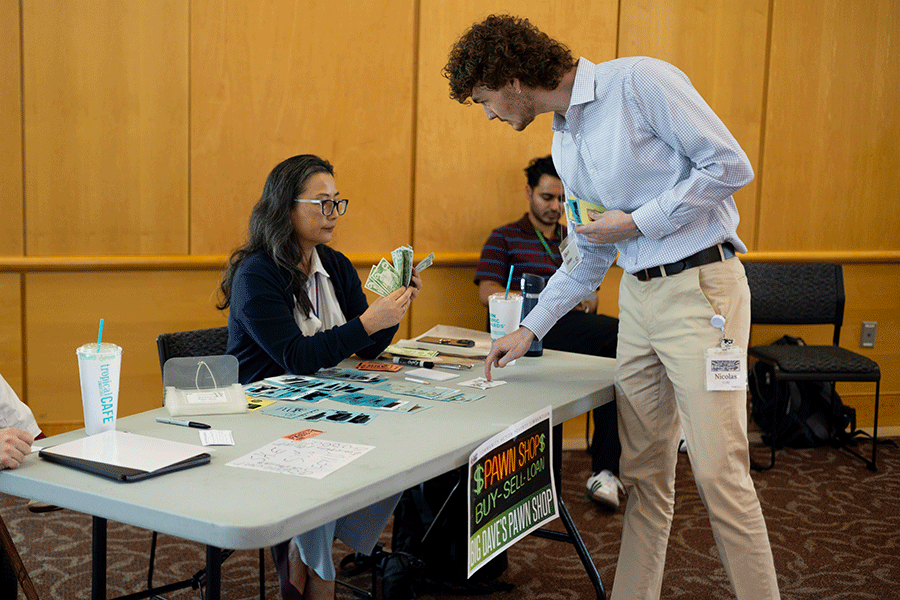
Do I buy groceries or pay the electric bill? Should I pawn some of my belongings to afford my prescription? My child is sick, so I will have to miss work to take care of him. Those are just a few of the difficult choices that OU-Tulsa health professional students confronted during the Community Access to Resources Experience. The role-playing activity challenged students to navigate the financial, family and other pressures that can affect a person’s health and ability to follow medical advice. Held annually during the SCM Institute orientation week, the experience is designed to generate understanding and build empathy.