NEWS


University of Oklahoma freshman Jack Daugard kicked a 30-yard field goal during ESPN's College Gameday broadcast, earning $200,000 from host Pat McAfee's Kicking Contest. The Houston native accomplished the feat despite having minimal prior field goal experience, turning what could have been a routine game day promotion into an exuberant moment on the South Oval.
Daugard, the first leftie to participate in McAfee’s contest, had roughly an hour’s notice before the high-pressure opportunity. To cope with the nerves, he listened to music and pet dogs that were out enjoying the GameDay festivities.
Despite his nerves, when the moment arrived, everything fell into place. "It was so crazy, I kicked it, and it looked so good," he recalled, describing everything as "surreal." The kick sent the College Gameday crowd into a frenzy and Jack’s twin brother, also an OU student, jumped the fence to join in the euphoric moment.
Jack remains remarkably grounded about his windfall. He admits he doesn't know what he'll do with the money yet, but his focus remains clear on his academic and professional goals. A freshman in the Price College of Business, he hopes to become a certified public accountant or chief financial officer down the road.
Watch the incredible kick here.
About the University of Oklahoma
Founded in 1890, the University of Oklahoma is a public research university located in Norman, Oklahoma. As the state’s flagship university, OU serves the educational, cultural, economic and health care needs of the state, region and nation. For more information about the university, visit www.ou.edu.
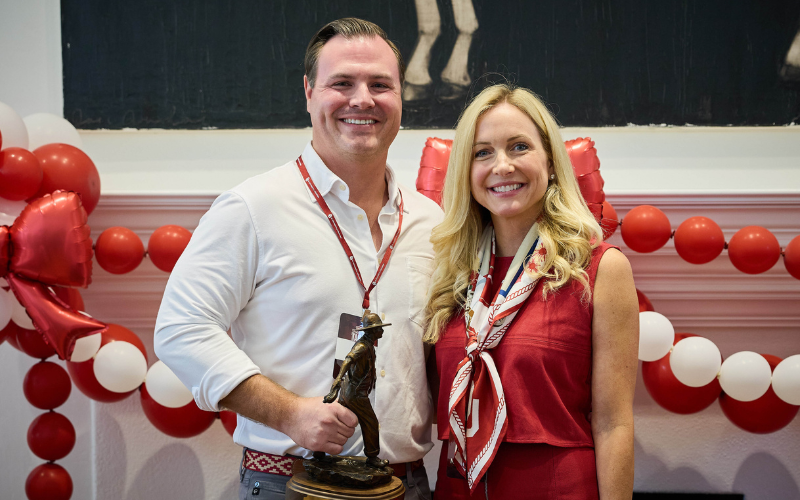
The University of Oklahoma has received a transformative gift from Jon and Shannon McCartney, which will name the McCartney Family Tunnel of Champions, the McCartney Family Gate of the Gaylord Family - Oklahoma Memorial Stadium and the McCartney Family Grand Lecture Hall in the Michael F. Price College of Business. The gift will also support the Inspiring Champions and the Athletic Director’s Discretionary Fund, in addition to establishing the McCartney DFW Career Trek program at Price College.
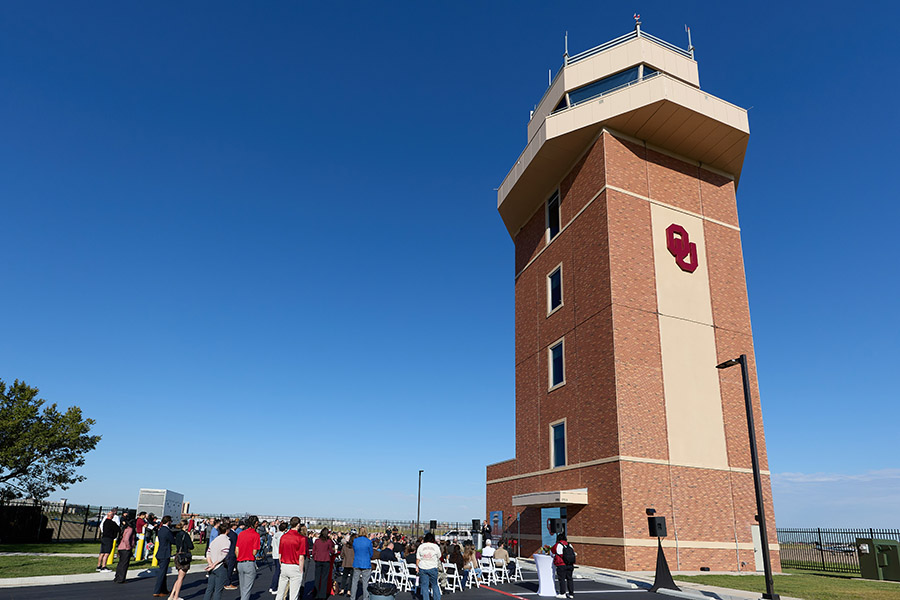
The University of Oklahoma today celebrated the opening of a new air traffic control tower at the OU Max Westheimer Airport. Standing 106 feet tall, more than double the current 52-foot facility, the new tower will modernize air traffic control operations and improve safety for pilots and students operating in the airspace.
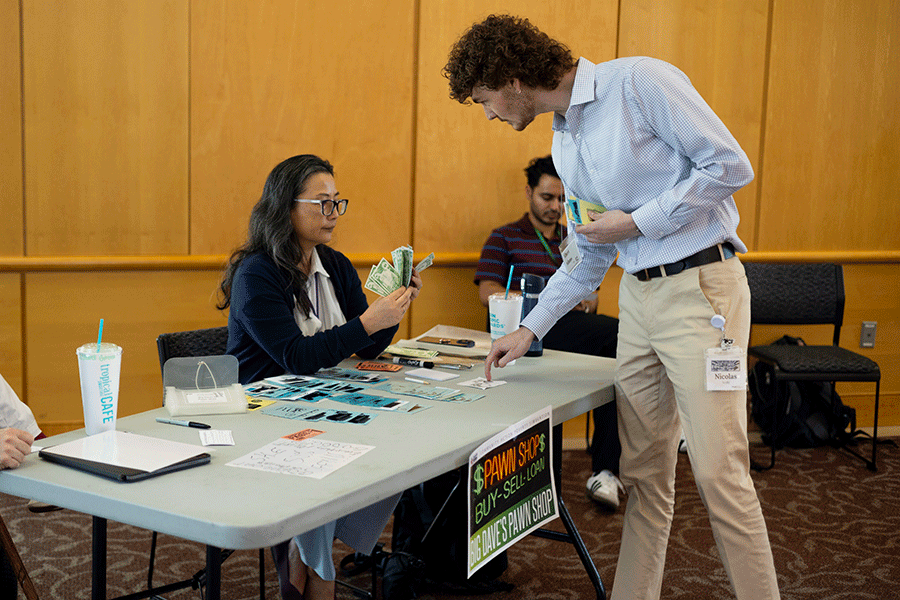
Do I buy groceries or pay the electric bill? Should I pawn some of my belongings to afford my prescription? My child is sick, so I will have to miss work to take care of him. Those are just a few of the difficult choices that OU-Tulsa health professional students confronted during the Community Access to Resources Experience. The role-playing activity challenged students to navigate the financial, family and other pressures that can affect a person’s health and ability to follow medical advice. Held annually during the SCM Institute orientation week, the experience is designed to generate understanding and build empathy.