NEWS


LAWTON, OKLA. – The University of Oklahoma Board of Regents today approved several updates to academic programs in the Fran and Earl Ziegler College of Nursing, designed to expand access, streamline degree completion, and ensure alignment with accreditation standards and workforce needs. Driven by a commitment to lift the health of Oklahoma, these updates directly support key priorities OU has set forth in its “Lead On, University” Strategic Plan.
“These program enhancements reflect the innovation and adaptability that define our approach to preparing the next generation of nurses in Oklahoma,” said Gary Raskob, senior vice president and provost, University of Oklahoma Health Campus. “From accelerating degree completion to expanding advanced practice opportunities, we are committed to meeting Oklahoma’s workforce needs while upholding the highest standards of nursing education.”
The approved modifications include the addition of a Certified Registered Nurse Anesthesia track within the Doctor of Nursing Practice program. This not only establishes the first CRNA program at a public university in Oklahoma, but it also comes as the state faces persistent serious shortages of anesthesia providers.
According to the Oklahoma Board of Nursing, 52 of Oklahoma’s 77 counties lack an anesthesiologist. At the same time, CRNAs represent more than 80% of anesthesia providers statewide and are the primary anesthesia professionals in 75 counties. By creating this pathway, the College of Nursing is directly addressing the state’s need for advanced practice anesthesia nurses, particularly in rural and underserved communities.
“As the flagship College of Nursing in Oklahoma, the Fran and Earl Ziegler College of Nursing appreciates the support of the University of Oklahoma Board of Regents of our effort to address the nursing shortage in Oklahoma, especially the shortage of certified nurse anesthesia providers” said Melissa Craft, Ph.D., dean of the Fran and Earl Ziegler College of Nursing. “This new program will provide urgently needed nurse anesthetists for Oklahoma and is particularly important for our rural hospitals.
“The impact of having more CRNAs in Oklahoma is emphasized in rural hospitals where half use a CRNA-only model for obstetric anesthesia care, and CRNAs safely deliver pain management care, saving patients long drives of 75 miles or more to obtain these services.”
In addition to revisions that align the college’s curriculum with new essentials accreditation standards by the American Association of Colleges of Nursing, the Accelerated Bachelor of Science in Nursing program will be shortened from 14 months to 12 months, allowing students to complete their degrees more quickly and enter the workforce sooner.
This fall also marks the fourth consecutive year the OU College of Nursing will accept all qualified applicants to its Bachelor of Science in Nursing program, allowing more students the opportunity to pursue a nursing career and, in turn, building up the state’s nursing workforce.
Other program updates include strengthening clinical requirements in the BSN-to-DNP program to ensure graduates meet certification and licensure standards and making graduate education more accessible by removing the admissions requirement of a prior research methodology or general statistics course.
The nursing program updates will now go before the Oklahoma State Regents for Higher Education for final approval. The CRNA program is seeking initial accreditation by the Council on Accreditation and students cannot be enrolled in the program until initial accreditation has been granted.
During the meeting, the Regents also approved:
About the University of Oklahoma
Founded in 1890, the University of Oklahoma is a public research university located in Norman, Oklahoma. As the state’s flagship university, OU serves the educational, cultural, economic and health care needs of the state, region and nation. For more information about the university, visit www.ou.edu.
The University of Oklahoma has received a transformative gift from Jon and Shannon McCartney, which will name the McCartney Family Tunnel of Champions, the McCartney Family Gate of the Gaylord Family - Oklahoma Memorial Stadium and the McCartney Family Grand Lecture Hall in the Michael F. Price College of Business. The gift will also support the Inspiring Champions and the Athletic Director’s Discretionary Fund, in addition to establishing the McCartney DFW Career Trek program at Price College.
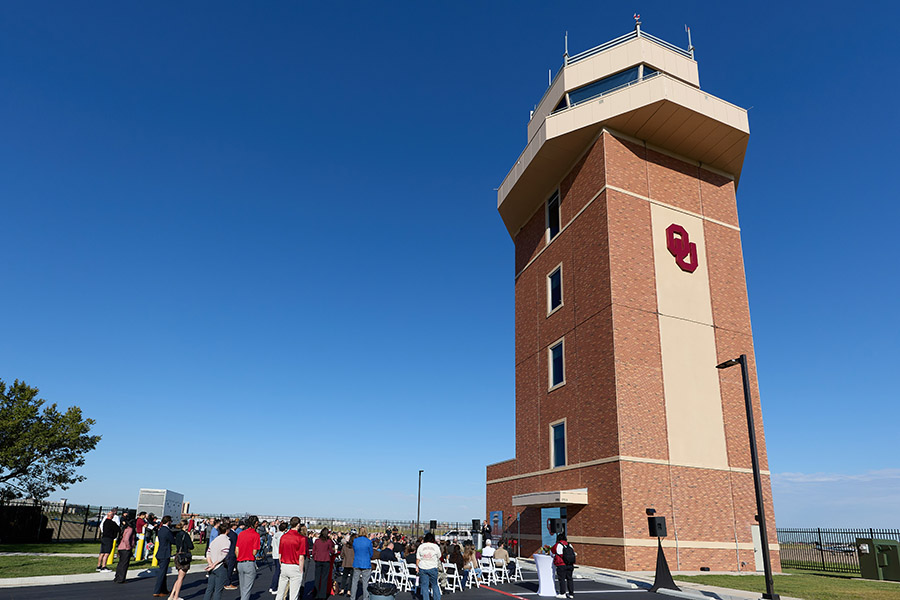
The University of Oklahoma today celebrated the opening of a new air traffic control tower at the OU Max Westheimer Airport. Standing 106 feet tall, more than double the current 52-foot facility, the new tower will modernize air traffic control operations and improve safety for pilots and students operating in the airspace.
Do I buy groceries or pay the electric bill? Should I pawn some of my belongings to afford my prescription? My child is sick, so I will have to miss work to take care of him. Those are just a few of the difficult choices that OU-Tulsa health professional students confronted during the Community Access to Resources Experience. The role-playing activity challenged students to navigate the financial, family and other pressures that can affect a person’s health and ability to follow medical advice. Held annually during the SCM Institute orientation week, the experience is designed to generate understanding and build empathy.