NEWS


NORMAN, OKLA. – The University of Oklahoma has announced Wei R. Chen, Ph.D., as director of the Peggy and Charles Stephenson School of Biomedical Engineering (SBME). He has served as Stephenson Chair and professor of SBME and became its interim director last year.
“Dr. Chen is a leader in both biomedical engineering and our OU community, and we’re pleased to have him guide our Stephenson School as it enters its next decade,” said John Klier, Ph.D., dean of the Gallogly College of Engineering.
Under Chen’s leadership, the school will continue its transformational work in health care education and research. SBME was founded in 2016 and welcomed its 10th undergraduate class this fall. Before joining the University of Oklahoma in 2020, Chen served as professor of biomedical engineering and dean of the College of Mathematics and Science at the University of Central Oklahoma.
His contributions toward cutting-edge cancer research, including the treatment of late-stage, metastatic cancers and the mechanisms behind antitumor immune responses, earned him the title of Senior Member of the National Academy of Inventors last year. Chen has also received numerous other awards and honors, including Fellow of the International Society for Optics and Photonics and Fellow of the American Institute for Medical and Biological Engineering.
About the University of Oklahoma
Founded in 1890, the University of Oklahoma is a public research university located in Norman, Oklahoma. As the state’s flagship university, OU serves the educational, cultural, economic and health care needs of the state, region and nation. For more information about the university, visit www.ou.edu.
A newly funded study at the University of Oklahoma aims to increase prostate-specific antigen (PSA) screening among Black men in Oklahoma, who die from prostate cancer at rates two to four times higher than other racial groups.
Young adults who want to quit vaping may turn to social media for support, but keeping them engaged with digital cessation programs over time can be challenging. A University of Oklahoma researcher is testing whether adding support from trained peers can help keep young adults engaged as they try to quit vaping.
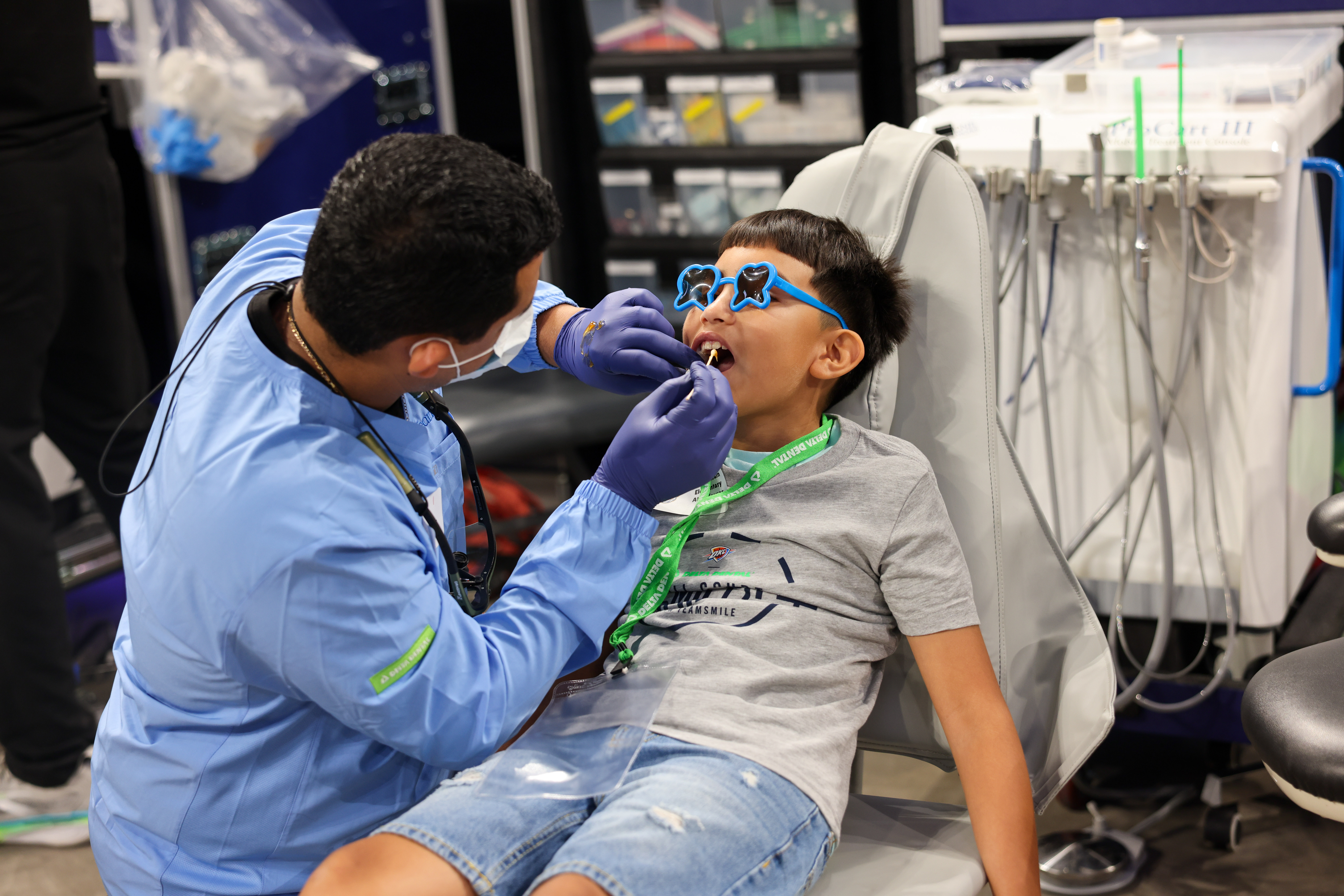
For 259 third- and fourth-graders from Oklahoma City Public Schools, a trip to the Paycom Center recently came with something more than a chance to see the home of the Oklahoma City Thunder. During the inaugural Full Court Smiles event, the students received $82,315 in free dental care from faculty, residents and students from the University of Oklahoma College of Dentistry and other dental professionals.