NEWS


NORMAN, Okla. – An international research team featuring Jessica Cerezo-Román, Ph.D., from the University of Oklahoma, has garnered headlines this year for a groundbreaking archaeological discovery in central Africa. The group’s work has led to a pledge from the government of Malawi to safeguard an ancient site home to the world’s oldest known in situ adult funeral pyre.
Cerezo-Román, an associate professor of anthropology at OU and a world-renowned expert on the study of cremated human remains, presented the findings in Malawi this summer alongside fellow researcher Jessica Thompson, Ph.D., an assistant professor at Yale University. They were joined by Malawian officials and community leaders in a roundtable discussion and a media press conference at the country’s U.S. embassy in Lilongwe.
Supported by funding from the U.S. National Science Foundation, Yale University and the University of Oklahoma, the team published their research in Science Advances earlier this year. Their efforts reveal how a 9,500-year-old hunter-gatherer community practiced intentional cremation at the base of Mount Hora. By using techniques such as sediment examination and bone fragment analysis, the group determined that an adult woman’s body had been posthumously burned.
This discovery sharply contrasts with previous ancient burials discovered at the site, where bodies were found in complete states. It also marks the earliest known evidence of cremation on the African continent.
Following the roundtable, an official with Malawi’s Department of Museums and Monuments said the country would designate the Hora 1 site as a protected monument. “That has a very direct implication to not only the protection of archaeological material, cultural property and cultural patrimony, but also to the surrounding community,” Cerezo-Román said.

She also noted that the site can be used for tourism, such as by creating a museum. These opportunities could help strengthen the economic outlook of the area.
During her Malawi trip, Cerezo-Román continued field work and laboratory analysis of other remains found at Mount Hora. As a leading international expert on the study of burned and fragmented human remains, she also used her trip to share insights from her field.
“I took the opportunity while I was doing the analysis to train local archeologists and professionals,” Cerezo-Román said. “While I was doing my research, they were helping me. But they were also learning the type of analysis that I do and its potential.”
Cerezo-Román said she anticipates publishing more findings from Malawi in the near future. She hopes that future work can have a similar impact to the Mount Hora finding, which has increased awareness of Malawi’s cultural heritage.
“When leaders protect archaeological sites as a result of my research, that, for me, has a high impact, because we are affecting and potentially improving people’s lives at the community level,” Cerezo-Román said. We are also making sure that they learn what happened to their ancestors, and who their ancestors are. And they’re excited to learn about it.”

About the University of Oklahoma
Founded in 1890, the University of Oklahoma is a public research university located in Norman, Oklahoma. As the state’s flagship university, OU serves the educational, cultural, economic and health care needs of the state, region and nation. For more information about the university, visit www.ou.edu.
From strengthening severe-weather preparedness to advancing national security, MITRE and the University of Oklahoma (OU) are joining forces to tackle some of the nation’s most critical challenges.
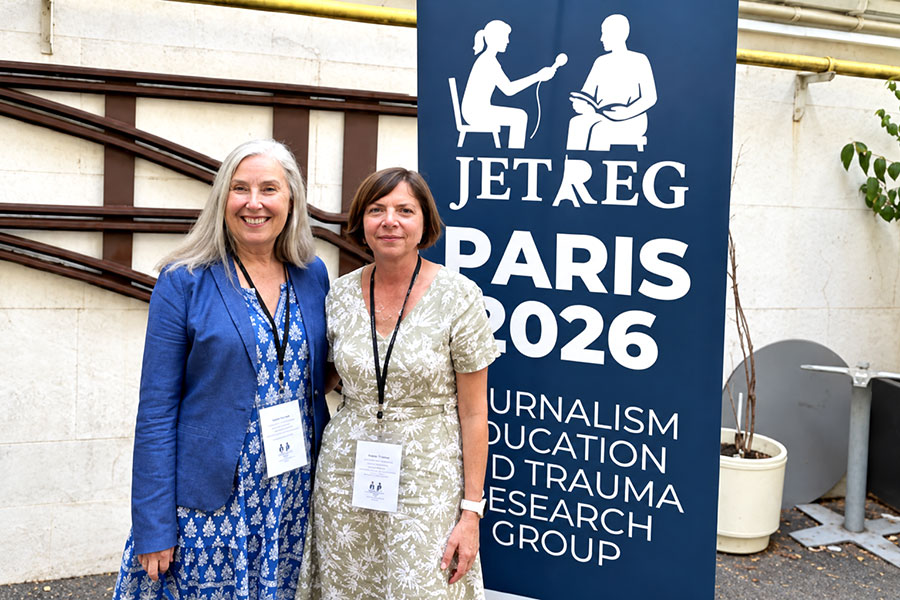
Desiree Hill was an executive producer at News 9 when the Oklahoma City bombing put local journalists in the middle of a story they would carry with them long after the coverage ended. Years later, she returned to the bombing as a researcher, interviewing journalists about its effects on their lives and work.
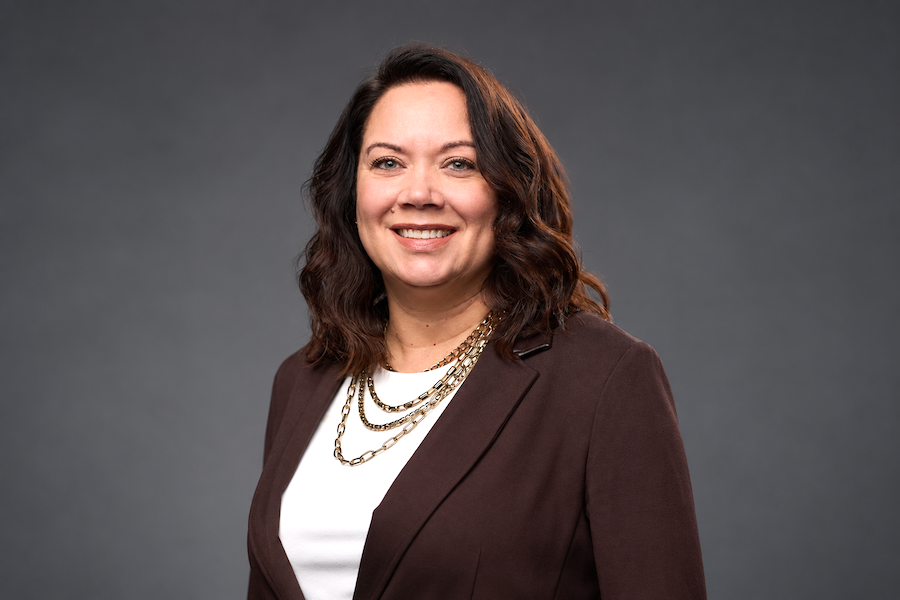
Jensen Moore, Ph.D., an associate professor of public relations at the University of Oklahoma’s Gaylord College of Journalism and Mass Communication, has been elected to a three-year term on the Association for Education in Journalism and Mass Communication’s Standing Committee on Professional Freedom and Responsibility.