NEWS


NORMAN, Okla. — A group of University of Oklahoma students spent roughly a month this spring doing something few civilians have ever done: operating a solar-powered autonomous aircraft with a wingspan comparable to a Boeing 747 as part of a record-setting flight campaign.
“It is not every day you can be part of a company's history," said Mackenzie Moore, an OU flight instructor and military aviator who served as one of the mission's air vehicle operators. "My time in the military is coming to an end, so it was very important to me to contribute to a company like Skydweller, which is making great strides in this field and will ultimately save lives or be the start of the next groundbreaking autonomous technology."
The interns — Moore, Nathan Ungetheim, Jasper Chan and Liam Thompson — filled roles as air vehicle operators, mission planners and operational meteorologists during Skydweller's Flex 26 Naval Exercise flight campaign. The aircraft, a solar-powered autonomous drone with a 236-foot wingspan, completed a flight of more than 8 days – 192 hours and 14 minutes – without landing or refueling.
Following four weeks of intensive training, Moore and Ungetheim qualified as air vehicle operators on Skydweller’s Group 5 multi-engine aircraft, placing them among a very small number of civilians trained to operate an aircraft of this class.
"Getting to be a part of this talented team that is constantly pushing the boundaries of what's possible in aviation has been incredibly rewarding," Ungetheim said. "Skydweller is an aircraft that stands alone in its capabilities, combining solar power with ultra-long-endurance flight."
The mission was operated simultaneously from three locations: an Oklahoma City mission control center, a support site in Stennis, Mississippi, and a station in Madrid, Spain. Each eight-to-ten-hour shift included a mission director, air vehicle operator, mission planner, meteorologist, flight safety engineer and administrator working in coordination across time zones.
Training took approximately four weeks. Interns shadowed experienced operators before being cleared to run shifts independently.
"We ate, breathed, and slept the aircraft flight manual," Moore said.
As mission planner, Chan — an OU air traffic management major entering his junior year — was responsible for energy modeling, flight routing and contingency planning, coordinating with air vehicle operators to anticipate weather, airspace constraints and other variables affecting the mission each day.
"Everyone had the same goal in mind: complete the mission and bring what's best to the company," Chan said. "It was a really healthy, fun workspace, people who were not only very professional and very knowledgeable, but also very positive."
Thompson, who graduated from OU's School of Meteorology this spring, joined the internship after learning about it from a faculty member. As an operational forecaster, Thompson generated forecasts at all expected flight levels and produced cloud forecasts to help the flight team optimize solar energy collection, sometimes working with limited data when the aircraft flew outside the continental U.S.
"This experience gave me an appreciation for the needs of aviation forecasting and opened my eyes to how solar-powered aircraft could be used for future meteorological field campaigns,” Thompson said.
For each intern, the opportunity drew directly on skills developed at OU, whether flight certifications, air traffic management coursework or meteorological training. The internship also surfaced feedback the students plan to bring back to OU, including a desire for earlier crossover between aviation disciplines and greater exposure to drone operations across programs.
"The University of Oklahoma provided these students with an exceptional foundation in aviation, meteorology and operational disciplines,” said Skydweller co-founder and CEO Robert Miller, Ph.D. "They arrived at Skydweller prepared to contribute and quickly earned the confidence of our flight operations team through their professionalism, technical aptitude and commitment to mission success."
About the University of Oklahoma
Founded in 1890, the University of Oklahoma is a public research university located in Norman, Oklahoma. As the state’s flagship university, OU serves the educational, cultural, economic and health care needs of the state, region and nation. For more information about the university, visit www.ou.edu.
Jensen Moore, Ph.D., an associate professor of public relations at the University of Oklahoma’s Gaylord College of Journalism and Mass Communication, has been elected to a three-year term on the Association for Education in Journalism and Mass Communication’s Standing Committee on Professional Freedom and Responsibility.
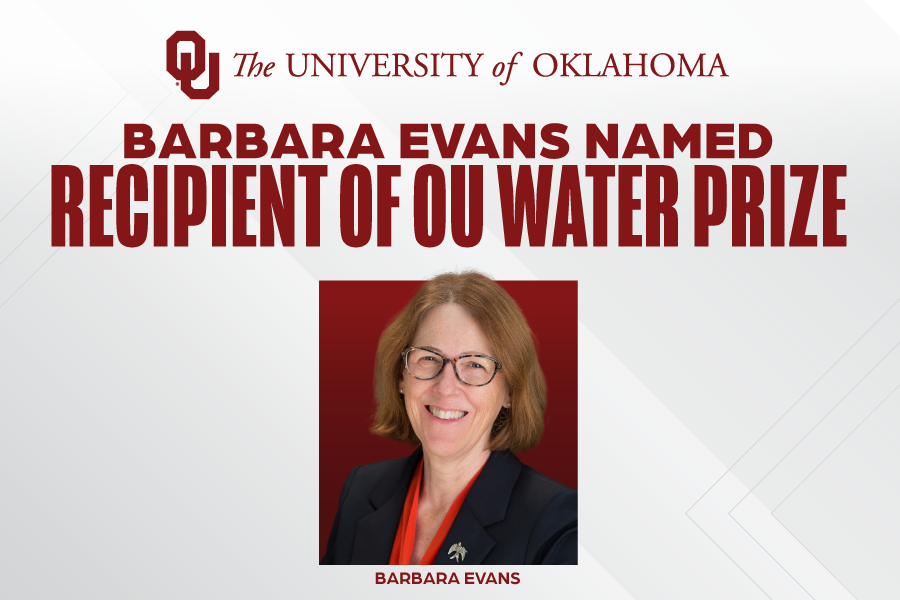
The OU Water Technologies for Emerging Regions (WaTER) Center has awarded Barbara Evans, a leader in public health engineering and urban sanitation, with the ninth International Water Prize. Her selection was announced at the 2026 OU WaTER Symoposium.
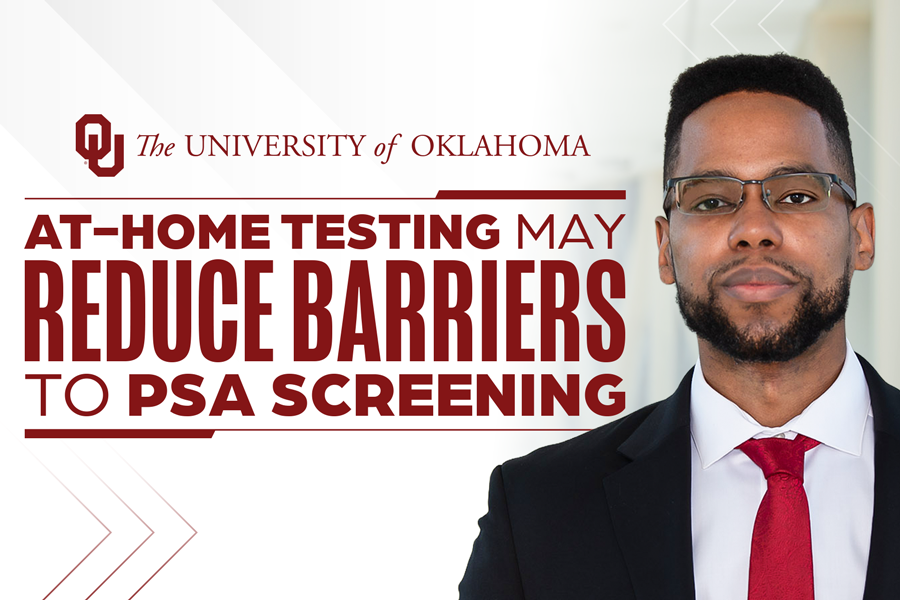
A newly funded study at the University of Oklahoma aims to increase prostate-specific antigen (PSA) screening among Black men in Oklahoma, who die from prostate cancer at rates two to four times higher than other racial groups.