NEWS


OKLAHOMA CITY – Scientists at the University of Oklahoma have identified a previously unrecognized immune system pathway that helps explain how cigarette smoking increases the risk of cardiovascular disease. The findings, published in Circulation Research, show that cigarette smoke activates immune cells that trigger widespread inflammation throughout the body, accelerating the buildup of plaque in arteries.
Cigarette smoking is a major risk factor for cardiovascular disease and is linked to heart attacks, strokes and other life-threatening conditions. While smoking’s harmful effects on the lungs are well established, the biological processes that connect cigarette smoke exposure to cardiovascular disease have been less well understood.
The new study, conducted in a mouse model of atherosclerosis, centers on neutrophils, the most abundant white blood cell in the body, whose job is to find and vanquish invading pathogens. When cigarette smoke is breathed into the lungs, researchers found that the chemicals agitate the neutrophils, which then rapidly increase in number. They make their way into the blood vessels, where they encounter macrophages, another type of white blood cell. As a result of that interaction, the neutrophils die.
Upon the neutrophils’ death, they release a number of proteins – notably Interleukin 1-alpha and Interleukin-1 beta. In turn, the macrophages become dysfunctional. When the macrophages cannot perform their function, which is to remove dead cells and bad cholesterol, the arteries become susceptible to plaque dislodging, forming a clot, and causing a heart attack or stroke. Additional risk factors, like high blood pressure, increase vulnerability.
“Smoking essentially reprograms some of our ‘first responder’ immune cells,” said the paper’s senior author, Prabhakara Nagareddy, Ph.D., a professor of medicine at the OU College of Medicine. “Instead of helping protect us, they become overactive and drive chronic inflammation inside the arteries.”
The study also had a surprising finding: The chemicals in cigarette smoke could trigger these inflammatory effects even when administered orally rather than inhaled.
“This suggests that tobacco-related chemicals can directly activate immune cells after they are absorbed into the body,” he said. “The cardiovascular effects of tobacco exposure may extend beyond inflammation that begins in the lungs.”
While the best treatment is not smoking or quitting smoking, Nagareddy said, understanding what drives chronic inflammation in the arteries is crucial. One day, that knowledge could point the way toward new therapies that reduce some of the cardiovascular damage.
“Most therapies today focus on lowering cholesterol. That’s incredibly important, but inflammation is the other half of the story,” he said. “Understanding how smoking activates inflammation could eventually help us identify new treatments that protect people who are at high cardiovascular risk.”
The research team plans to continue the work by investigating which cigarette compounds cause the most damage.
“Cigarette smoke contains more than 7,000 chemical compounds. Our next goal is to identify which ones are actually driving this harmful inflammatory response,” said the paper’s first author, Dipanjan Chattopadhyay, Ph.D., a postdoctoral researcher in Nagareddy’s laboratory.
The researchers plan to study other nicotine delivery systems, such as vaping and nicotine pouches, to see if the neutrophils react in the same way. They also plan to conduct the same studies in humans.
About the project
The paper, “Inflammasome-Primed Neutrophils Aggravate Atherosclerosis in Cigarette Smoking,” can be found at https://www.ahajournals.org/doi/10.1161/CIRCRESAHA.125.327714.
About the University of Oklahoma
Founded in 1890, the University of Oklahoma is a public research university located in Norman, Oklahoma. As the state’s flagship university, OU serves the educational, cultural, economic and health care needs of the state, region and nation. For more information about the university, visit www.ou.edu.
The University of Oklahoma has received a transformative gift from Jon and Shannon McCartney, which will name the McCartney Family Tunnel of Champions, the McCartney Family Gate of the Gaylord Family - Oklahoma Memorial Stadium and the McCartney Family Grand Lecture Hall in the Michael F. Price College of Business. The gift will also support the Inspiring Champions and the Athletic Director’s Discretionary Fund, in addition to establishing the McCartney DFW Career Trek program at Price College.
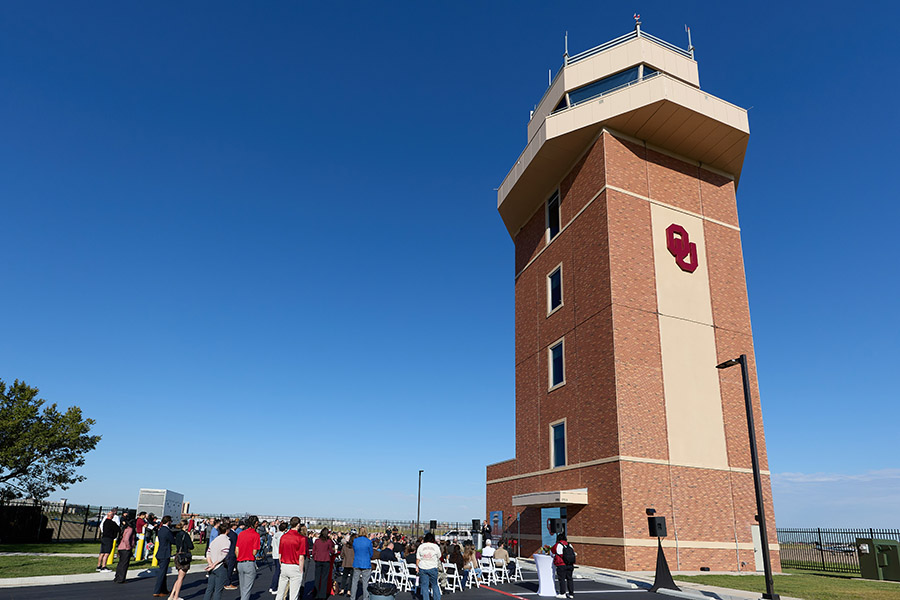
The University of Oklahoma today celebrated the opening of a new air traffic control tower at the OU Max Westheimer Airport. Standing 106 feet tall, more than double the current 52-foot facility, the new tower will modernize air traffic control operations and improve safety for pilots and students operating in the airspace.
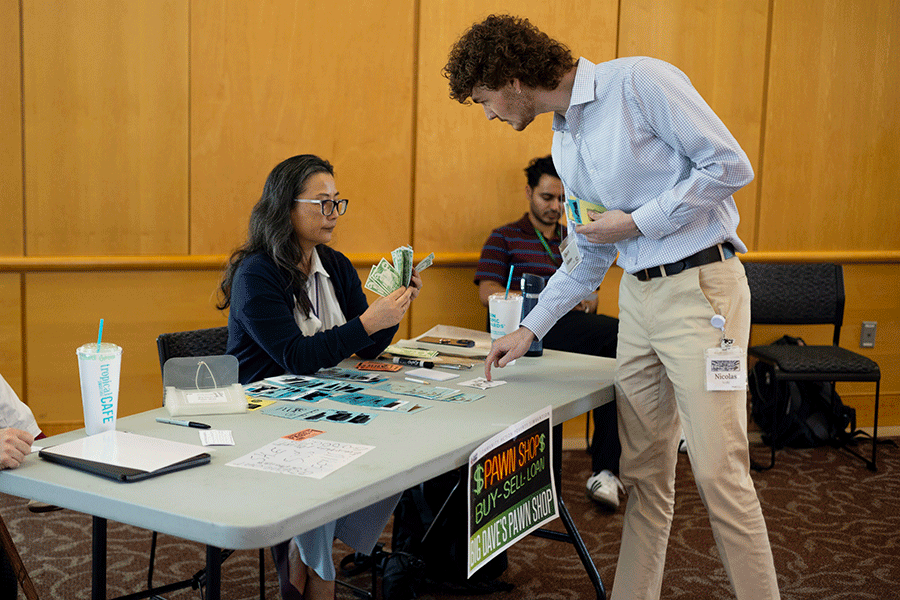
Do I buy groceries or pay the electric bill? Should I pawn some of my belongings to afford my prescription? My child is sick, so I will have to miss work to take care of him. Those are just a few of the difficult choices that OU-Tulsa health professional students confronted during the Community Access to Resources Experience. The role-playing activity challenged students to navigate the financial, family and other pressures that can affect a person’s health and ability to follow medical advice. Held annually during the SCM Institute orientation week, the experience is designed to generate understanding and build empathy.