NEWS


Norman, OK — The University of Oklahoma’s Gallogly College of Engineering is launching specialized workshops at the OU Bioprocessing Core Facility (OU BPCF), beginning Spring 2026. These workshops are designed to provide hands-on, equipment-specific training for both students and industry professionals, advancing workforce development and innovation in Oklahoma’s growing biomanufacturing and biotechnology sectors.
The initiative expands upon the OU Bioprocessing Certificate Program, a key component of the $35 million EDA grant-driven effort to strengthen workforce development and the state’s biotech ecosystem. Participants will gain practical experience using state-of-the-art bioprocessing equipment, preparing them to meet the demands of a rapidly evolving industry.
“These workshops are more than training sessions—they are an investment in Oklahoma’s future,” said John Klier, Dean of the Gallogly College of Engineering. “By equipping the workforce with advanced bioprocessing skills, we are fueling innovation, supporting industry growth, and positioning our state as a national leader in biotechnology.”
The OU Bioprocessing Core Facility serves as a regional and national resource for research, education, and industry collaboration, reinforcing OU’s commitment to driving discovery and translating innovation into real-world impact. Innovation thrives when knowledge meets application.
For more information about the OU Bioprocessing Core Facility workshops and registration details, visit the OU Bioprocessing Core Facility or contact us at bioprocessing@ou.edu
About the University of Oklahoma
Founded in 1890, the University of Oklahoma is a public research university located in Norman, Oklahoma. As the state’s flagship university, OU serves the educational, cultural, economic and health care needs of the state, region and nation. For more information about the university, visit www.ou.edu.
The University of Oklahoma has received a transformative gift from Jon and Shannon McCartney, which will name the McCartney Family Tunnel of Champions, the McCartney Family Gate of the Gaylord Family - Oklahoma Memorial Stadium and the McCartney Family Grand Lecture Hall in the Michael F. Price College of Business. The gift will also support the Inspiring Champions and the Athletic Director’s Discretionary Fund, in addition to establishing the McCartney DFW Career Trek program at Price College.
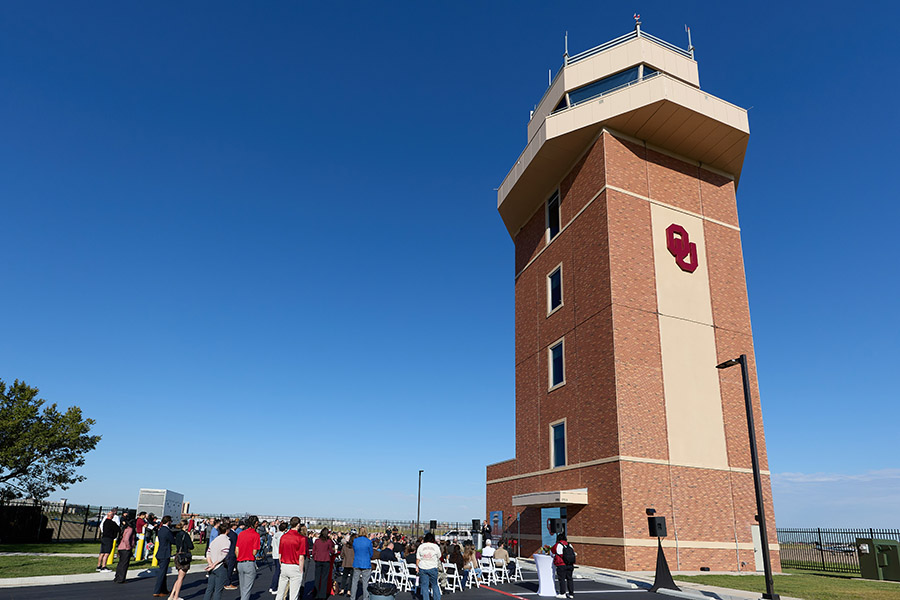
The University of Oklahoma today celebrated the opening of a new air traffic control tower at the OU Max Westheimer Airport. Standing 106 feet tall, more than double the current 52-foot facility, the new tower will modernize air traffic control operations and improve safety for pilots and students operating in the airspace.
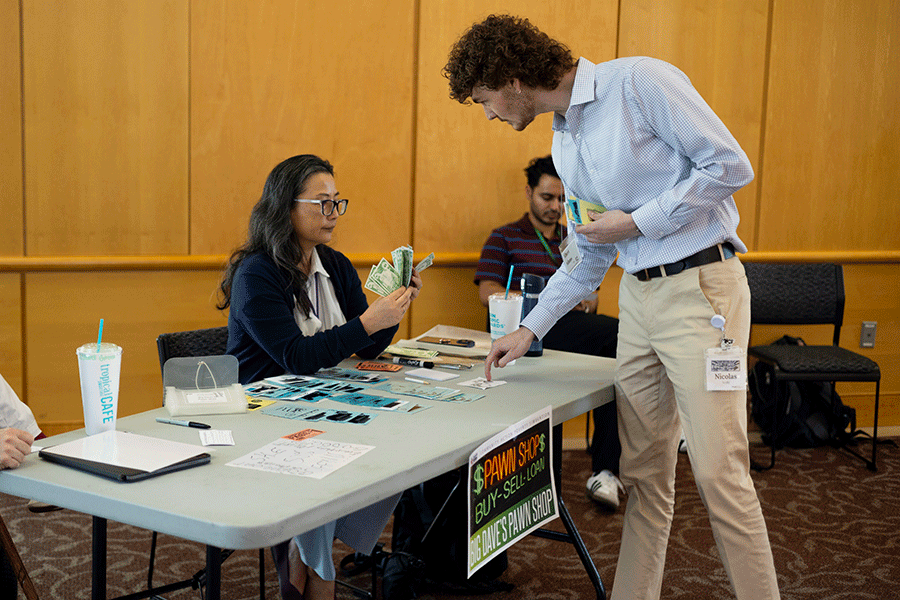
Do I buy groceries or pay the electric bill? Should I pawn some of my belongings to afford my prescription? My child is sick, so I will have to miss work to take care of him. Those are just a few of the difficult choices that OU-Tulsa health professional students confronted during the Community Access to Resources Experience. The role-playing activity challenged students to navigate the financial, family and other pressures that can affect a person’s health and ability to follow medical advice. Held annually during the SCM Institute orientation week, the experience is designed to generate understanding and build empathy.