NEWS


TULSA, OKLA. – The University of Oklahoma hosted the Ethical Tribal Engagement Series on March 5, bringing together tribal leaders, legal experts and university faculty to discuss the critical intersection of artificial intelligence, data sovereignty and tribal governance.
Titled “AI, Data Sovereignty and Tribal Issues,” the series featured a panel of three speakers focusing on the impact of new technologies on Tribal Nations and how to protect tribal data and cultural heritage.
“The Office of Tribal Relations, and specifically the Native Nations Center for Tribal Policy Research, embraces discussions around innovative technologies, such as artificial intelligence. We were excited to bring together AI, legal, and tribal experts to talk about the challenges and opportunities around AI and machine learning. Our goals for the event were twofold: that attendees learned more about tribes and university expertise, and that we helped plant a seed for future discussions about these emerging topics.” OU offers the Ethical Tribal Engagement Series to strengthen the relationships between the university and Tribal Nations. Our goal is to enhance both our current and future interactions with tribes,” said Tana Fitzpatrick, J.D., (Crow/Lakota/Ponca/Chickasaw), associate vice president of Tribal Relations and director of the Native Nations Center for Tribal Policy Research.
Matthew Beattie, Ph.D., a faculty member at the OU Polytechnic Institute and Gallogly College of Engineering, addressed the implications of AI on Tribal data sovereignty. He questioned whether platforms like ChatGPT have trained on Tribal Nations’ publicly available content, including policy documents and cultural materials. He emphasized the importance of tribal leaders understanding how AI systems collect and utilize data, urging caution in sharing sensitive information online.
AI offers increased visibility but also risks misinformation and loss of control over tribal knowledge, Beattie says. He warned that if Tribal Nations share information publicly, they should be aware that ChatGPT and similar companies use that content for training purposes.
“Do not assume the training models will get your tribe’s information right. Your tribe may lose control over its data. It’s important to remember that you can use AI while still maintaining control over your data,” Beattie said.
Warren Queton (Kiowa), District 7 legislator for the at-large Kiowa District, provided historical context on sovereignty. He addressed the challenges of the digital age, where controlling, preserving and integrating tribal data requires a collaborative approach with AI developers and policymakers. He also expressed concerns over social inequities in automated systems, particularly for tribes that may lack the technological infrastructure. “Data governance has become the next frontier. Tribes need to take action to protect our data sovereignty,” he said.
M. Alexander Pearl (Chickasaw), the Chickasaw Nation Endowed Chair in Native American Law in the OU College of Law, addressed how tribes have long navigated new technologies, often facing exploitation in the process. He recalled instances where scientists collected DNA samples from native communities under the guise of medical research, only to patent and commercialize the data without tribal consent.
Pearl stressed the need for informed regulation that includes tribal voices in AI policy discussions to prevent similar exploitation in the digital realm. He also pointed to economic opportunities, noting that AI tools could benefit tribal businesses by enhancing efficiency and development, if tribes retain control over their data.
The Ethical Tribal Engagement Series “AI, Data Sovereignty and Tribal Issues” video can be watched at https://bit.ly/4ii2YM9. To learn more about the Native Nations Center for Tribal Policy Research in the Office of the President, visit ou.edu/nativenationscenter.
About the University of Oklahoma
Founded in 1890, the University of Oklahoma is a public research university located in Norman, Oklahoma. As the state’s flagship university, OU serves the educational, cultural, economic and health care needs of the state, region and nation. For more information about the university, visit www.ou.edu.
The University of Oklahoma has received a transformative gift from Jon and Shannon McCartney, which will name the McCartney Family Tunnel of Champions, the McCartney Family Gate of the Gaylord Family - Oklahoma Memorial Stadium and the McCartney Family Grand Lecture Hall in the Michael F. Price College of Business. The gift will also support the Inspiring Champions and the Athletic Director’s Discretionary Fund, in addition to establishing the McCartney DFW Career Trek program at Price College.
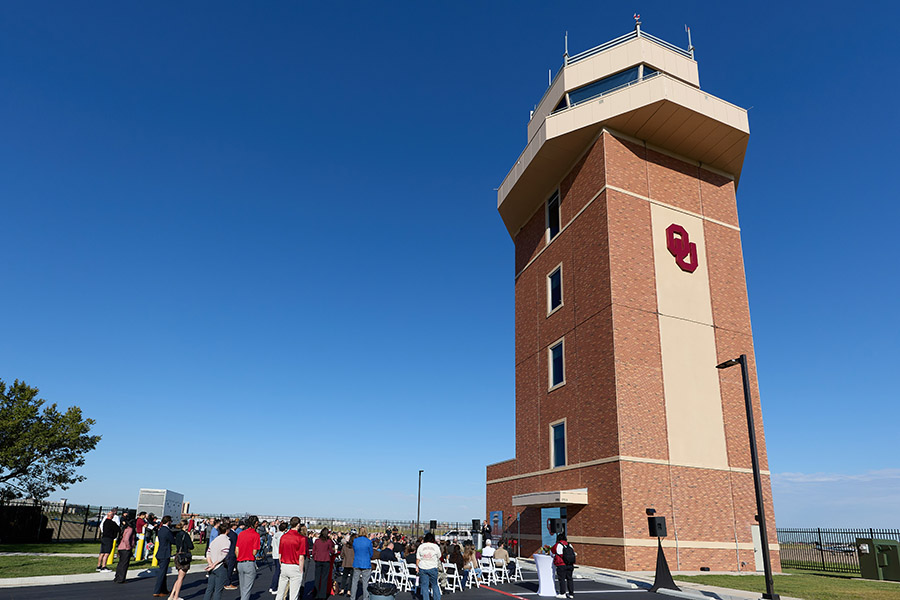
The University of Oklahoma today celebrated the opening of a new air traffic control tower at the OU Max Westheimer Airport. Standing 106 feet tall, more than double the current 52-foot facility, the new tower will modernize air traffic control operations and improve safety for pilots and students operating in the airspace.
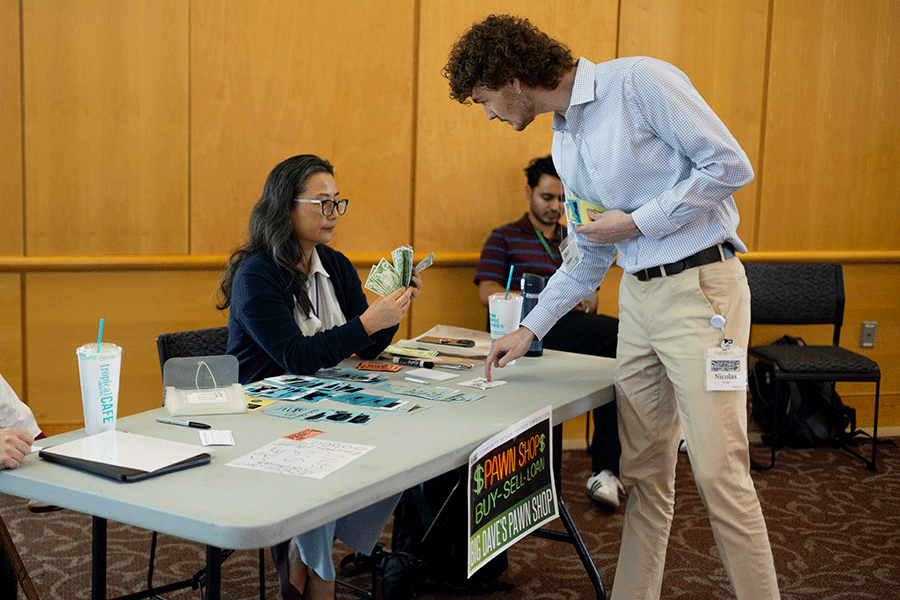
Do I buy groceries or pay the electric bill? Should I pawn some of my belongings to afford my prescription? My child is sick, so I will have to miss work to take care of him. Those are just a few of the difficult choices that OU-Tulsa health professional students confronted during the Community Access to Resources Experience. The role-playing activity challenged students to navigate the financial, family and other pressures that can affect a person’s health and ability to follow medical advice. Held annually during the SCM Institute orientation week, the experience is designed to generate understanding and build empathy.