

The School of Civil Engineering and Environmental Science is at the forefront of innovation, offering comprehensive degree programs in Civil, Architectural, Environmental Engineering, and Environmental Science. Our curriculum is designed to equip students with the skills and knowledge to address the challenges of modern infrastructure, sustainable design, and environmental stewardship.
Our students find fulfilling careers in all three major sectors of engineering and scientific practice—government, private consulting, and industry—and address some of the most pressing infrastructure and environmental issues facing the world.

At the heart of our program is a distinguished faculty—leaders in their fields—who empower students with the knowledge, skills, and experiences needed to thrive in the workforce or excel in graduate studies.

Our undergraduate and graduate programs are thoughtfully designed to prepare students for successful careers and meaningful lives. We support a well-rounded education through engaging student life and committed staff.
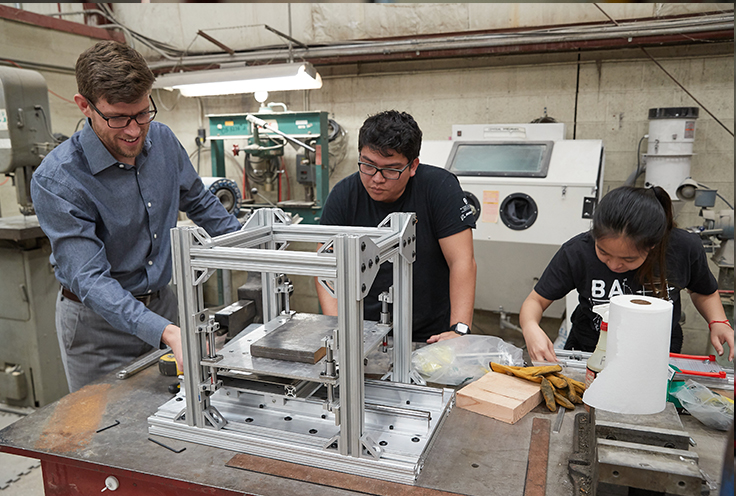
Our faculty and students actively engage in interdisciplinary research collaborations—both across campus and with partner institutions—while also leading the way in educational innovation.
Architectural engineers design buildings that are visually appealing, structurally sound, energy-efficient, and cost-effective. They integrate mechanical, electrical, and plumbing systems so everything works seamlessly, with a strong focus on innovation, safety, and sustainability.
Civil engineering, the oldest modern engineering discipline, shapes the built environment we rely on every day. Civil engineers design and build essential infrastructure—from highways and bridges to water systems and transit networks—that supports modern society.
Environmental engineers use physics, biology, and chemistry to tackle today’s most urgent environmental challenges. Their work includes water and wastewater treatment, air quality, waste management, recycling, and sustainable resource systems—creating a cleaner, healthier world for future generations.
Environmental scientists protect natural resources and public health by monitoring air, water, and soil quality, ensuring compliance with environmental regulations, and working with communities to address local environmental challenges.

September 16, 2026
Ms. Faith Gachunga, an undergraduate junior in the School of Civil Engineering and Environmental Science (CEES), has received the OU Provost’s First-Generation UReCA Fellowship in recognition of the exceptional merit of her research proposal.
