The Hydrometeorology and Remote Sensing (HyDROS) Laboratory is a transdisciplinary research group at the University of Oklahoma, headquartered in the National Weather Center in Norman, Oklahoma. The lab maintains close partnerships with the Advanced Radar Research Center, the WaTER Center (Water Technologies for Emerging Regions), the Center for Analysis and Prediction of Storms, the School of Meteorology, and the School of Civil Engineering & Environmental Science.
HyDROS operates at the nexus of remote sensing technology, hydrology, weather, and climate, advancing science that translates Earth observations into predictive understanding and actionable societal decision-making. Our research spans a broad range of spatial and temporal scales—from local watersheds and urban environments to regional, continental, and global systems—supporting modeling, forecasting, and risk assessment in both data-rich and data-scarce regions worldwide.

Dr. Yang Hong was recently featured in the IEEE Geoscience and Remote Sensing Society Professional Member Spotlight for his transdisciplinary contributions to global precipitation measurement, remote sensing hydrology, and hydrologic hazard prediction.
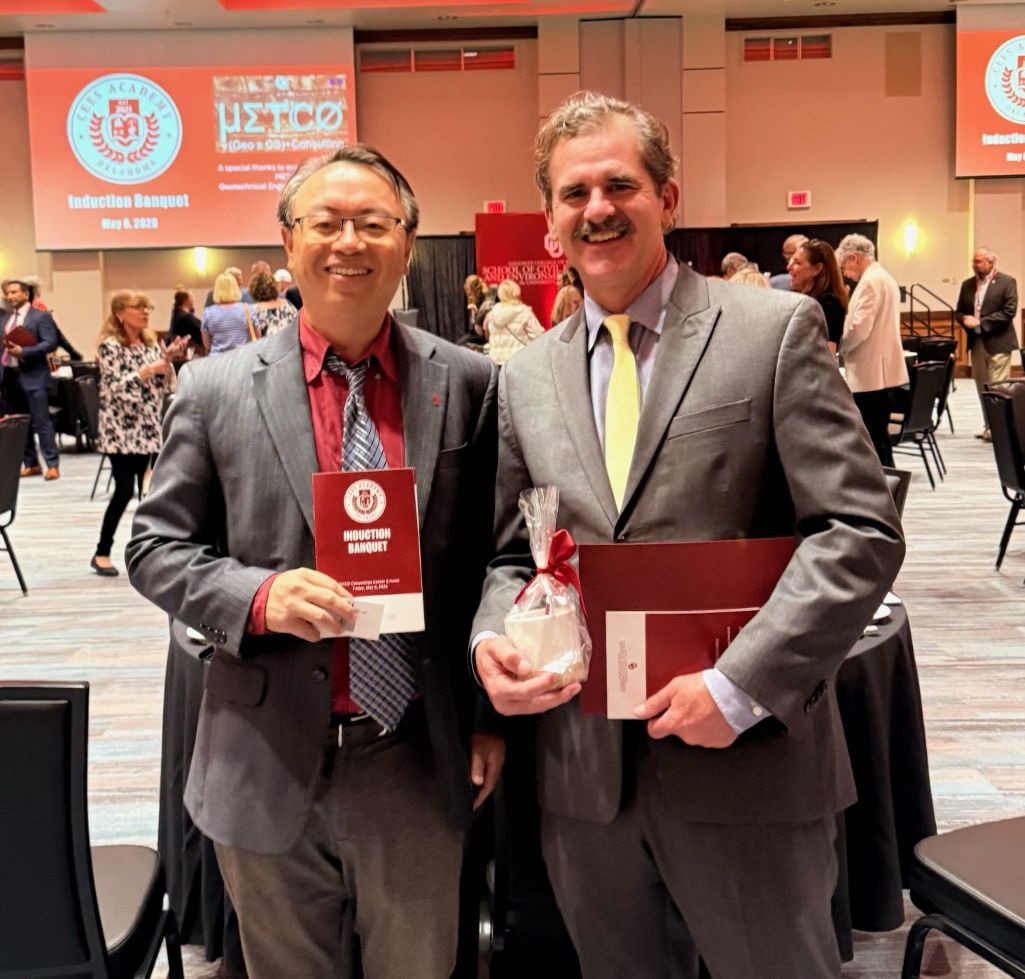
Congratulations to Dr. Jonathan "JJ" Gourley on his induction into the University of Oklahoma Civil Engineering and Environmental Science Academy!
Abbey Snooks, a junior majoring in Environmental Science at the University of Oklahoma, has been selected as a recipient of the 2026 Provost’s Summer Undergraduate Research and Creative Activity (UReCA) Fellowship. Her proposal was chosen from 127 high-quality submissions through a highly competitive selection process.
NORMAN, OK — OU News recently highlighted a HyDROS study, A Review of the Past Half Century of Geostationary Satellite Thermal Observations for Global Precipitation Estimation: Developments, achievements, and future prospects, in a press release.
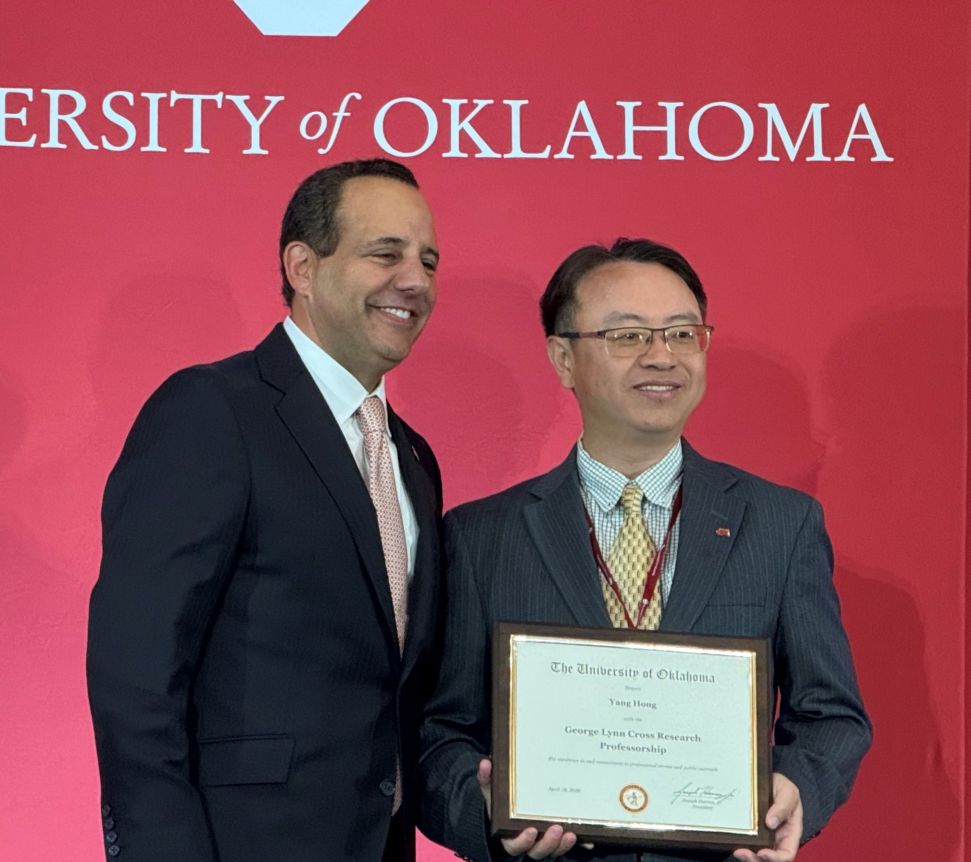
NORMAN, OK — The University of Oklahoma has named Professor Yang Hong a recipient of the prestigious George Lynn Cross Research Professorship, the university’s highest honor for research and creative activity. The distinguished professorship recognizes faculty members who have demonstrated exceptional and sustained excellence in scholarship, placing them among the institution’s most accomplished researchers. Recipients are selected based on their national and international impact, scholarly productivity, and contributions to advancing knowledge.
HyDROS researchers seek to observe, understand, and predict the storage, movement, and quality of water across space–time scales by integrating advanced sensing technologies with physically based and data-driven predictive models. Our work emphasizes end-to-end frameworks that connect observations, models, and decision support.
The mission of HyDROS is to develop technological and scientific solutions that mitigate the impacts of climate change and natural hazards through interdisciplinary research and education. We leverage state-of-the-art remote sensing, information technology, and hydrologic modeling, working in close collaboration with public agencies, private industry, and international partners to advance water security and societal resilience.
We pursue this mission through transdisciplinary research and education involving faculty, students, and scientists from engineering, natural sciences, mathematics, and socioeconomic disciplines, as well as sustained collaboration with universities, government agencies, industry, and global partners.
HyDROS is always seeking motivated and curious students and researchers interested in hydrology, remote sensing, and Earth system science. We have advised students from Civil Engineering, Hydrology (Water Resources Engineering), Environmental Science (Water Track), Geography, Meteorology, Computer Science, and Geoinformatics.
For general information on graduate programs, please visit the OU Graduate College and the relevant academic departments for application materials.