

The Resilient Futures Symposium brings together experts from across the University of Oklahoma (OU) campus to share recent research and explore ways our environments may be adapted to facilitate wellbeing for both people and planet.
Feature Image: Bicyclists at Smithson’s Spiral Jetty, 2014, Todd Stewart, OU School of Visual Arts
April 13-14, 2022
The Resilient Futures Symposium is part of the Spring 2022 course “Resilient Futures” (ARCH 4970/5970), taught by Dr. Angela Person and Dr. Stephanie Pilat with assistance from PhD student Felipe Flores. The symposium was made possible with support from the OU Gibbs College of Architecture Bruce Goff Chair of Creative Architecture, as well as the OU Institute for Resilient Environmental and Energy Systems, OU Arts and Humanities Forum, OU Data Institute for Societal Challenges, OU Institute for Community and Society Transformation, and OU School of Visual Arts.
Changes in the earth’s climate necessitate a critical rethinking of how and where we live in order to imagine a more resilient and sustainable future for humans, plants and animals. As severe weather intensifies, coastlines erode, forests burn, and water sources evaporate, millions of people are already being forced to migrate in search of habitable environments. Meanwhile, communities and economies must prepare for the devastating impacts of declining crop yields in the face of climate change. International conflicts are increasingly born out of fight for diminishing resources resulting from environmental impacts of climate change. Human migration, urbanization and development is resulting in an encroachment on animal habitats that has brought mankind into greater contact with animal species. The rise of inter-species contact precipitates a rise in the transmission of diseases across species most notably evident in the covid-19 pandemic. These events unfolding around the world have made clear that in addition to trying to slow climate change, we need to think about how to adapt to it. As Martin Pederson and Steven Bingler put it, “If Plan A was to prevent, or at least mitigate, the most serious impacts of climate change, what’s Plan B?” How can we imagine a more resilient future?
The dramatic effects of climate change demand a rethinking of how we inhabit the planet: where we live, how we utilize natural resources, and how we co-exist with other species. To date, however, much effort has been dedicated towards mitigating the effects of climate change by reducing dependence on fossil fuels, developing more sustainable energy sources, rethinking manufacturing and waste cycles and more. Despite these efforts, the facts are clear. The planet is warming. As the OU VPR Strategic Plan describes, “The Global Risks Report 2020 of the World Economic Forum identified extreme weather, climate action failure, natural disasters, biodiversity loss, and human- made environmental disasters as the top five global risks.” Alongside efforts to slow climate change, we must also turn our attention and energy to planning for how to best live with its inevitable effects. While mitigation efforts should continue; we must plan for a future defined by mass migrations of species. Where will we live next? Is it possible, for example, for climate refugees to re- occupy post-industrial cities or rural towns that have lost population? How do we support health and well-being amid such drastic change?
Join us for a full day of presentations and panel discussions exploring the latest research and interdisciplinary approaches to answering these critical questions and more about climate change, migration, and habitation.
Columbia University
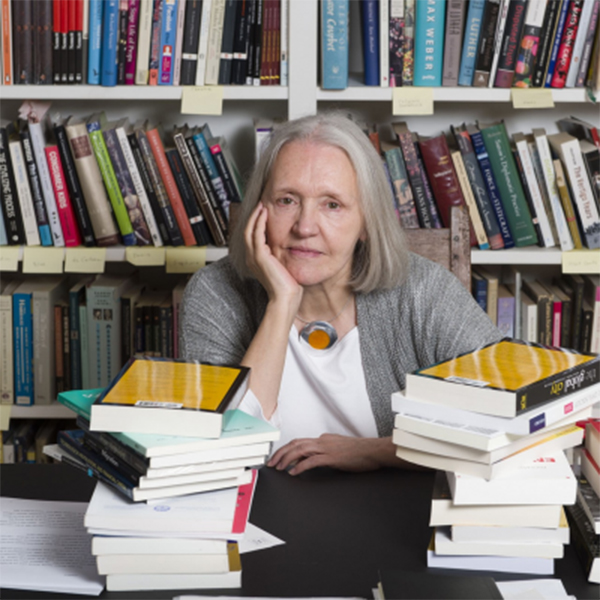
Saskia Sassen is the Robert S. Lynd Professor of Sociology and former Chair of The Committee on Global Thought, Columbia University. She is the author of several major books. Among them are ”Territory, Authority, Rights: From Medieval to Global Assemblages” (Princeton University Press 2008), “A Sociology of Globalization” (W.W.Norton 2007), and the 4th fully updated edition of “Cities in a World Economy “(Sage 2011). “The Global City” came out in a new fully updated edition in 2001. Her books are translated into twenty-one languages. She is currently working on “When Territory Exits Existing Frameworks” (Under contract with Harvard University Press).

North Carolina State University
Dr. Traci Rose Rider is Assistant Professor at NC State University’s College of Design and faculty in the PhD in Design and Doctor of Design programs. She is an Interdisciplinary Research Leaders Fellow with the Robert Wood Johnson Foundation focusing on how the built environment in an underresourced community can increase positive health outcomes for students, staff, parents, and the community. She has two books on green building guidelines and materials, with another book just published on healthy building guidelines for design practitioners. Her focus is on interdisciplinary work addressing larger issues of health and sustainability.
Speakers are listed in alphabetical order.
"Climatically Responsive Landscape Architecture Design and Research"
Wenwen Cheng is an assistant professor of Landscape Architecture. Wenwen Cheng uses interdisciplinary technologies such as remote sensing, spatial statistics, and bio- meteorological modeling to discover the relationship between urban climate change, human health, and evidence-based landscape design. Her research area includes human outdoor thermal comfort; urban landscape ecology and urban heat island phenomena at different scales.
Climate change and extreme heat place a severe toll on American cities. Outdoor environments can be modified through climatically responsive landscape design and planning (CRD). Through heat vulnerability index, children’s thermal comfort model, and neighborhood microclimatic study, this presentation demonstrates heat vulnerable locations, populations, and CRD strategies.
“Urban Growth and Housing Models for Climate Migration Scenarios”
Francesco Cianfarani is an Assistant Professor of Architecture at the Christopher C. Gibbs College of Architecture at the University of Oklahoma. He holds a PhD in Architectural and Urban Design at Sapienza, University of Rome. His research and creative activity focus on urban design and housing.
The talk introduces predicted urban growth and densification models in response to domestic climate migration in the US. Potential of existing urban areas in Oklahoma will be discussed, considering relationships between existing infrastructure and different scales of the built environment.
“Imagining Urban Futures: Adaptation and the Politics of Possibility in Jakarta”
Emma Colven is Assistant Professor of Global Environment in the International & Area Studies Department and affiliate faculty member of the OU Gibbs College of Architecture in the Division of Regional & City Planning. As an urban geographer and political ecologist, her research explores themes of water politics, real estate and urban development, and adaptation.
In 2020, the Indonesian President announced that the nation’s capital would be relocated away from Jakarta to East Kalimantan. His decision seemed to confirm what the media have already long been speculating: Jakarta is doomed. I reflect on the use and work of dystopian climate imaginaries, and what it means to forecast disaster and uninhabitability for cities that for many will continue to be home.
“Centering Social Justice While Planning for our Climate Future”
Simone Domingue is a social scientist who specializes in hazards and disasters, climate change adaptation, and environmental justice. Her research critically examines disaster resilience initiatives, disaster aid programs, and Louisiana’s response to climate change and coastal land loss. Her work also investigates how to equitably build local capacity for adaptation.
Many communities are tired of the trope of “resilience.” Drawing from theory and research, I elaborate on the pitfalls of resilience discourse, enumerate equity issues that are embedded in societal adaptation to climate hazards and disasters, and discuss building resilience in ways that center social justice.
“Intelligent Human-Computer Teaming for Resilient Communities”
David S. Ebert is an Associate Vice President for Research and Partnerships, the Gallogly Chair Professor of electrical and computer engineering, and Director of the Data Institute for Societal Challenges (DISC) at the University of Oklahoma in Norman, OK, USA. He is the recipient of the 2017 IEEE Computer Society vgTC Technical Achievement Award, member of the IEEE vgTC Visualization Academy, an adjunct Professor of electrical and computer engineering with Purdue University, and the Director of the Visual Analytics for Command Control and Interoperability Center (VACCINE), the Visualization Science team of the Department of Homeland Security’s Visual Analytics and Data Analytics Emeritus Center of Excellence. He received his Ph.D. in computer and information science from The Ohio State University, Columbus, OH, USA, and performs research in visual analytics, novel visualization techniques, interactive machine learning and explainable AI, human–computer teaming, advanced predictive analytics, and procedural abstraction of complex, massive data. He is also the IEEE Computer Society Vice President for Publications and a Board of Governors Member, as well as an IEEE Ethics and Membership Conduct Committee Member.
We have an opportunity to improve our resiliency through combining advanced human-guided analytics and artificial intelligence for better planning, preparation, operation, and response to short-term and long-term challenges facing our communities and businesses from our changing environment. In this talk, I’ll describe our work, challenges, and opportunities.
“Urban Climate Resilience: Multi-Scale Planning Model for Urban Heat Islands and Street Canyons to Address Air Quality Issues related to Urban Form and Related Health Outcomes”
Dr. Lee Fithian's research and teaching efforts focus on the application of biological and ecological models to architectural design. She builds connections between interdisciplinary research and the built environment to protect human health, and to conserve and regenerate air and water in cities and buildings.
Urban planning and design guidelines lag considerably behind the growing science of climate change and are inadequate in considering multi-parameter heat-related and air quality health risks. Evaluating and predicting the impact of urban planning and design at different scales in mitigating future heat stress and air quality is critical to developing effective policy interventions and public health guidance. This problem creates a critical need to investigate the physical characteristics contributing to the vulnerability of our urban populations and provide design interventions to mitigate the problem. Evidence-based, climate-resilient urban planning and design is essential to resolve and mitigate global challenges. This presentation involves the VPRP funded Big Idea Challenge XGEM core working group and specifically our teams’ interactions and contributions to the project. Our team investigated Urban morphology, UHI and human health. We are seeking to reveal the relationship between urban morphology (land surface cover and land use, street canyon configurations, building facets), UHI, and human health within the urban boundary layers through the development of an urban canyon lab, and studying communities in Oklahoma City.
“Indigenous Engagement in Adaptation Planning”
Dr. Sharon Hausam is a Climate Adaptation Planner and Research Scientist with the South Central Climate Adaptation Science Center at the University of Oklahoma. Her professional practice and research focus on community-based and collaborative climate adaptation planning in and with Indigenous and historically-marginalized communities.
Dr. Sharon Hausam will discuss the significance of and some challenges to equitable climate adaptation planning for and with Indigenous communities, focusing on tribal sovereignty, data sovereignty and traditional knowledges, and community-based and collaborative planning processes as tools for decision-making and implementation.
“Engaging Communities for Resilient Futures”
Vanessa Morrison is the Associate Director of the Institute for Quality Communities at the Christopher C. Gibbs College of Architecture and teaches in the Environment Design program. Vanessa is a social impact planner and activist who works to support the spatial needs of marginalized communities.
Through a case study of the town of Tullahassee, Oklahoma’s oldest, surviving Black township, this talk will explore how community engagement can be used as a tool to learn from communities while empowering them to address near and long-term climate challenges.
“Well-being in rural America: Trends, Challenges, and Opportunities”
Tom Mueller is a Research Assistant Professor of Geography and Environmental Sustainability at OU. As a rural sociologist and demographer, he uses quantitative approaches to understand why some places are worse off than others, and what we can do to fix that. His work is frequently tied to issues of the natural environment including water quality, natural resource development, and nature-based tourism.
Rural America has faced persistent difficulties over the past fifty years. Due to economic restructuring, migration, and other factors, many dimensions of well-being remain worse in rural America than in urban areas. Although difficulties persist, these areas are resilient and remain clear avenues for positive change.
“City climate adaptation planning: A health equity and environmental justice issue”
Lauren Mullenbach is an assistant professor in the Department of Geography and Environmental Sustainability at OU. She is a scholar of urban environmental justice, focused on climate adaptation, green space development, gentrification, and wellbeing. Her current work focuses on equitable green space planning; city climate change planning; and homelessness.
This talk will cover climate adaptation planning in U.S. cities, ways they are–and are not–equitable, and will briefly present a paper on health equity and other unintended consequences, such as gentrification, that arise from city climate plans.
“Feminization of Survival Migration: Cases of Refugees and Human Trafficking Victims”
Dr. Noyori-Corbett’s activities are embedded within a social research and development (SRD) framework. The social problem she has been conceptualizing and investigating is one of women and families in distress as a result of transition in their lives, both in time and space. Populations she has investigated thus far include female sex trade human trafficking victims, and refugee women.
This presentation summarizes the presenter’s research investigating the vulnerability of women in this era of globalization, who leave their countries of origin and resettle in countries in the Global North. The cases of human trafficking in Japan and Myanmar refugee women in the United States will be explored. The presenter will introduce the current plan via her transdisciplinary research team to initiate their Humanitarian Innovation Center for better resettlement model creation.
“‘Things are not balancing out’ – Perceptions of a changing climate among Native agriculturalists and traditionalists in southwestern Oklahoma”
Randy Peppler is Associate Director for CIWRO and Instructor in the Department of Geography and Environmental Sustainability. He worked with Native agriculturalists and traditionalists in southwestern Oklahoma on how they know and conceptualize weather and climate in various ways, including cultural, and researched local ways of knowing about tornado risk.
In 2008-11, Peppler conducted research to understand how Native American agriculturalists and traditionalists in southwestern Oklahoma conceptualize weather and climate in local and cultural ways and to learn their thoughts and perceptions on climate change and its potential impacts on their agricultural and cultural activities.
“Climate Change and Its Implications for the United States and Oklahoma”
Rachel Riley is the Director of the Southern Climate Impacts Planning Program at the University of Oklahoma. She has over a decade of experience co-producing useful and usable research and information that helps communities plan for and respond to climate-related challenges. She holds a B.S. in meteorology (Iowa State University) and an M.S. in interdisciplinary studies (communication and meteorology; University of Oklahoma).
This presentation will begin with a brief overview of climate change. Next, historical trends, future projections, and impacts for the United States will be described before focusing on Oklahoma. Some examples of how researchers and practitioners are working to address the climate-related challenges we face will be shared.
“Destiny Manifest: An Intertextual Reading of the Desert West”
Todd Stewart is Associate Professor of Art, Technology, and Culture at the University of Oklahoma where he teaches courses in photography and imaging. He is the author of two books: Placing Memory: A Photographic Exploration of Japanese American Internment (2008) and Picher, Oklahoma: Catastrophe, Memory, and Trauma (Co-author Alison Fields, 2016).
As a photographer, I have explored the American desert for over two decades. Although each site I visit is unique and layered with its own set of histories, narratives, ideologies, etc., they are all interconnected. A reading of one landscape informs and contextualizes the reading of another and vice versa.
“Agency, Trust, and the Road to Recovery”
Xiaochen Angela Zhang (Ph.D., University of Florida) is an assistant professor in public relations at Gaylord College of Journalism and Mass Communication at OU. Her research focuses on understanding how publics process crisis and risk information, the role of online discourse in shaping collective understanding and sense of community, how to increase individual and community resilience, and the ethical challenges of these areas.
The presentation will discuss the idea of “soft power” of a resilient future with a particular focus on individual and community resilience perceptions. The presentation will articulate the need for and importance of resiliency cultivation and will discuss ways to increase individual and community resilience vis-à-vis results of a few research studies on disaster and pandemic resilience.
Daniel Butko is an Associate Professor of Architecture in The University of Oklahoma Christopher C. Gibbs College of Architecture. Daniel’s academic and professional experience spans over 30 years in all phases of design, client management, construction administration, and acoustical consultation which culminate in teaching and research focused on architectural acoustics, material science, and data-driven design.
Dr. Connelly is an Industrial/Organizational (I/O) Psychologist who has conducted basic and applied research projects related to effectiveness and ethical functioning of leaders and employees in the workplace.
My group studies the fundamental processes controlling carbon and nitrogen cycling in soil, litter, and streams within both natural and managed ecosystems. Much of our recent work focuses on soil dynamics within intensively managed landscapes stretching from the coastal irrigated deserts in Peru, to the plains of Northeast China, to the agricultural fields of the glaciated Midwest of the United States.
Kimberly Marshall is an Associate Professor of Anthropology at the University of Oklahoma. She is a cultural anthropologist who specializes in the study of Native North American cultures and in the anthropology of religion and expressive culture. She is particularly interested in the places where all of these interests converge, as they did in the Navajo-led Pentecostal tent revivals that informed her first book.
Dr. Angela M. Person is Director of Research Initiatives and Strategic Planning for the Gibbs College of Architecture at the University of Oklahoma and a lecturer in the OU Department of Geography and Environmental Sustainability. Dr. Person’s research looks at relationships between social and material conditions and individual, community, and public identities.
Stephanie Z. Pilat is the Director of the Division of Architecture in the Christopher C. Gibbs College of Architecture at the University of Oklahoma. Pilat is a designer and writer whose teaching and research examines points of intersection between politics and architecture.
Gibbs College Director of Research Initiatives and Strategic Planning
Director of the Division of Architecture
Associate Professor of Architecture
PhD Student
The Resilient Futures Symposium is made possible with support from the OU Gibbs College of Architecture Bruce Goff Chair of Creative Architecture, as well as the OU Institute for Resilient Environmental and Energy Systems, OU Arts and Humanities Forum, OU Data Institute for Societal Challenges, OU Institute for Community and Society Transformation, and OU School of Visual Arts.
