NEWS


NORMAN, OKLA. – Rakhi Rajan, an associate professor of chemistry and biochemistry at the University of Oklahoma, has received a renewal grant from the U.S. National Science Foundation to improve the accuracy of CRISPR-Cas technologies.
CRISPR, or Clustered Regularly Interspaced Short Palindromic Repeats, is a tool that allows scientists to edit the DNA of living organisms. This Nobel Prize-winning technology, first developed in 2012, was adapted from the antiviral defense mechanism found naturally in bacteria. CRISPR-associated, or Cas, proteins act as molecular scissors to precisely snip and modify DNA using short RNA sequences as guides.
Rajan’s lab specializes in CRISPR-Cas research and focuses on the characterization of the protein-DNA-RNA interactions of this bacterial immune systems. This award is a renewal of the grant she received from the NSF in 2017.
“We’re focusing on one small region of the Cas protein called a bridge helix,” she said. “The bridge helix is not only found in Cas9, which is the star player of gene editing, but in many other Cas proteins used for molecular diagnosis in diseases like cancer and COVID. If we can learn how this one helix communicates with different parts of the protein, then we can apply it to other proteins as well.”

A goal of this research is to understand how these bridge helix components of Cas proteins can be used without worrying about errors in the targeting and snipping mechanisms. If successful, future researchers will be able to utilize these proteins for many more diseases without the fear of harming living beings. As technology continues to improve and advance, the cost of gene editing will also become more affordable and accessible.
“The fear is off-target DNA cutting, meaning the RNA guides the Cas proteins to the wrong DNA sequence. That would be bad for the subject,” she said. “The goal is to develop high-fidelity proteins that we know will work effectively and minimize unintended genetic changes. That is going to take time because this is a global, societal, ethical and technological grand challenge.”
An important biotechnology tool in this research is the cryo-electron microscope, or cryoEM. Rajan's lab has access to this instrument through the Center of Biomedical Research Excellence, and Sam Roberts Noble Microscopy Lab core facilities at the University of Oklahoma.
“The COBRE in Structural Biology was instrumental in my lab receiving funding because of the data we compiled with the cryoEM. They also helped us collect data from other national labs and provided the instruments needed to make and process samples,” she said.
Throughout this project, Rajan plans to employ three graduate students and one postdoctoral researcher, with plans to recruit more during the fall semester.
“Working with students and training the next generation of researchers is one of the best things about research,” she said. “Their interest in this work, especially in the cryo-electron microscope, is what keeps us going and makes this job so satisfying.”
Learn more about the Rajan Research Group at the University of Oklahoma.
About the project
The project, “Modifying conformational changes of a conserved bridge helix of Cas9 and Cas12a to reduce off-target DNA cleavage,” is funded by a $1 million renewal grant from the National Science Foundation’s Division of Molecular and Cellular Biosciences Core Programs. Rajan will collaborate with Jin Liu from the University of North Texas Health Science Center at Fort Worth. The project began on Aug. 1, 2024, and is expected to conclude on July 31, 2027.
About the University of Oklahoma
Founded in 1890, the University of Oklahoma is a public research university located in Norman, Oklahoma. As the state’s flagship university, OU serves the educational, cultural, economic and health care needs of the state, region and nation. OU was named the state’s highest-ranking university in U.S. News & World Report’s most recent Best Colleges list. For more information about the university, visit ou.edu.
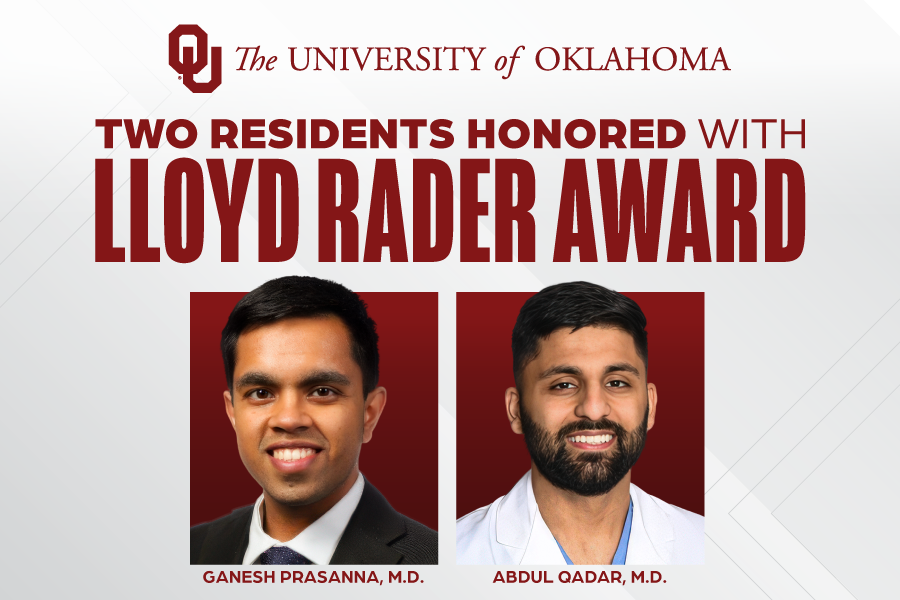
The University of Oklahoma College of Medicine has honored two residents with the Lloyd Rader Award, which recognizes outstanding clinical and research achievements in residency.
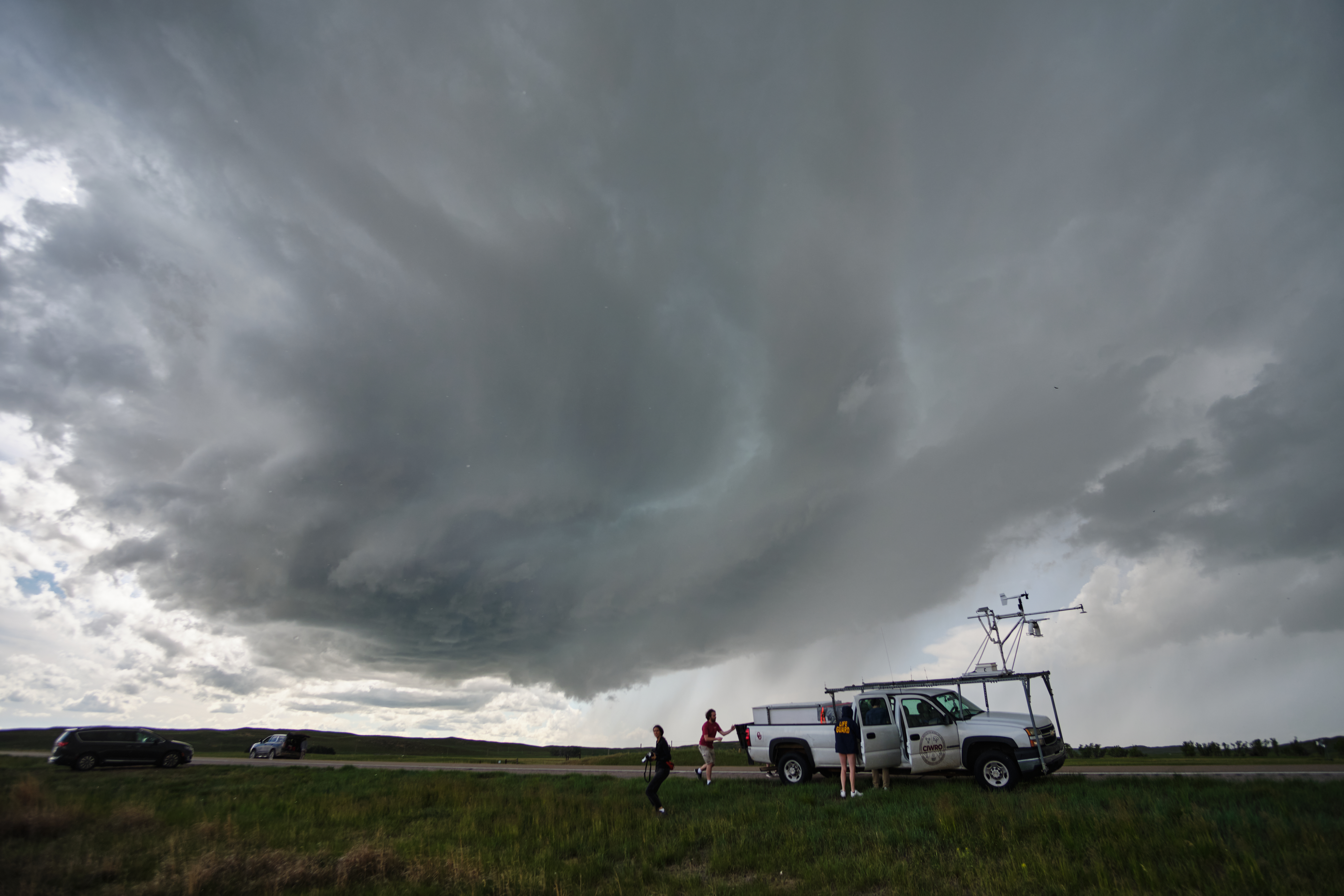
The University of Oklahoma will receive up to $220 million over five years from the U.S. Department of Commerce and the National Oceanic and Atmospheric Administration to continue the life-saving weather research led by the OU-NOAA Cooperative Institute for Severe and High-Impact Weather Research and Operations, extending a nearly 50-year partnership that has helped give Americans earlier, more accurate weather warnings
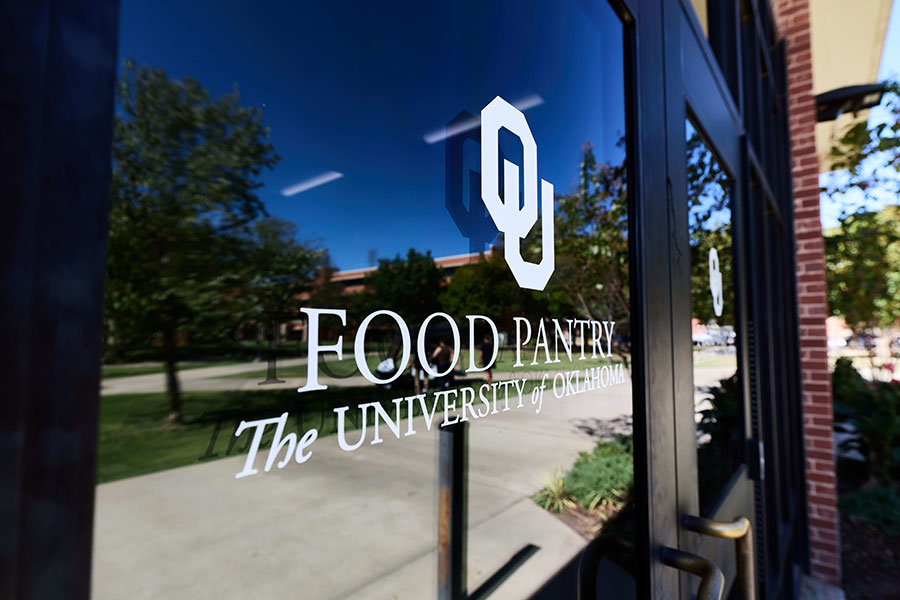
The OU Food Pantry won the annual Red River Food Fight, collecting 31,815.9 pounds of shelf-stable food and drinks to top UT Outpost’s 22,567 pounds. OU has won the competition four years in a row.