NEWS


NORMAN, OKLA. – A team of University of Oklahoma researchers has been awarded a three-year grant from the National Science Foundation to help small and medium-sized manufacturers compete in the digital era. The project aims to build a next-generation platform that connects customer demand directly to manufacturing capability using artificial intelligence and large language models.
Led by Yifu Li, an assistant professor in the School of Industrial and Systems Engineering, the group will collaborate with the Oklahoma Department of Commerce and Oklahoma-based companies, including Simple Modern, which was founded by a University of Oklahoma alumnus.
“This project is about empowering small manufacturers by reducing the technical and financial barriers that come with product design and production planning,” Li said. “We’re building tools that allow companies, even those with minimal design expertise or budget, to facilitate the transformation from customer demands into engineering design and production plan with LLMs and deep learning. Our solutions significantly accelerate demand-to-product transformation in manufacturing”
According to Shiva Raman, co-principle investigator and director of the School of Industrial and Systems Engineering, many manufacturing contracts go to large companies, while small and rural manufacturers struggle with the design phase due to limited resources. Their proposed AI platform will help people find the small manufacturers who can provide their design services and convert customer descriptions into draft product designs.
“We envision a future where a customer can verbally describe a product they need to their AI virtual assistant, like Amazon Alexa. Then an AI system translates that into a usable blueprint that local manufacturers can quote and produce,” Li said. “This could open up an entirely new kind of on-demand manufacturing marketplace.”
Unlike traditional manufacturing systems that require significant manual design input and expensive consulting services, their proposed framework integrates recent advancements in AI and builds on concepts like the generative functional analysis diagram to streamline both design and production.
“The goal is to empower small manufacturers by reducing inefficiencies and connecting customer demand directly to their capabilities,” Raman said. “By eliminating unnecessary intermediaries and making design knowledge more accessible, we help small businesses remain competitive.”
The NSF-funded project is a Grant Opportunities for Academic Liaison with Industry (GOALI) award, which emphasizes collaboration between academia and industry. These awards require meaningful participation from industrial partners, a unique aspect that highlights the practical impact of the research.
According to Rui Zhu, co-PI and assistant professor in Industrial and Systems Engineering, this project is a true example of close collaboration between academia and industry that fosters the next level of education-to-employment transition for engineering students.
“Through the student co-ops, workshops and educational programs, we’re ensuring that the benefits of this research reach beyond the labs and factories into the classroom and everyday lives,” she said.
While the platform is currently under intensive research and implementation, the long-term vision includes an AI-driven design marketplace where customers, engineers, and manufacturers can all interact efficiently and effectively. The team plans to have a working demo available this academic year with plans to expand access to the platform in the months that follow.
Learn more about research being conducted in the Gallogly College of Engineering’s School of Industrial and Systems Engineering.
About the project
This project, “GOALI: Fostering Democratized Manufacturing with Artificial Intelligence (AI)-Assisted Product Design and Production Planning,” is funded by a $679,973 grant from the National Science Foundation, no. 2452666. It began in May 2025 and is expected to end in April 2028.
About the University of Oklahoma
Founded in 1890, the University of Oklahoma is a public research university located in Norman, Oklahoma. As the state’s flagship university, OU serves the educational, cultural, economic and health care needs of the state, region and nation. For more information about the university, visit www.ou.edu.
The University of Oklahoma College of Medicine has honored two residents with the Lloyd Rader Award, which recognizes outstanding clinical and research achievements in residency.
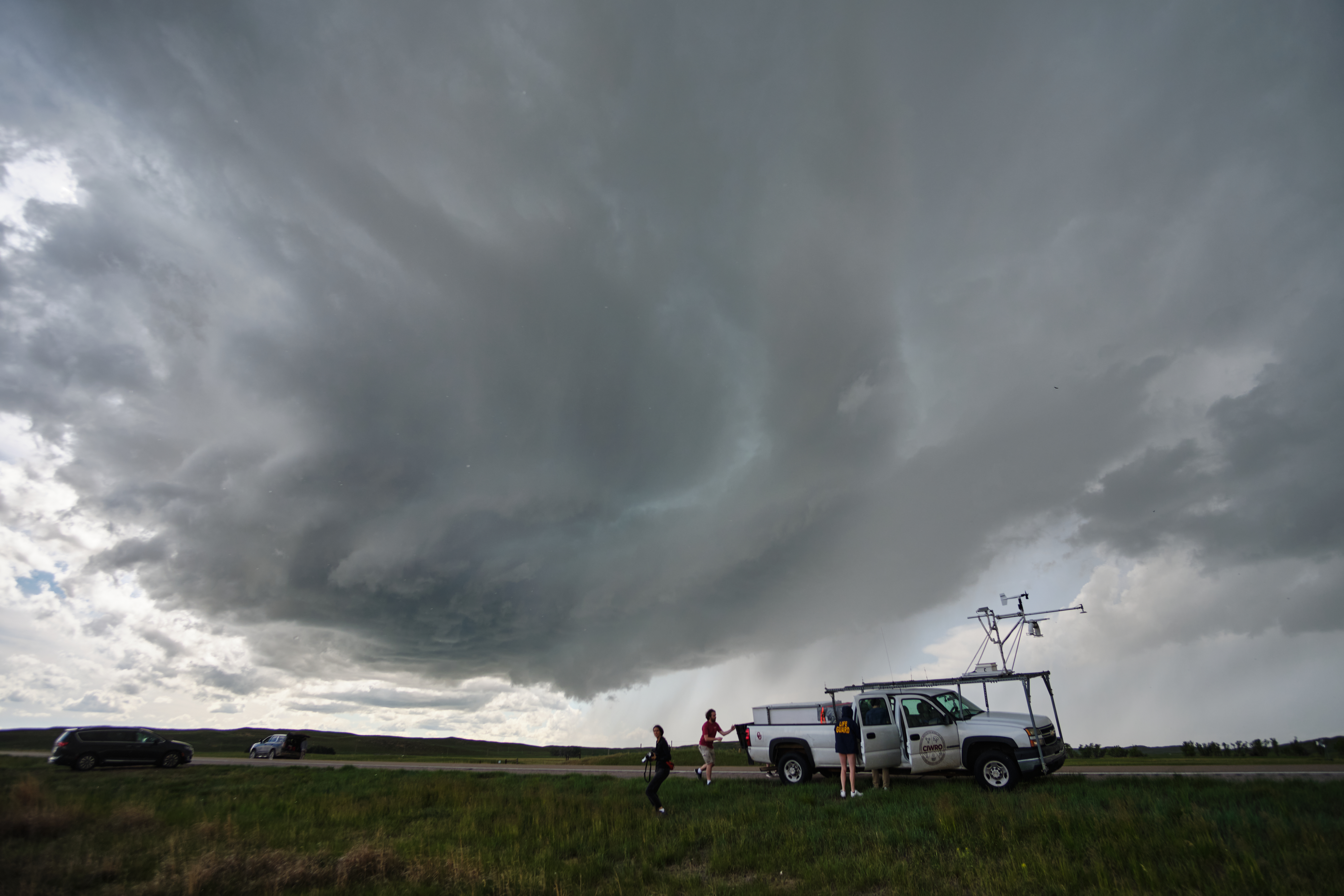
The University of Oklahoma will receive up to $220 million over five years from the U.S. Department of Commerce and the National Oceanic and Atmospheric Administration to continue the life-saving weather research led by the OU-NOAA Cooperative Institute for Severe and High-Impact Weather Research and Operations, extending a nearly 50-year partnership that has helped give Americans earlier, more accurate weather warnings
The OU Food Pantry won the annual Red River Food Fight, collecting 31,815.9 pounds of shelf-stable food and drinks to top UT Outpost’s 22,567 pounds. OU has won the competition four years in a row.