NEWS


ARDMORE, OKLA. – The University of Oklahoma Board of Regents met today in Ardmore to approve the university’s fiscal year 2026 budget, a bold step to sustain OU’s excellence and unmatched value through life-changing education, research, and service to the people of Oklahoma and beyond.
“OU was created to do what no other can: transform lives, uplift our state, and keep the American Dream within reach,” said OU President Joseph Harroz Jr. “In a time of rapid change across higher education, our momentum has never been stronger. That progress isn’t by chance; it stems from the bold goals we set in our Strategic Plan and our unwavering commitment to deliver both excellence and affordability. More students are choosing OU than ever before, and we’ve taken real steps to make that vision a reality. As we enter the next phase of our Strategic Plan, guided by the same principles but with even greater ambition, we must continue to think strategically to ensure we invest in the very things that make OU exceptional.”
Since the launch of its “Lead On, University” Strategic Plan in 2020, the University of Oklahoma has built remarkable momentum, delivering measurable progress across key areas. OU has welcomed four consecutive record-breaking freshman classes, driven the largest percentage enrollment increase in nearly 50 years, and transformed health care in the state through the creation of OU Health, Oklahoma’s only academic health system. Over the last four years, OU’s research enterprise has grown at one of the fastest rates in the nation.
This spring, OU launched an ambitious, refreshed Strategic Plan, sharpening its focus through five updated pillars. These refined goals elevate the university’s drive to improve health outcomes, pursue Association of American Universities (AAU) membership, and continue creating opportunities for students to thrive.
While tuition has surged at many institutions across the country, a degree from OU is more affordable today than it was six years ago. The university has grown need-based aid by 48%, increased the annual amount of scholarships awarded to undergraduate students by 41%, and cut $150 million in annual operating costs since 2018. These efforts have resulted in a 27% decline over the last six years in the actual amount the average resident freshman must pay. Additionally, 56% of undergraduates now graduate debt-free, compared to just 45% nationwide. Students and families are taking notice, and now, more students than ever are choosing OU.
To continue building on this momentum, the Regents approved the 2025-2026 academic year budget to further bolster OU’s standing as a leader in accessible, high-quality education. The budget includes a strategic 3% adjustment in tuition and mandatory fees for most undergraduate and graduate students on the Norman campus and in OU Online programs. The OU Health Sciences campus will see a 2% to 4% adjustment for most undergraduate and graduate programs, and ten professional programs.
A key component of the adjustment is a merit-based raise program, helping OU recruit and retain outstanding faculty and staff in a competitive talent landscape, new strategic faculty positions to advance academic and research endeavors, expanding student opportunity through increased access to study abroad, undergraduate research, and high-impact learning experiences and addressing critical deferred maintenance projects. These investments are central to fulfilling OU’s pursuit of delivering an affordable and accessible education while driving innovation and discovery.
During the meeting, the Regents also approved:
About the University of Oklahoma
Founded in 1890, the University of Oklahoma is a public research university located in Norman, Oklahoma. As the state’s flagship university, OU serves the educational, cultural, economic and health care needs of the state, region and nation. For more information about the university, visit www.ou.edu.
The University of Oklahoma has received a transformative gift from Jon and Shannon McCartney, which will name the McCartney Family Tunnel of Champions, the McCartney Family Gate of the Gaylord Family - Oklahoma Memorial Stadium and the McCartney Family Grand Lecture Hall in the Michael F. Price College of Business. The gift will also support the Inspiring Champions and the Athletic Director’s Discretionary Fund, in addition to establishing the McCartney DFW Career Trek program at Price College.
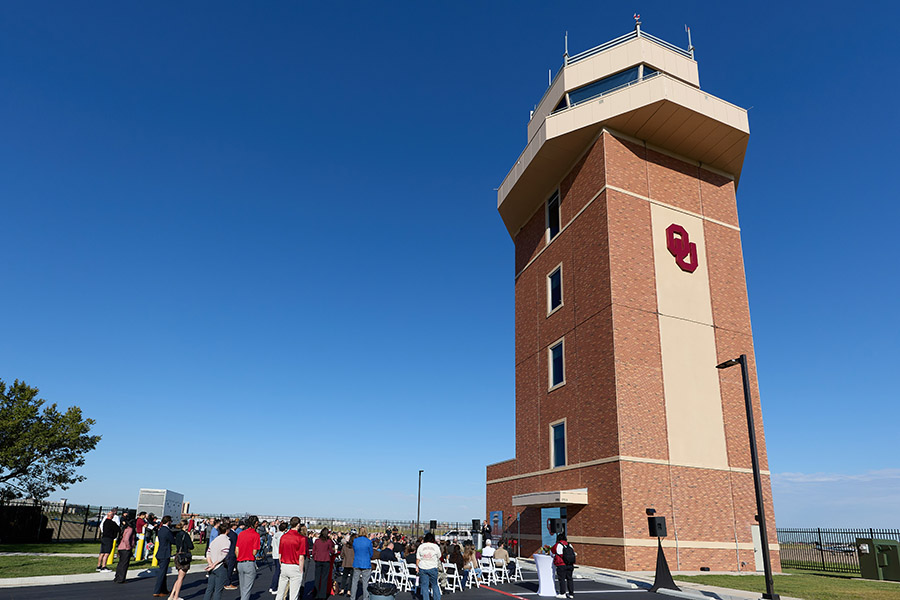
The University of Oklahoma today celebrated the opening of a new air traffic control tower at the OU Max Westheimer Airport. Standing 106 feet tall, more than double the current 52-foot facility, the new tower will modernize air traffic control operations and improve safety for pilots and students operating in the airspace.
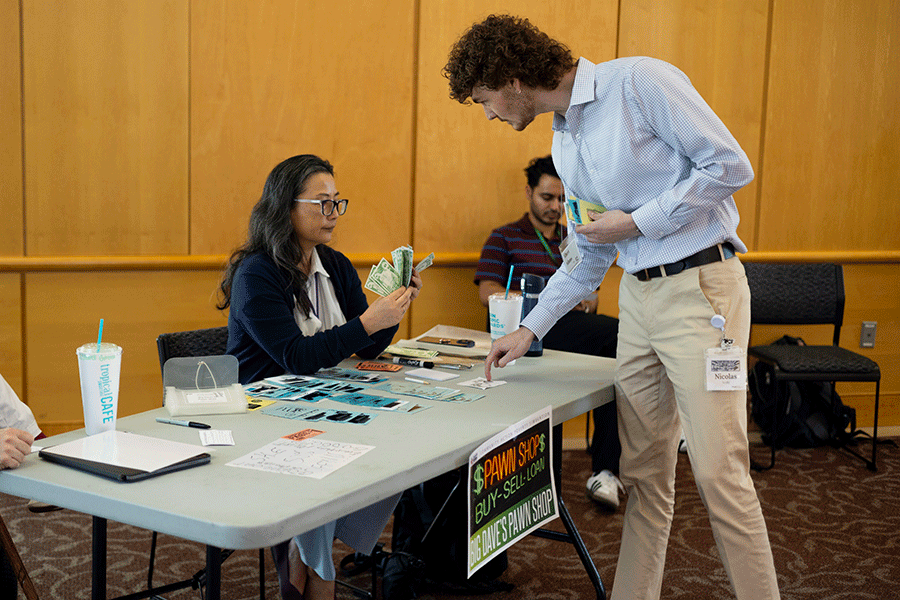
Do I buy groceries or pay the electric bill? Should I pawn some of my belongings to afford my prescription? My child is sick, so I will have to miss work to take care of him. Those are just a few of the difficult choices that OU-Tulsa health professional students confronted during the Community Access to Resources Experience. The role-playing activity challenged students to navigate the financial, family and other pressures that can affect a person’s health and ability to follow medical advice. Held annually during the SCM Institute orientation week, the experience is designed to generate understanding and build empathy.