NEWS


NORMAN, OKLA. – The University of Oklahoma’s Native Nations Center for Tribal Policy Research recently named Grace Fox as its first tribal health care policy analyst, expanding the center’s efforts to support tribal decision-making through nonpartisan, research-driven policy analysis. Fox is helping lead projects tied to the National Institutes of Health-funded initiative Improving Cancer Outcomes in Native American Communities (ICON), a five-year, $17 million grant awarded to OU to address cancer disparities faced by tribal communities across Oklahoma and Indian Country.
In her first year, Fox (Seminole) is examining structural barriers shaping cancer prevention, screening, diagnosis and treatment for citizens of the 38 federally recognized Tribal Nations in Oklahoma. Her work supports ICON’s policy and community engagement efforts and brings tribal perspectives into efforts to address cancer disparities.
“I am thrilled Grace joined our team and is contributing to our policy research efforts that serve Indian Country,” said Tana Fitzpatrick, J.D., (Lakota/Crow/Ponca/Chickasaw), associate vice president for tribal relations and director of the Native Nations Center. “She is an expert-in-training on issues of tribal health care policy, with a specific emphasis on cancer, and I am excited to watch her grow into this position.”
Fox comes to OU with training in federal Indian policy, health equity and culturally rooted research methodologies. She earned a Master of Public Policy from the University of Oxford’s Blavatnik School of Government as an Eisenhower Global Scholar, completing fieldwork with the U.S. Department of Agriculture’s Office of Tribal Relations. She previously earned a Bachelor of Arts from Columbia University, graduating cum laude with majors in psychology and ethnicity and race studies.
Fox said caring for a close family member with breast cancer made her more aware of the barriers many Native families face when trying to get timely and appropriate care.
“This role feels like the exact intersection of my community, my training and the issues that matter most,” Fox said. “The ICON initiative is an opportunity to confront long-standing barriers head-on and help Tribal Nations exercise sovereignty in decisions that affect cancer care for their citizens.”
Fox is currently working on her first Sovereign Report, a nonpartisan policy brief prepared to support Tribal Nation decision-makers. Her first report, “Purchased/Referred Care and Cancer: Overview and Options for Tribal Consideration,” explores how the Indian Health Service’s Purchased/Referred Care program influences access to cancer screenings, referrals and treatment. It is expected to be released in mid-December.
Fox is also part of ICON’s community engagement efforts, which recently included an OU-Comanche Nation roundtable in Lawton focused on water quality, environmental health and their relationship to cancer outcomes. The discussions help research and policy options reflect community needs and priorities.
The Native Nations Center for Tribal Policy Research, in addition to Fitzpatrick and Fox, also includes Evelyn Cox, Ph.D. (Chamoru), research project manager, and Quanah Yazzie (Navajo), office manager. They are continuously working to provide research products geared toward tribal governments through reports, briefings and new approaches like the upcoming SovereignCast broadcast podcast series. To learn more about the Native Nations Center for Tribal Policy Research, visit here.
About the University of Oklahoma
Founded in 1890, the University of Oklahoma is a public research university located in Norman, Oklahoma. As the state’s flagship university, OU serves the educational, cultural, economic and health care needs of the state, region and nation. For more information about the university, visit www.ou.edu.
One in eight Oklahomans has type 2 diabetes, and an estimated one-third of the state’s adult population has undiagnosed prediabetes. University of Oklahoma researchers are developing a digital outreach program to help people understand their risk and connect with resources to help prevent the disease.
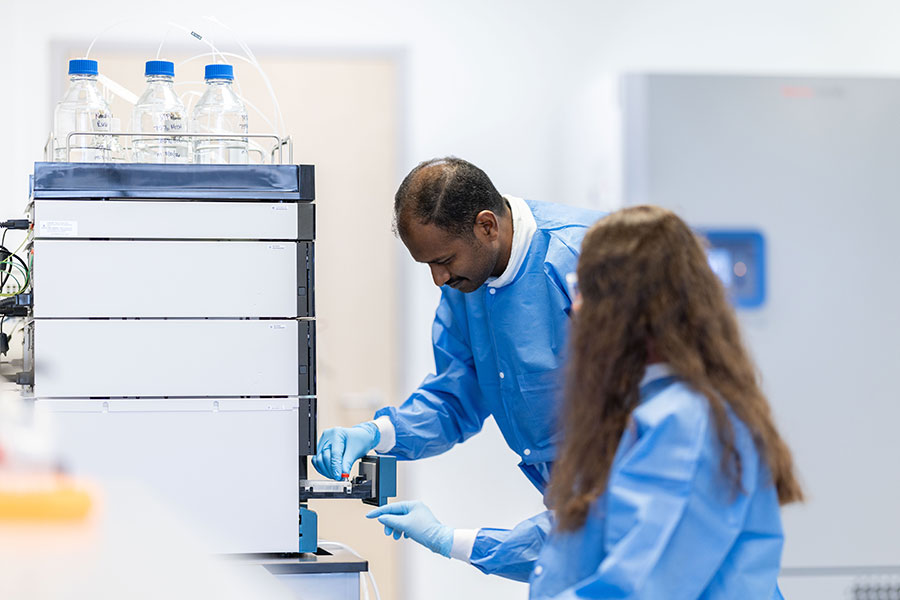
The Presbyterian Health Foundation has provided a grant for the University of Oklahoma College of Pharmacy to obtain its first liquid chromatography mass spectrometry equipment system. This acquisition expands the health campus’s ability to turn research into real-world impact.
Armed with a new five-year, $3.4 million grant from the National Institutes of Health, OU healthcare leaders are building the first chronic pain mHealth intervention app made with and for Native Americans.