NEWS


TULSA – Do I buy groceries or pay the electric bill?
Should I pawn some of my belongings to afford my prescription?
My child is sick, so I will have to miss work to take care of him.
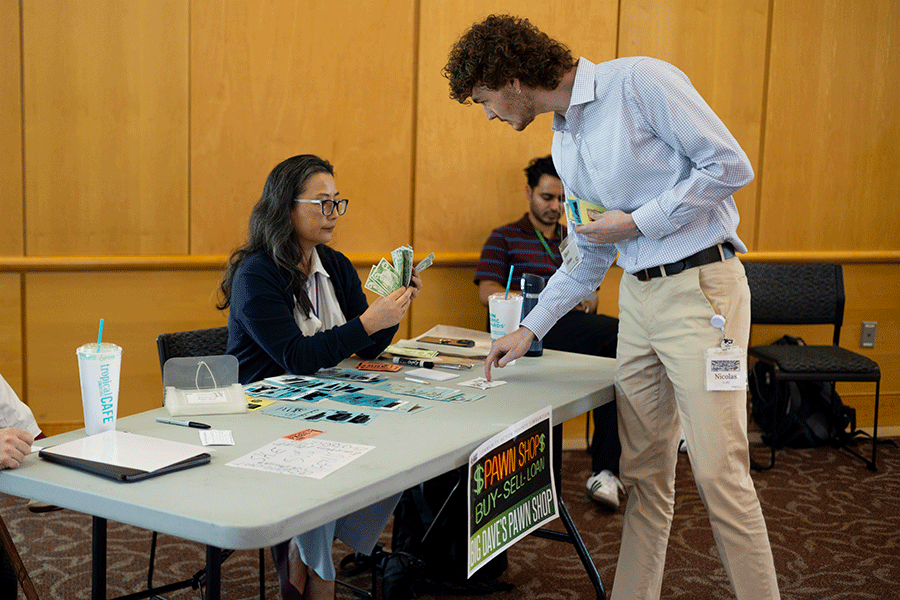
Those are just a few of the difficult choices that OU-Tulsa health professional students confronted during the Community Access to Resources Experience. The role-playing activity challenged students to navigate the financial, family and other pressures that can affect a person’s health and ability to follow medical advice. Held annually during the SCM Institute orientation week, the experience is designed to generate understanding and build empathy.
“This activity allows our students to experience some real-life scenarios that occur,” said LaMont Cavanagh, M.D., chair of the Department of Family and Community Medicine in the School of Community Medicine. “Social issues can have a huge impact on our patients’ overall health and well-being. It’s important for our students to understand that every person has different circumstances they are living in.”
Cavanagh played a law enforcement officer during the exercise, which assigned students various family situations and financial circumstances. The students’ “homes” were in the center of the large room, surrounded by tables representing workplaces, schools, utility companies, social services, child care centers, homeless shelters, banks, grocery stores, food banks and more. Faculty members and other participants staffed the tables, playing the roles of the people students might encounter as they tried to meet their families’ needs.
The students’ assigned scenarios allowed them to experience the impossible challenges that many of their patients face. For example, a physician may recommend healthier foods or more exercise, but patients’ circumstances can make those recommendations difficult to follow.
“Do they have money to afford healthy food? Do they have transportation to get to the stores that have healthy options, or can they only eat the food that is accessible nearby? Is their neighborhood safe so they can get outside and exercise? Those are all experiences that our patients face. They have to make trade-offs that we might not think about,” said internal medicine physician Amanda Gibson, M.D., an assistant professor of medicine.
Medical student James Paul Coleman said the experience underscored the importance of social workers, who can help patients navigate some of their challenges.
“As physicians, we might tell them that they can get free medication at a local free pharmacy, but if they can’t get there, is that resource really of any use to them?” he said. “It really opened my eyes, and it points to the importance of social worker involvement in healthcare.”
Coleman’s wife, Reba Coleman, also a medical student, said the experience showed her that patients may not be willfully ignoring doctors’ orders – they may be overwhelmed with all that life has thrown at them.
“In my scenario, I was a single parent with two kids, and I was without a job,” she said. “Things started to get very complex very fast. I realized that I’m going to have patients that I will give recommendations to, and they may not be able to follow them. And it’s not because they don’t want to.”
Lauren Conway, D.O., associate dean of student affairs in the School of Community Medicine, said understanding what patients are experiencing can lead to more compassion in the exam room.
“Our students took this exercise very seriously because it represents the lives that some of our patients are leading,” she said. “We hope it creates a level of empathy and understanding so they can provide better care and ultimately improve the health of their patients.”
About the University of Oklahoma
Founded in 1890, the University of Oklahoma is a public research university located in Norman, Oklahoma. As the state’s flagship university, OU serves the educational, cultural, economic and healthcare needs of the state, region and nation. For more information about the university, visit www.ou.edu.
Do I buy groceries or pay the electric bill? Should I pawn some of my belongings to afford my prescription? My child is sick, so I will have to miss work to take care of him. Those are just a few of the difficult choices that OU-Tulsa health professional students confronted during the Community Access to Resources Experience. The role-playing activity challenged students to navigate the financial, family and other pressures that can affect a person’s health and ability to follow medical advice. Held annually during the SCM Institute orientation week, the experience is designed to generate understanding and build empathy.
Thanks to more than $5 million in funding through a National Institutes of Health initiative, the University of Oklahoma's College of Nursing will support four maternal health research projects over the next four years.
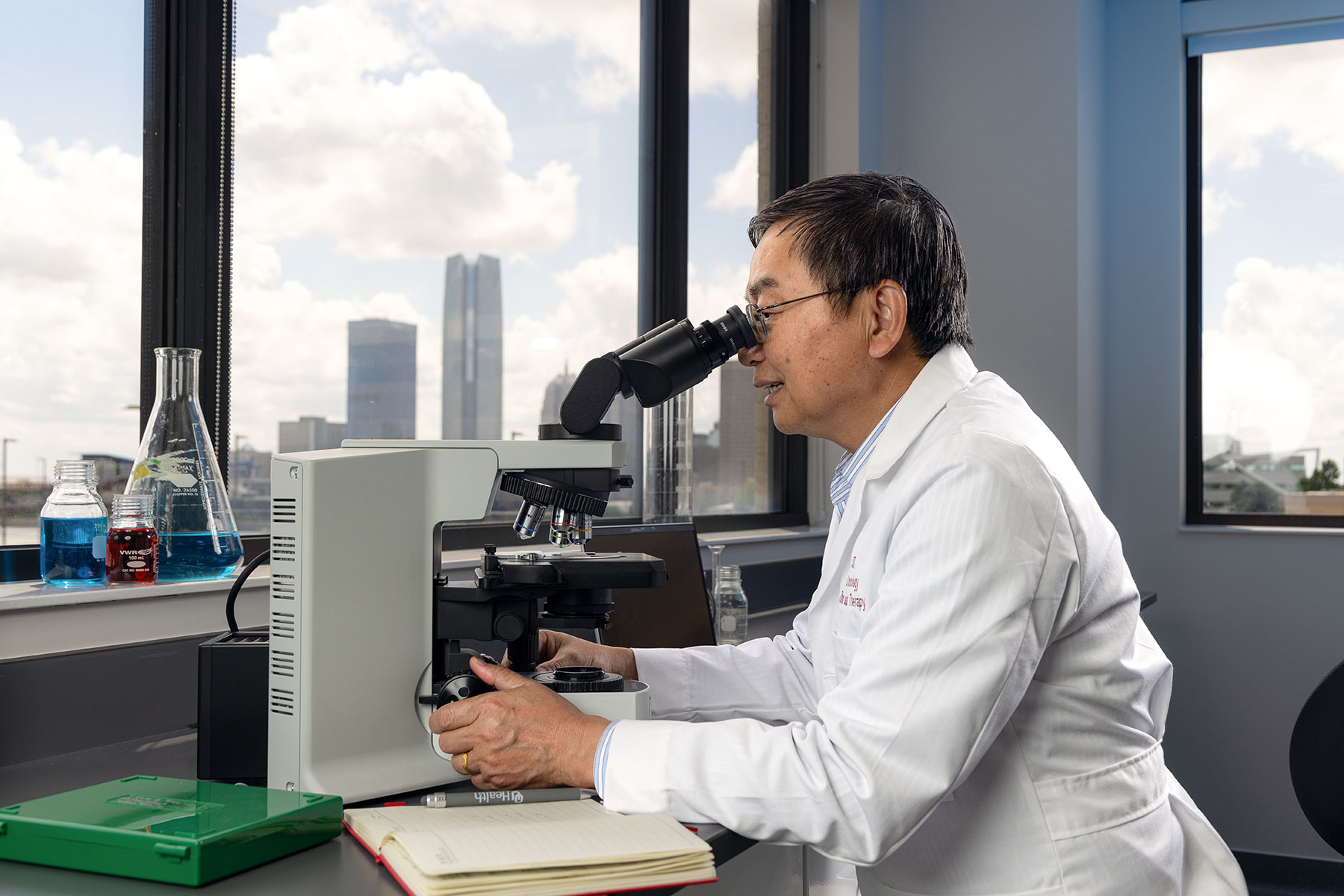
A University of Oklahoma physician-researcher recently received $2.9 million in funding from the National Cancer Institute to study whether RedHill Biopharma’s drug opaganib, given after CAR T-cell therapy, can help the immune cells fight cancer more effectively.