
It's never too early to engage with our office to learn about the impact of intellectual property and how it complements your research. We are a resource for campus inventors interested in protecting and commercializing innovation, and have served over 800 unique inventors over the last seven years.
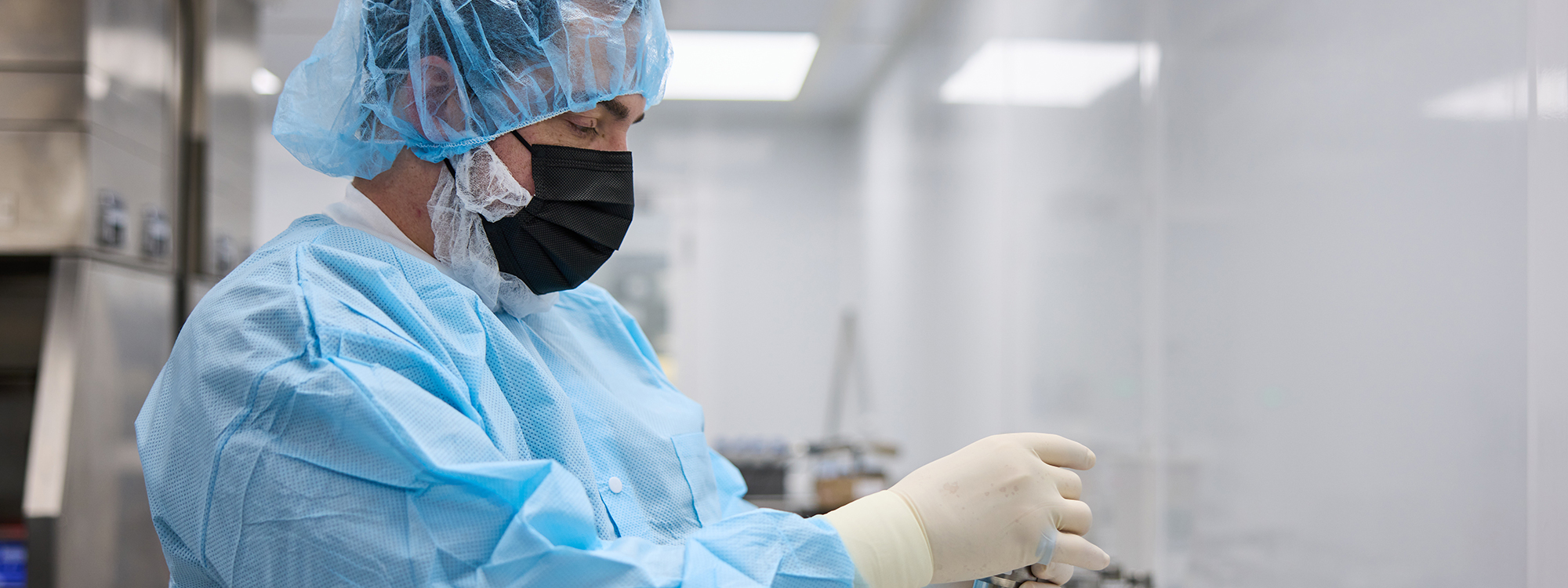
An invention disclosure should be completed when an invention is recognized by the inventor(s). Our Disclosure Guide (pdf) can assist with the online process.

Access convenient forms to request common intellectual property agreements like non-disclosure, materials transfer, data use, and more.

From the basics of intellectual property and academia to strategies on how to start a university spin-out, these resources can help.

Learn about OU's intellectual property policy, and how IP is key to creating strong partnerships.

The creation and development of intellectual property at the University of Oklahoma encourages new business and is key to creating strong university-industry partnerships. OU has adopted an Intellectual Property Policy (pdf) and has developed procedures for disclosing and protecting intellectual property.
Confidentiality or Non-Disclosure Agreement
A Confidentiality Agreement (CA) or Non-Disclosure Agreement (NDA) is established when two parties wish to disclose confidential information for a specified purpose.
Addendum to Confidentiality or Non-Disclosure Agreement
Submit this addendum request form in order to modify or expand the scope of a previously established Confidentiality Agreement (CA) or Non-Disclosure Agreement (NDA).
Data Use Agreement or Material Transfer Agreement
A Data Use Agreement (DUA) or Material Transfer Agreement (MTA) is established when a party wishes to provide/share data or materials for research purposes to/from OU, and outlines the terms and conditions for sharing and use of/access to the data or materials.

Transferring innovation from university labs to the commercial marketplace is an exciting, but often complicated, process. The following guide will help as you navigate this technology transfer journey. We also welcome you to contact our office if you have any questions or require additional guidance with any of the following steps. Please note that steps may vary depending on the nature of the technology, industry, steps for IP protection and licensing type.
Step-by-step information to guide you through the technology transfer process.
If you are an OU faculty member or graduate student and have completed research that has led to a unique discovery, you are encouraged to disclose this discovery to begin discussions related tointellectual property (IP) protection and commercialization. An invention can include a useful process, tool, software, composition of matter or any new or useful improvement. Multiple researchers may contribute to the invention.
OTC highly encourages disclosing your invention as early as possible. Disclosing after public communication of the invention may restrict or minimize its potential for patent protection. Examples of public disclosure include (but are not limited to) online or hard-copy publications, posters, private emails not subject to a confidentiality agreement, and oral presentations. This step is mandatory for any further action to be taken in the commercialization and IP protection process. For detailed information on the disclosure process, please view our disclosure guide. After the form is submitted, you'll participate in an in-person meeting to further explore the invention and potential patent and licensing.
During this time, our office will review the disclosure, conduct patent searches (if applicable), and analyze the market and competition to assess the invention’s potential for commercialization.
After assessment, OTC will take any necessary steps to protect the intellectual property of your invention. IP protection is often in the form of a patent, a legal protection method that begins with filing a patent application with the U.S. Patent and Trademark Office. In addition, foreign patent applications will take place if appropriate. Issuing a patent is often a lengthy process. The amount of time this process will take depends on the invention and patent strategy.
There are two commercialization paths: form a new startup business or license your invention to an existing company. OTC will help to guide this process and decision making based on technology and market analysis.
If you are licensing to an existing business, see step 6A. If you are forming a startup, see step 6B.
If the invention will best be commercialized by one or more existing companies, the technology licensing officer will seek potential licensees and work to identify mutual interests, goals, and plans to fully commercialize this technology.
If creating a new startup is feasible and the inventor is interested in participating, our office can assist you by connecting you to valuable startup resources.
A license agreement is a contract between OU and a third party (either an existing company or a startup) in which OU’s commercial rights to a technology are transferred for financial and other benefits.
The licensee (startup or existing company) continues to advance the technology and makes other business investments to develop it. This step may entail further development, regulatory approvals, sales and marketing, support, training, and other activities.
Below is how the revenue from the invention will be distributed:
35% to the inventor(s)/discoverer(s) as submitted on the Invention Disclosure Form
20% to the original college(s), hlf of which go to the originating department
20% to the Growth Fund maintained for each originating campus
15% OTC to apply to operational expenses
5% to the campus VP of Research
5% to the President's discretionary fund
A portion of the revenue generated from commercialization is reinvested to further current campus research. The Growth Fund, for example, strengthens the commercial potential of OU innovations, providing support for future technologies to reach the marketplace. Commercialization activity can also lead to new opportunities for sponsored research and internships and jobs for students.
