


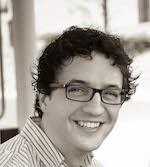
dcallen at ou.edu Website
Stream and riparian ecology, landscape ecology, stable isotope ecology, food web ecology
In our lab we study Geographical Aquatic Ecology. We are interested in linkages between biological community structure (which species, how many, what traits they have, how they interact) and ecosystem processes (energy, water, and sediment flows through and between ecosystems). We are interested in how these processes shape patterns observed at the landscape and network spatial scales, and how regional and global scale processes influence these processes at smaller spatial scales. As we work in stream and riparian ecosystems in a range of biomes (deserts, grasslands, western montane coniferous forests, eastern deciduous forests) and work with a wide range of organisms (from plants to animals and from invertebrates and vertebrates); I welcome students with backgrounds in aquatic or terrestrial ecology, experience in any biome, and with taxonomic expertise in any area.
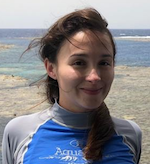
dahiana.arcila at ou.edu Website Website
My research focuses on understanding macroevolutionary dynamics in freshwater and marine fishes using a combination of applied methods in comparative genomics. My research goals ultimately seek to unravel the genetic bases of morphological adaptation and the factors that promote phylogenetic diversification. Further research also involves the integration of information from fossils and extant species to improve inferences in macroevolution..
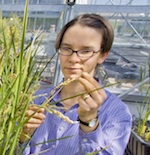
lbartley at ou.edu Website
Plant molecular biology, molecular evolution, genome evolution, genetic diversity
I am interested in the genetic and genomic signatures of evolution. Currently my research focuses on a grass diverged and expanded family of enzymes, some members of which function in grass-diverged aspects of cell wall synthesis, while others show evidence of neofunctionalization within grass species. I am also conducting an association genetics study to identify switchgrass genetic variation that correlates with heritable cell wall variation.
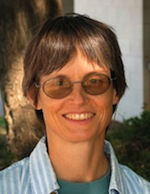
lbergey at ou.edu
Ecology of stream invertebrates and algae, stream disturbance ecology, aquatic conservation biology
I study how organisms survive and recover from disturbance and am currently looking at how algae in protective refuges subsidize grazer production and algal recovery from floods in streams. I also work on the distribution, ecology, and conservation biology of the fauna of springs.

ebridge at ou.edu
Behavior, endocrinology, evolution of life histories, avian migration
In general terms, my research investigates the mechanisms and evolutionary forces that influence behavioral and anatomical traits. More specifically, I am interested in the evolution of avian life histories—how birds negotiate tradeoffs among demanding activities such as breeding, feather molt, and migration. In addition, I am attempting to discern the role of parental programming in free-living bird populations. Parental programing occurs when adult behavioral phenotypes (i.e. personalities) are determined early in life based on how parents behave toward their offspring. To help enable my research, I have helped to develop several new technological tools that allow biologists with difficult tasks such as tracking small migratory birds and providing supplemental food to specific members of a population..
ari at ou.edu
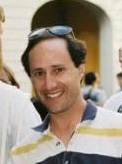
Neuronal mechanisms of behavioral choice and movement control
I conduct electrophysiological, neuroanatomical, and pharmacological experiments on the turtle spinal cord control of swimming and scratching, to address how the nervous system selects and generates an appropriate behavior for each circumstance an animal faces.
rbroughton at ou.edu, Website
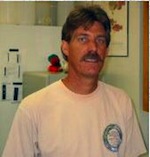
Molecular evolution, phylogenetics, population genetics, comparative genomics
My reasearch employs evolutionary patterns in DNA sequence data to investigate processes that generate and maintain biological diversity. This includes fundamental questions related to population divergence and adaptation, patterns of phylogenetic relationships, and the evolution of genomes in fishes.
ricardo.betancur at ou.edu, Website
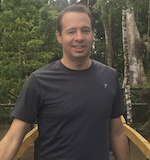
Fish evolution, phylogenomics, genomics, macroevolution, phylogeography, phylogenetic comparative methods, ichthyology
I’m broadly interested in the evolutionary biology of fishes. My research in ichthyology is oriented around five major aims: (1) inferring relationships and testing evolutionary hypotheses in the context of such relationships, (2) uncovering the drivers of morphological and lineage diversification, (3) elucidating the processes that explain spatial and temporal patterns of distribution of species and populations within species, (4) understanding the genetic basis of adaptive traits, and (5) documenting the diversity of marine and freshwater fish faunas. This research scope includes strong fieldwork and collection-based components and we use a variety of genomic approaches to address questions around these aims.
chilson at ou.edu Website
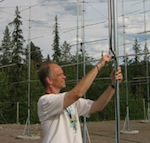
Atmospheric physics, radar remote sensing, precipitation studies
There exists obvious links between weather and the environment. To better facilitate our understanding of these links and the ensuing interactions, it is sometimes necessary to remotely probe the atmosphere at small spatial and temporal scales. A common theme in my research has been the development and application of new sensor technologies in order to probe the atmosphere at such scales. The focus of my studies has been on the use of clear-air and weather radars as remote sensing tools. Recently, however, I have also been exploring the use of various in-situ instruments and numerical models in my research.

Robert Cichewicz, Regent's Professor of Chem/Biochem, INPART Director, EEB Associate
rhcichewicz at ou.edu Website
Microbial natural products,
Research focuses on secondary metabolites (natural products) produced by fungi and bacteria. These bioactive compounds serve a variety of essential functions in nature (defensive metabolites, chemical messengers, etc.), which can be applied for human use..

rlc at ou.edu
Paleontology, mammals, systematics, functional morphology
I am primarily a vertebrate paleontologist. My main research interest is in the evolution of mammals, with particular emphasis on systematics and functional morphology. In recent years, I have focused attention mainly on early mammals (with most emphasis placed on Cretaceous varieties from North America). To this end, I have maintained an active collecting program, and conduct mainly specimen-based research, in which both undergraduate and graduate students routinely participate. Current assemblages of primary interest date to between 130 and 100 million years old. These document lingering types of archaic groups, together with diversifying clades of “modern” mammals (marsupials, placentals, and presumed relatives). I am interested in the relationships and biogeographic deployment of these groups, as well as their biological roles in their respective communities.
nczaplewski at ou.edu
Mammals, vertebrate paleontology, systematics, biogeography, natural history
My research interests are in the systematics, phylogeny, paleontology, natural history, and biogeography of mammals of the Cenozoic era (to Anthropocene) in the western hemisphere.

kathleen.e.duncan-1 at ou.edu
microbial community diversity, microbial ecology of chemically impacted soil, microbial evolution: population structure, gene transfer and genetic variation, modes of speciation, Bacillus species
My research is centered on gaining a greater understanding of how microbial diversity is structured at several different levels; that is, how genetic and ecological factors affect communities, species, and populations, and how they respond as environments change. I have studied the effects of changing environments using manmade disturbances such as contamination by petroleum and salt water. Another main branch of my research focuses on gene transfer, genetic variation, and speciation in the genus Bacillus.

jpgibson at ou.edu
plant reproductive biology, population genetics and mating system analysis, seed dispersal and germination
I am interested in the interaction between plant life history and population genetic diversity and structure. The primary focus of this research is to understand how unique reproductive strategies shape the levels and structuring of diversity within and among populations of species with highly fragmented distributions.
bhoagland at ou.edu
Coming soon.......
dhambright at ou.edu website
Limnology and zooplankton ecology
Ecological interactions between freshwater consumer and prey species are the primary focus of my research. My studies have covered a broad range of organisms ranging from fishes to bacteria. I am particularly interested in understanding how consumers affect community and ecosystem level dynamics through direct and indirect effects on microbial assemblages via mechanisms such as selective consumption, alteration of competitive forces, and changes in nutrient cycling dynamics. Students working in my lab are free to explore any topic in aquatic ecology and evolutionary biology..
hoefnagels at ou.edu Website
Mycology, biology education
I have expertise in plant pathogenic and mycorrhizal fungi. I am also a general biology textbook author, and I am interested in classroom computer technology.
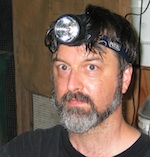
Director of the EEB Graduate Program
mkaspari at ou.edu, Website
Community ecology, macroecology, scaling, ants, litter, brown food web, tropics
Our lab addresses the basic question, "how and why do properties of ecological communities vary as you move from place to place?". We also are particularly fond of ants, and use them as model organisms to ask a variety of questions, from their physiological ecology to their impact on ecosystem function.
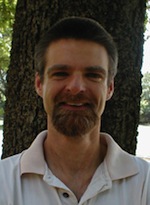
jkelly at ou.edu Website
Conservation biology, terrestrial fauna of Oklahoma, avian ecology
I study (1) the ecology and conservation of birds and (2) current and historic distributions of vertebrates in Oklahoma. I welcome inquiries from students interested in pursuing a broad range of graduate research projects as well as those that share my current research interests, which include the application of stable isotope techniques to understand the migratory ecology of songbirds and riparian zone ecology and management, particularly the impact of riparian vegetation structure on animal communities.
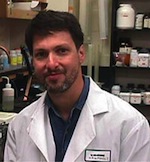
krumholz at ou.edu Website
Genetics of sulfate reducing bacteria, Microbial Ecology of a Sulfur spring, Bioremediation of Radionuclides in anoxic aquifers
Research focuses on physiology and ecology of sulfate reducing and other anaerobic bacteria. We are attempting to understand mechanisms for the natural geochemical processes carried out by anaerobic bacteria and their communities.
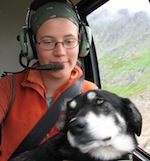
hclanier at ou.edu Website
Evolutionary biology, population genomics, comparative phylogeography, mammalogy
Research in my lab is focused on the underlying mechanisms that drive evolution along geographic and climatic gradients. I am particularly interested in how the interplay between historical factors (e.g., population isolation and habitat change) and species biology impact the potential for local adaptation. This work integrates population genetic, phylogeographic, phylogenetic, and morphological approaches to address fundamental questions regarding the distribution and maintenance of biodiversity.

cmlewis at ou.edu Website
Population Genetics; Peopling of South America; Evolution of Disease Associated Genetic Variation; Anthropological Genetics
My labs address questions concerning the distribution and evolution of human genetic variation. To address these questions, I have collected and/or analyzed ancient DNA, genetic data from hypervariable mitochondrial regions, from autosomal functional regions, and a genome-wide survey of Short Tandem Repeats. Research topics include human population history, the evolution of disease associated genetic variation, and the relationship between cultural, environmental and genetic variation.
paul.lawson at ou.edu Website
Systematics, taxonomy, microbial community diversity, gastrointestinal ecology, hot springs, biocorrosion, clinical and veterinary pathogens
My research encompasses a broad canvas of interests that include the isolation and characterization of microorganisms from a wide variety of ecosystems. I use both molecular and classical methods (16S and chemotaxonomic) in a polyphasic approach for microbial taxonomy. The molecular revolution as given unprecedented insights into microbial diversity, it is now the time to isolate the individual members of these communities. Using this approach, we can now begin to understand the complex interplay between community members that ultimately lead to stable ecosystems.

J. P. Masly, Associate Professor of Biology
masley at ou.edu website
Evolutionary genetics, morphological evolution, speciation, evolution of development
The primary goal of our research is to understand the mechanisms that generate biodiversity. We use molecular and genomic technologies to study how genetic change directs the development of differences between species and ultimately gives rise to two important evolutionary processes— speciation and phenotypic evolution. We study four closely related species of the Drosophila melanogaster species complex (D. melanogaster, D. simulans, D. sechellia, D. mauritiana), which allows us to take advantage of the arsenal of genetic, genomic, and molecular tools available in D. melanogaster.
Katharine A Marske, Assistant Professor of Biology
kamarske at ou.edu
Comparative phylogeography, biogeography, macroecology, community ecology
Our lab integrates comparative phylogeography (the geographical distribution of genetic variation) with other geographic and evolutionary ecology methods to understand the history of a species within its place. We investigate the historical factors which underlie intraspecific diversification and the formation of species’ geographic ranges, and how these, in turn, contribute to community assembly and the generation of contemporary large-scale biodiversity patterns. We are particularly interested in insects and amphibians but any study systems are welcome!

heather.mccarthy at ou.edu website
Physiological Ecology, Global Change, Urban Ecology, Ecohydrology, Elevated CO2 effects on ecosystems, Forest Carbon Cycling
My research uses physiological and ecosystem ecology to explore how tree and forest-scale water and carbon cycle processes respond to global change factors, including changes in water availability, extreme weather events, elevated atmospheric CO2, and urbanization. I am also interested in how ecosystems can be managed to moderate environmental changes.
Mark Meo, Professor of Geography and Environmental Sustainability, EEB Associate
mmeo at ou.edu Website
Environmental policy analysis, science and technology policy, global environmental change, corporate environmental management
Mark Meo is a Research Fellow in Science and Public Policy at the University of Oklahoma. His research interests include environmental policy innovation, technological innovation of energy systems, watershed management and decision making, and sustainable development.
David McCauley, Associate Professor of Biology
dwmccauley at ou.edu
Comparative developmental biology
Research in my lab is focused on the evolution of vertebrate-specific neural crest cells. We use embryology, genetics and molecular biology tools to investigate the evolution of neural crest development. Our work focuses primarily on how the neural crest develops in a basal jawless vertebrate, the sea lamprey, and in zebrafish, a model organism that has become a critical tool in developmental biology. We are investigating how molecular mechanisms have evolved that have led to differentiation of the neural crest into derivatives such as cartilage, pigment, and much of the peripheral nervous system.
mjmiller at ou.edu
abigail.j.moore at ou.edu
Plant evolutionary biology, ecological adaptation, polyploidy, phylogeography, taxonomy
We use DNA and RNA sequence data to study how plants adapt to live in different environments. In part, we look for the actual genes involved in adaptations and in part we look at evolutionary patterns across the phylogeny. I am especially interested in the evolution of tolerance to different types of soil, drought tolerance, and how polyploidy influences ecological diversification. We also look at the phylogeography of Oklahoma groups, to understand their more recent history. The lab's research has a strong field and herbarium-based component.

nairn at ou.edu Website
Ecosystem biogeochemistry, wetlands science, ecological engineering
Bob Nairn has conducted research on created wetland structure and function, riparian restoration, wetland functional and biological assessment, rural and urban surface water quality, and bio-monitoring techniques. His current research focuses on ecosystem biogeochemistry and ecological engineering, with specific emphases on the coupled understanding of water quality improvement performance and ecological function, development of sustainable treatment designs, and materials recycling.
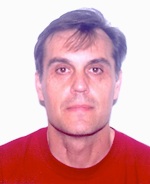
mpatten at ou.edu, Sutton Avian Research Center
Evolutionary ecology, biogeography, conservation biology
My interests are varied, but I am, in essence, an evolutionary ecologist with a bent toward quantitative ecology and biogeography. The principal driving force behind my work and a common thread in most of my publications is an abiding interest in how things work. I seek to uncover ecological mechanisms of how things came to be or why they are the way they are, whether behavioral differences in recently diverged taxa, geographic distributions of vertebrate taxa, relative influences of bottom-up and top-down effects in ecosystem control, or extrinsic factors that affect life-history evolution and persistence of populations of declining species.
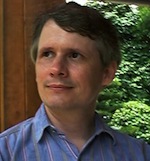
Thomas S. Ray, Professor of Biology
tray at ou.edu
Evolution, origin of complexity
I am interested in how the process of evolution generates novelty and complexity. I am using artificial evolving systems to explore the process.
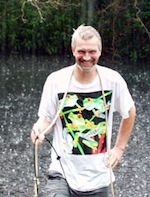
schlupp at ou.edu
Stability of gynogenetic mating systems; Evolution and maintenance of sexual reproduction; Sexual selection; Population biology of amphibians and fishes with a focus on conservation biology; Evolution of cave fish.
Research interests: My primary interest is to understand the maintenance of sexual reproduction. To address this I study a mating system in which an asexual fish and a sexual fish coexist in the same habitat. The asexual fish, the Amazon molly (Poecilia formosa) reproduces via gynogenesis, which means the need sperm to trigger embryogenesis. Sperm is provided by males of two other species, the Sailfin molly (P. latipinna) and the Atlantic molly (Poecilia mexicana), but the male genes are not used. This leads to interesting questions about male mating behavior and the stability of such gynogenetic mating systems. In addition to this I have a general interest in sexual selection. Another area of interest is the population biology fishes including conservation biology. I conducted a long term study on European Common toads (Bufo bufo). Finally, I am interested in the evolution of cave animals using a cave fish (Poecilia mexicana) as a model system.

Cameron Siler, Associate Professor of Biology and Assistant Curator of Herpetology SNOMNH
camsiler at ou.edu Website
Evolutionary biology, biogeography, conservation genetics, herpetology
I use genetic patterns to understand evolutionary processes in amphibians and reptiles. My program takes a broad, multifaceted approach to understanding vertebrate diversity, including investigating the evolution of morphology and body-form, geography, and speciation across complex landscapes and island systems.
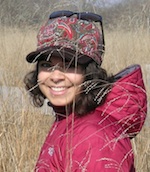
lara.souza at ou.edu
My research program focuses on the role of global change, such as biological invasions and climatic change, in shaping the structure of plant communities and associated ecosystem processes. More specifically, I investigate the role of resource and climatic gradients, and the interplay of such factors, in structuring diversity across and within species in natural plant communities across spatial and temporal scales. Further, I quantify how diversity, both within and across species, mediates ecosystem properties such as productivity and net ecosystem carbon dioxide exchange in the context of global change

Laura Stein, Assistant Professor Biology
laura.stein at ou.edu
Behavior Evolution Plasticity
My research seeks to understand the causes and consequences of behavioral plasticity, how behavior influences evolutionary patterns, and how experience, in particular between parents and offspring, shapes development. I use an integrated approach incorporating behavioral observation, neuroendocrine approaches, and genomic tools to answer broad questions from both proximate and ultimate perspectives. I use two excellent models of plasticity and evolution, the Trinidadian guppy (Poecilia reticulata) and the threespine stickleback (Gasterosteus aculeatus), to investigate outstanding questions in this field.
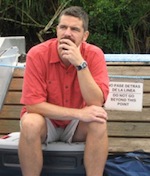
bradley.stevenson at ou.edu Website
Microbial ecology, adaptation to low-oxygen environments, cultivation and study of novel microbes
My research involves the use of both traditional and cultivation-independent molecular approaches to study the diversity of microbial communities, focusing on the "uncultivated majority" of microorganisms in global nutrient cycling. As a result of this work, we are now studying several novel strains of Acidobacteria and Verrucomicobria, two bacterial phyla that are prevalent in many environments but have few cultured representatives. Another focus of my research is on the ecology and evolution of bacteria that are adapted to environments with low oxygen fluxes. The prevelance of low oxygen flux in terrestrial and aquatic environments, the diverse, largely uncultured microbial populations adapted to these conditions, and their potential roles in these ecosystems offer great potential for discovery.
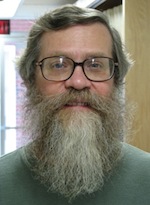
rtanner at ou.edu Website
Clostridia, acetogens, wastewater
Current research interests include water/wastewater microbiology (identification of two new indicator bacteria), and novel anaerobes (clostridia and SRB) in bioremediation and industrial microbiology.
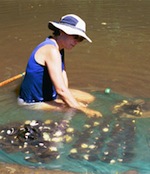
cvaughn at ou.edu Web Page
Stream ecology, conservation biology
My students and I are pursuing a variety of basic and applied ecological questions using stream benthic organisms as models. My current work uses the freshwater mussel guild as a model system to study species functional roles in ecosystems and how roles vary with environmental context
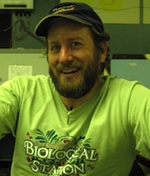
ljweider at ou.edu Website
Evolutionary ecology, ecological genetics, aquatic ecology
My research interests center on studying the mechanisms (e.g. selection, migration) that influence the maintenance of genetic diversity in natural populations, using the freshwater zooplankter, Daphnia, as my primary model organism. I use a variety of molecular (e.g. DNA sequencing) and ecological (e.g. life-table, selection experiments) techniques to address questions in evolutionary ecology.
gwellborn at ou.edu Website
Ecology, evolution, and behavior
My research examines the evolutionary, ecological, and behavioral mechanisms that generate and maintain biological diversity. My current work evaluates these processes in a species complex of freshwater.

xiangming.xiao at ou.edu
Ecosystems ecology, remote sensing, global change biology
My research interest includes global-scale land use and land cove change, biogeochemical cycles, agriculture, and ecology and epidemiology of infectious diseases. A variety of research tools are employed in our studies, including satellite remote sensing and modeling.