

There are many ways you can get involved with the work at the Oklahoma Biological Survey. There are opportunities to contribute data on your own, download an activity for your family, volunteer at a natural area, or watch a webinar on our YouTube channel.
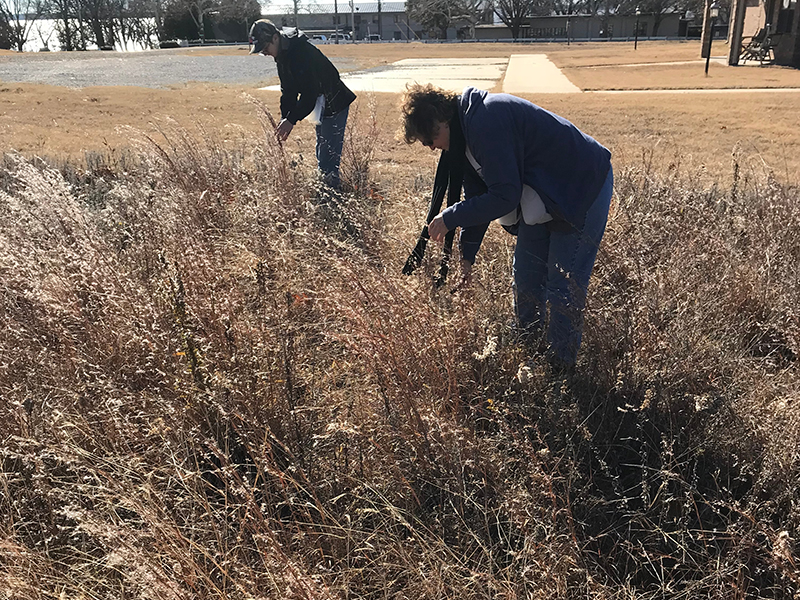
We host free Workshops and Field Days throughout the year. Field days focus on land conservation and biodiversity education. All events are educational and may include a service component.

A voluntary conservation program for private landowners who have rare species, natural habitats, or unique geologic features on their property.
Calling all nature nerds, naturalists, and passionate people to document butterfly diversity across Oklahoma. It's as easy as 123! Get the iNaturalist app and let the games begin. The smaller and less colorful species are often overlooked, making data on these species especially valuable. Help us alleviate butterfly blindness by capturing a wider variety of butterfly activity across the state. It's okay if you don't know what the species is! The community of experts on iNaturalist will lead us to the right identification.
Get out there, and good luck!


BioBlitz! Oklahoma was hosted by the Oklahoma Biological Survey for 20 years. During that time, thousands of community scientists reported thousands of species while celebrating Oklahoma's natural diversity.
Record life cycle data on our state tree, the Eastern Redbud. Data can easily be recorded via an app or on the BudBurst website.
Oklahoma is home to hundreds of bee species. However, we have little information on what these species are, where they occur, and whether they require special conservation effort. The Oklahoma Bee Atlas seeks to document bee diversity throughout the state to gain a better understanding of these critical pollinators.
Oliver's Woods is a 70 acre river bottom woodland and wildlife preserve adjacent to the campus of the University of Oklahoma, Norman, OK. The northern border is bounded by State Highway 9 and the forest of juniper and elm there sits on a plateau rising 25 feet above the rest of the Woods. The southern two thirds of the preserve is located on the floodplain of the South Canadian. The Woods comprises stands of large diameter bur oak, hackberry, and elm in the southwestern quarter. The northeast section is dominated by well spaced large pecan trees. The western central section grades from a cattail swamp and small ponds with permanent water, to a seasonally flooded forest with dense young green ash regeneration, to open more well drained stands of large diameter ash, cottonwoods and elm. The Oklahoma Biological Survey manages the area and coordinates its use for classroom and research purposes. Oliver's Woods is in the State Register of Natural Heritage Areas.
