

We are looking forward to out next DISC Annual Symposium.
April 7, 2026 at the OU Memorial Union in the Molly Shi Boren Ballroom
| DISC Symposium 2026 | |
|---|---|
8:00- 9:30 | Poster Judging |
8:30–9:00 | Registration |
9:00–9:30 | Breakfast |
9:30–9:45 | Welcome and Opening Remarks |
9:45–10:45 | Panel Discussion and Q&A Session |
10:45–11:00 | Coffee Break |
11:00–12:00 | Keynote Speaker and Q&A Session |
12:00–1:00 | Lunch/Viewing of Posters |
1:00–1:15 | Break |
1:15–2:15 | Speaker Session 1 |
2:15–2:30 | Break |
2:30–3:30 | Speaker Session 2 |
3:30–3:45 | Closing Remarks & Poster Award Announcement |
Interim Director, Data Institute for Societal Challenges

Dr. Mike Wimberly is Interim Director of the Data Institute for Societal Challenges (DISC) and Professor of Geography and Environmental Sustainability. He is a geospatial data scientist whose research advances understanding of how environmental change shapes public health risks. His work spans vector-borne diseases, environmental health, wildfires, and urbanization. Dr. Wimberly translates this research into operational decision-support tools, including disease forecasting systems and environmental monitoring platforms that support public health and natural resource management agencies.
Vice President of Research and Partnerships

Matt Hulver, Ph.D., is the Vice President for Research and Partnerships (VPRP) at the University of Oklahoma. With a focus on impact, the Office of the Vice President for Research and Partnerships leads strategy development and support for research, innovation, and strategic partnerships across the university system to advance discovery and innovation.
At OU, Dr. Hulver and the Office of the Vice President for Research and Partnerships are advancing an impact-focused vision for research that emphasizes the university’s unique strengths in areas where it is especially well-positioned to lead and drive innovation. These include:
Before joining OU, Dr. Hulver held senior leadership positions at other major research universities, including Arizona State University and Virginia Tech University. His record of leadership has expanded institutional presence through strategic partnerships with federal agencies, policymakers, global research institutions, and industry leaders, translating academic discoveries into real-world impact.
A career scholar, Dr. Hulver earned his Ph.D. in Exercise Physiology from the University of Kansas, an M.S. in Exercise Science from McDaniel College, and B.S. in Fitness Management from Marietta College. His research has explored skeletal muscle metabolism, mitochondrial adaptation, and insulin sensitivity, has received support from the National Institutes of Health, the American Diabetes Association, and various industry sponsors. Dr. Hulver has an extensive publication record with over 100 peer-reviewed articles.
Professor and Director, Geospatial Analysis Lab, University of San Francisco,
Managing Principal and Co-Founder of Spatial Informatics Group

David Saah, PhD, is Managing Principal and Co-founder of Spatial Informatics Group, Professor and Director of the Geospatial Analysis Lab at the University of San Francisco, and Chair of the NASA Applied Sciences Advisory Committee. Broadly trained as an environmental scientist, David is recognized as a global leader in geospatial analysis, remote sensing, wildfire science, and natural hazard modeling. He has authored dozens of peer-reviewed journal articles, book chapters, and technical reports, and is dedicated to the broad dissemination of his research through presentations, publications, and workshops.
David uses integrated geospatial science for multiscale landscape mapping, monitoring, and modeling. He has played a central role in the advancement of land monitoring and remote sensing projects with global reach, including SERVIR—a joint project of NASA and USAID that helps developing countries use remote sensing data—and Collect Earth Online, an open-source platform for interpreting satellite imagery. He is also Principal Investigator of Pyregence, a consortium of researchers and technologists providing free and open-source access to the next generation of wildfire models, and transforming our approach to wildfire mitigation and adaptation. In the vanguard of wildfire science, David’s contributions span from foundational research to the development of innovative tools that address the multifaceted challenges of wildfire management and climate adaptation. He is a driving force behind several pioneering projects, including Planscape, a wildfire resilience planning tool designed to optimize landscape treatments for fire risk mitigation and ecological sustainability. His work with the California Wildfire and Forest Resilience Task Force, in collaboration with federal and state entities, has led to the creation of a comprehensive geodatabase that supports strategic forest health treatments across California’s diverse landscapes.
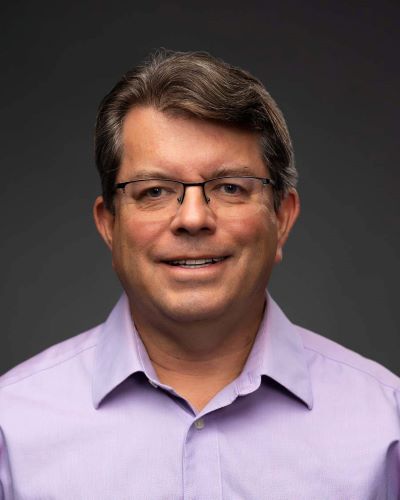
Dr. Mike Wimberly is Interim Director of the Data Institute for Societal Challenges (DISC) and Professor of Geography and Environmental Sustainability. He is a geospatial data scientist whose research advances understanding of how environmental change shapes public health risks. His work spans vector-borne diseases, environmental health, wildfires, and urbanization. Dr. Wimberly translates this research into operational decision-support tools, including disease forecasting systems and environmental monitoring platforms that support public health and natural resource management agencies.

Dr. Kent Teague serves as the Assistant Vice President for Research at the OU-Tulsa campus. He holds the George Kaiser Family Foundation Chair in Community Medicine Research. Dr. Teague is a biomedical researcher who specializes in studying the effects of psychosocial stress and chronic inflammation on the immune system and the downstream effects on health. He earned a PhD in Immunology from the University of Texas M.D. Anderson Cancer Center in 1995 and completed a postdoctoral fellowship in the field of immunology at the Howard Hughes Medical Institute in Denver in 1999. He joined the OU College of Medicine in 2000 where he directs the OU-Tulsa Integrative Immunology Center. Dr. Teague is also the Associate Dean for Research for the OU-TU School of Community Medicine where he is a tenured professor in the Department of Surgery.

Moriah Locklear, Ph.D., serves as Assistant Vice President for Research for Federal Relations at the University of Oklahoma, where she leads OU’s Washington, D.C.-based research engagement strategy. She works to expand OU’s federal research footprint by identifying emerging funding opportunities, strengthening relationships with federal agencies and congressional offices, and aligning OU’s research strengths with national priorities. Previously, she served in the Research Engagement Office at Arizona State University’s D.C. office and as a Research Fellow at the Potomac Institute for Policy Studies. She holds a Ph.D. in Chemistry from the University of Nebraska–Lincoln.
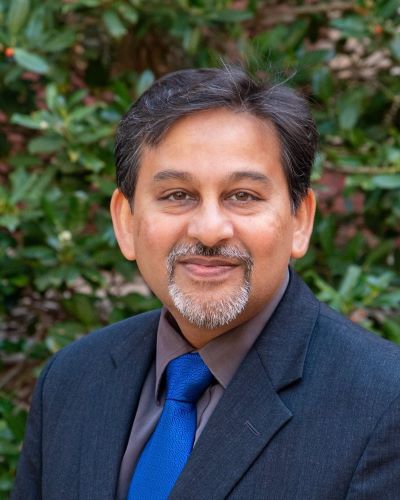
Shishir Shah is Gallogly Chair Professor and Director of School of Computer Science at the University of Oklahoma. He is also the inaugural Chief Artificial Intelligence Officer of the University of Oklahoma. He received his B.S. degree in Mechanical Engineering, and his M.S. & Ph.D. degrees in Electrical and Computer Engineering, all from The University of Texas at Austin. After completing his Ph.D. in 1998, he spent two years as a faculty member at Wayne State University. Thereafter, he worked primarily in two different startup companies leading research, development, and expansion efforts as Projects Manager, and President and Chief Operating Officer. In 2005, he joined the University of Houston as an Assistant Professor of Computer Science and was promoted to Professor in 2016. He served as Chair of the Department of Computer Science at University of Houston from 2019-2025.
Shah’s current research focuses on fundamentals of computer vision, machine learning, and statistical methods in image and data analysis with applications in human behavior analysis, person re-identification, video analytics, biometrics, and microscope image analysis. He has co-edited two books, and authored over 200 papers on video analytics, object recognition, sensor fusion, statistical pattern analysis, and biometrics. He is a Senior Member of the IEEE and a member of the National Academy of Inventors.
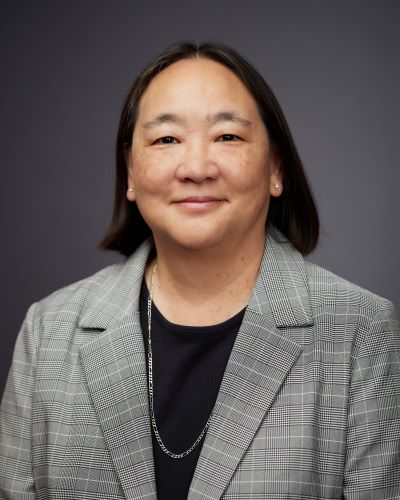
Ann West is an Associate Vice President for Research and Partnerships. She earned her B.A. degree in Biology from Wesleyan University and her Ph.D. degree in Genetics from Yale University. Her postdoctoral training in protein biochemistry and structural biology was conducted at Rutgers University before arriving at University of Oklahoma in 1996. Dr. West has led a highly productive research program focused on bacterial and fungal cell signaling pathways, funded by grants from the NIH, NSF, OCAST, Research Corporation, and the Price Family Foundation. Dr. West has co-authored over 70 peer-reviewed research articles to date. She is credited with establishing OU-Norman's macromolecular crystallography program and is currently director of a world-class Center of Biomedical Research Excellence (COBRE) in Structural Biology, funded by Phase 1, 2 and 3 grants from the NIH. She has been recognized with a Cottrell Scholar Award (1999, Research Corporation), Irene Rothbaum Award for Outstanding Assistant Professor (2001, College of Arts and Sciences), Edith Kinney Gaylord Presidential Professorship (2001-2008), Joseph A. Brandt Professorship (2008-2015), and currently holds the endowed Grayce B. Kerr Centennial Chair (2015-present). In addition to significant service roles at the departmental, college and university level, West has served on numerous NSF and NIH grant review panels as well as executive advisory committees. Recent honors include being named a Fellow of the AAAS and AIMBE.
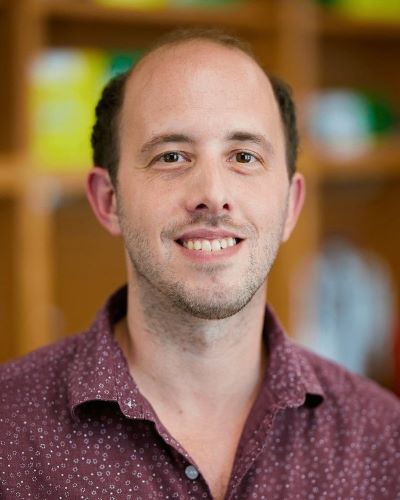
Dr. Daniel Becker is a disease ecologist in the School of Biological Sciences. He combines field studies, molecular techniques, and computational methods to study how pathogens move within and between species, focused on bats and birds. Since joining the University of Oklahoma in 2021, Dr. Becker has published over 70 manuscripts and has obtained over $3 million in external funding from the National Science Foundation, National Institutes of Health, Edward Mallinckrodt, Jr. Foundation, and Human Frontier Science Program, among other agencies. Dr. Becker is a member of The Lancet Commission on Prevention of Viral Spillover and has received early career awards from the Ecological Society of America, Society for Integrative & Comparative Biology, and Southeastern Universities Research Association.

Dr. S. Marcela Loría-Salazar is an Assistant Professor at the University of Oklahoma’s School of Meteorology. Her research focuses on atmospheric processes that affect air composition, including emissions from urban areas, wildfires, prescribed burns, agricultural activities, and dust. She integrates aerosol and gas measurements, satellite data, weather observations, numerical models, deep learning, and big data assimilation to enhance air quality forecasting and exposure assessments. Dr. Loría-Salazar has extensive experience in field campaigns and instrument development. She contributes to major research efforts, including NASA’s PACE Mission Early Adopter Program, NOAA’s Pathfinders Initiative, CIWRO, and the SPARTAN Global Network. Her work has earned numerous accomplishments, including the NASA Earth and Space Science Fellowship and awards from the University of Nevada, Reno, and the University of Oklahoma, and now she is serving as a committee member to the Optimizing Research on Experimental Prescribed Fires to Improve Understanding of Wildland Fire and Smoke Behavior for the NASEM. She holds a Ph.D. and M.S. in Atmospheric Sciences from the University of Nevada, Reno, and a B.S. in Meteorology from the Universidad de Costa Rica.
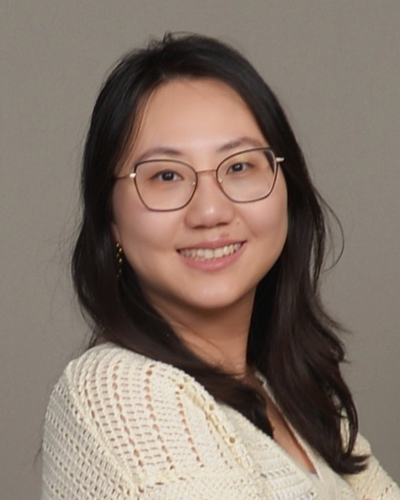
Dr. Xin (Selena) Feng is an Assistant Professor in the Department of Geography and Environmental Sustainability at the University of Oklahoma. She earned her Ph.D. in GIScience (Spatial Analysis & Modeling) from the University of California, Santa Barbara; an M.A. in Geographical Science and Urban Planning from Arizona State University; and a M.S. in Remote Sensing from Peking University. Her research interests include geographic information science, spatial analysis and optimization, GeoAI, and decision-support methods for urban, regional, and natural resource planning, with applications in severe weather observation, emergency response, and infrastructure and transportation systems.
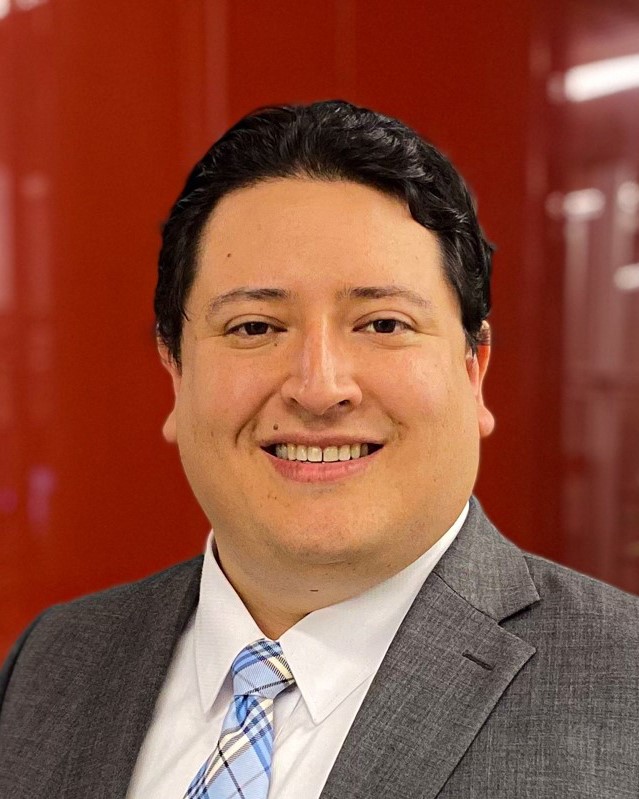
Andrés D. González is an Associate Professor in the Gallogly College of Engineering, School of Industrial and Systems Engineering (ISE). He is also an Affiliate Faculty of Data Science and Analytics (DSA) and a Faculty Fellow at the Data Institute for Societal Challenges (DISC). Dr. González’s research focuses on developing and applying analytical tools from systems dynamics, statistical physics, operations research, and civil engineering to study the dynamics associated with cyber, social, and physical systems, and enhance their resilience and adaptability. He has worked on modeling the behavior of financial markets, designing routes and frequencies of massive transportation systems, and, more recently, on optimizing the resilience of critical interdependent infrastructure and supply chain networks. Dr. González’s research has been funded by multiple federal agencies, including the National Science Foundation (NSF), the National Institute of Standards and Technology (NIST), and the Department of Defense (DoD), among others. Dr. González leads the Supply Chain community of practice at the University of Oklahoma, funded by DISC and the Oklahoma Aerospace and Defense Innovation Institute (OADII).

Dr. Rupa Haldavnekar is an Assistant Professor of Electrical and Computer Engineering and the Principal Investigator at NanoSpectral BioDiagnostics Lab, where she leads pioneering research for early cancer diagnosis, biomarker discovery and real-time treatment monitoring. Her work integrates nanotechnology, Raman and surface-enhanced Raman imaging (SERS), and machine learning to develop highly sensitive, data-driven liquid biopsy platforms. Dr. Haldavnekar works with a multidisciplinary team of researchers, engineers, and clinicians to develop rapid, sensitive, and noninvasive diagnostic tools. Dr. Haldavnekar brings a broad foundation in biomedical research, with expertise spanning the basic science of Raman spectroscopy, SERS, and machine learning-based analysis of liquid biopsy biomarkers. Dr. Haldavnekar is also a committed mentor, nurturing early-career scientists and fostering a collaborative environment that encourages curiosity, creativity, and interdisciplinary problem-solving.
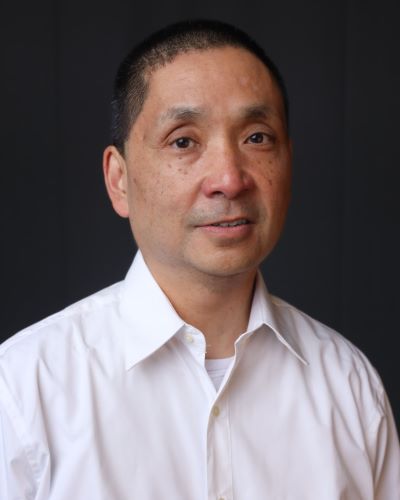
Dee Wu, Ph.D., M.S.S.E., DABMP, DABMRS, FAAPM is Professor and Chief of Technology Applications and Translational Research at the University of Oklahoma Health Sciences Center. A board-certified medical physicist and Fellow of the AAPM, Dr. Wu is nationally recognized for advancing AI in diagnostic imaging, patient safety, and medical education. He leads AI integration efforts at OU Medical Center and the VA Health System, focusing on clinical workflow optimization and regulatory compliance. A champion of interprofessional education, Dr. Wu develops microlearning and simulation tools to prepare providers for real-world decision-making. Dr. Wu has completed over 34 projects across various medical subspecialties, demonstrating his adaptability to diverse research and translational environments. He regularly presents on AI-enhanced simulation, snippet-based learning, and digital curriculum design.

Be part of the DISC Poster Competition, a core event of the DISC Annual Symposium 2026, bringing together outstanding, student-led research from across the University of Oklahoma. Undergraduate and graduate students from all three campuses are invited to present innovative, data-driven work that places data science at the center. Join us to share ideas, gain visibility, engage with experts, and be recognized for excellence, while competing for prizes.
Poster registration is combined with DISC Symposium registration and will be hosted on the DISC website.
Two competitive tracks will run simultaneously:
The primary student author’s degree status determines the track.
The competition consists of two evaluation stages:
Final rankings are based on aggregated scores. Check the evaluation rubric for more information.
If you have any questions please contact the DISC team organizer, danala@ou.edu.
A: Full-time undergraduate and graduate students enrolled at OU Norman, OKC, or Tulsa. All authors must be a DISC member, and a faculty mentor/advisor must be listed.
A: The primary student author’s degree determines the track:
A: Only one poster per participant. Maximum submissions per track:
A: Submit both to your designated Teams folder (TBD):
A: Each poster is reviewed by three judges at two stages (Digital and In-person). Check evaluation rubric for more information.
A: Your video presentation must strictly adhere to the following guidelines to ensure fairness for all competitors:
A: Scholarships: Awarded to the top 3 posters in each category (grad and undergrad)
.
A: Poster registration is combined with DISC Symposium registration.
Early registration is encouraged due to limited poster slots.
A: Please contact Gopi Danala at danala@ou.edu.
