Cover Page by The Telesis Team (2026).
Date
The Christopher C. Gibbs College of Architecture is proud to announce the release of Telesis “Design_less,” the eighth volume of its student-led journal.
With this volume, Telesis invites readers to recognize the essential role of design in shaping and re-shaping cultural, physical, and natural environments. With the advancement of practical solutions and economic efficiency in the built environment, Design_less highlights the importance of architecture, art, and design as fields that fight against the ubiquitousness of place. The volume, therefore, encourages design professionals to look beyond standardized systems, familiar assemblies, and readily available digital tools by embracing experimentation, critical reflection, and contextual thought as vital parts of the creative process.

Aerial View of a 'Jea' House in the Ecuadorian Amazon by Felipe Flores (2025).
This edition encourages contributors and readers to reconsider the role of design in everyday life. What values are expressed through the creative process? What responsibilities do designers carry? What happens when human ingenuity is replaced by solutions that are faster, cheaper, and easier to reproduce? Through these questions, Design_less critiques not only standardized design, but also the professional habits, economic structures, institutions, technologies, and cultural expectations that enable it.
The volume also considers how dependence on technology has transformed creative practice more broadly. Sketchbooks, trace paper, physical models, sustained conversations, and acts of close observation are increasingly displaced by digital programs and automated processes. Beyond the design professions, people are reading, writing, listening, and communicating with greater technological assistance, often encountering the world through phones, headphones, algorithms, and narrowly curated social-media feeds. Design_less asks whether these habits are expanding creative possibilities or gradually limiting the skills and perspectives required to produce meaningful work.

‘Soddy Nestled’ by Atelier AL (2023).
Design_less, however, is not a call to reject contemporary technology or abandon the tools that support modern creative practice. Instead, it asks designers to use those tools intentionally and critically. The volume presents an opportunity to slow down, reconsider familiar processes, and reassert the importance of human judgment, curiosity, craft, and imagination.
Through 35 contributions from OU students, faculty, alumni, practitioners, and other contributor groups from across the globe, the eighth volume explores how architecture, art, and design can resist cultural and material standardization. Its contributors investigate how creative work can move beyond what is merely easy, efficient, or economical to become more contextual, beautiful, responsible, and meaningful.
Design_less graphic and material qualities reinforce its central argument, inviting readers to engage with the publication not simply as a container of information, but as an intentionally designed object. The contributions are organized into five thematic sections: “prologue” “critical_reflections”; “art_design”; “interviews”; and “dispatches”.

Interview with Mark Pasnik, ‘Metro Station in Washington D.C.’ by Kevin Harber @ cc Flicker (2011).
Volume VIII was led by Editors-in-Chief Felipe Flores, a Ph.D. candidate, and Trey London, an undergraduate architecture student at Gibbs College, with the support of Associate Editor Yousef Haghighi and Communications Editor Chandler Thompson. Gibbs College students Ellie Burdette, Terry Chishimba, Ethan Howard, Seaira Hull, Betty-Sue Kihunrwa, and Ryan Pittman were part of the editorial and design team. Their work helped shape the journal’s editorial direction, visual language, and material identity by bringing together critical reflection and creative experimentation. Dr. Angela Person, Associate Professor of Architecture, served as the faculty advisor.
Contributions by Aaron Betsky, Dr. Ladan Mozaffarian, Amanda Choi, Simon Allford, and BLDUS, together, approach the theme through writing, research, visual art, photography, interviews, architectural investigation, and design experimentation.

'Soon They’ll Be Zombies’ by Nathan Ehrlich (2025).
This year’s journal was made possible through the support of Christopher C. Gibbs College of Architecture, led by Dean Hans E. Butzer, and the Division of Architecture, led by Director Daniel Butko. The Telesis team is also grateful for the contributions of Precision Printing Corporation, a local printer based in Moore, OK, whose support helped bring the eighth volume to life.
Ultimately, Design_less challenges creatives to rebuild trust in the value of their disciplines and reconsider their role in shaping the future. It imagines physical and ideological environments formed not solely by convenience and efficiency, but by care, intention, cultural awareness, and human creativity.
For more information, visit the Telesis webpage, follow the journal on Instagram at @telesisou, or contact the team at telesis@ou.edu.

‘Blurred Existence’ by Ellie Brudette (2025).
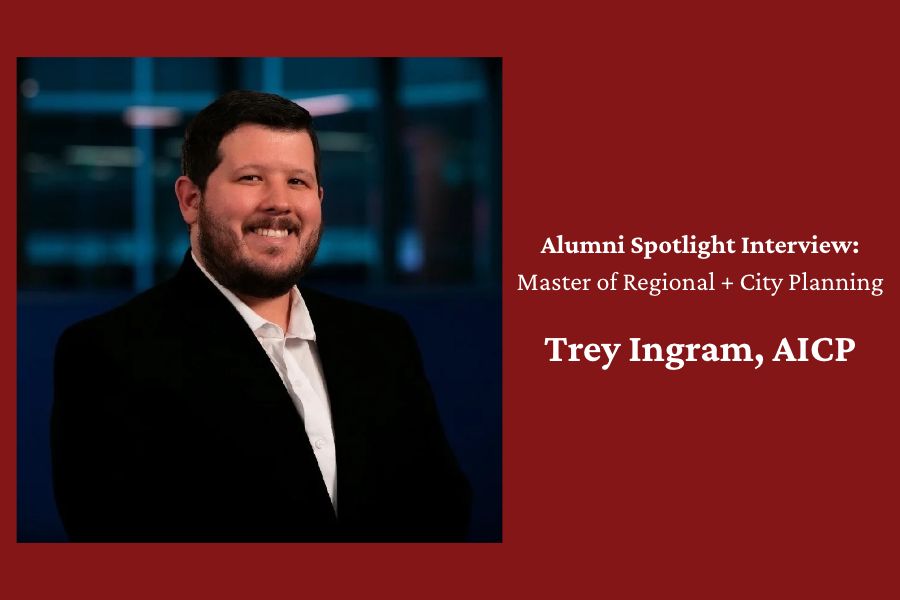
Planning, Landscape Architecture, and Design (PLAD) alumni Trey Ingram, AICP recently spoke with current PLAD student and graduate media assistant Molly Strobel to share his experiences with the Regional and City Planning program and current work with the Toyota Mobility Foundation.
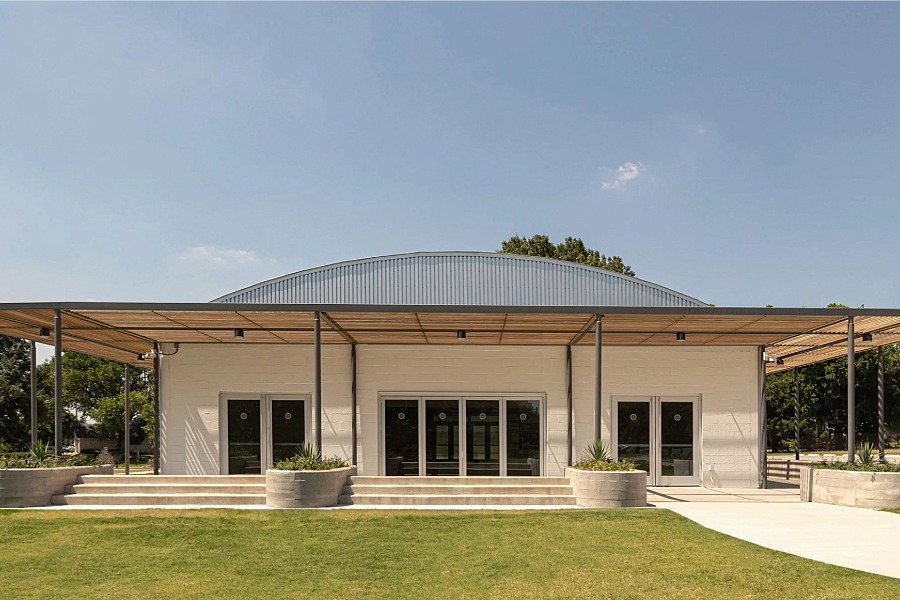
Christopher C. Gibbs College of Architecture assistant professor Amy Leveno and Mark Leveno, co-founders of OFFICIAL Design, have received a 2026 AIA Central States Region Design Award for the firm’s Granger Annex Community Center project in Garland, Texas.
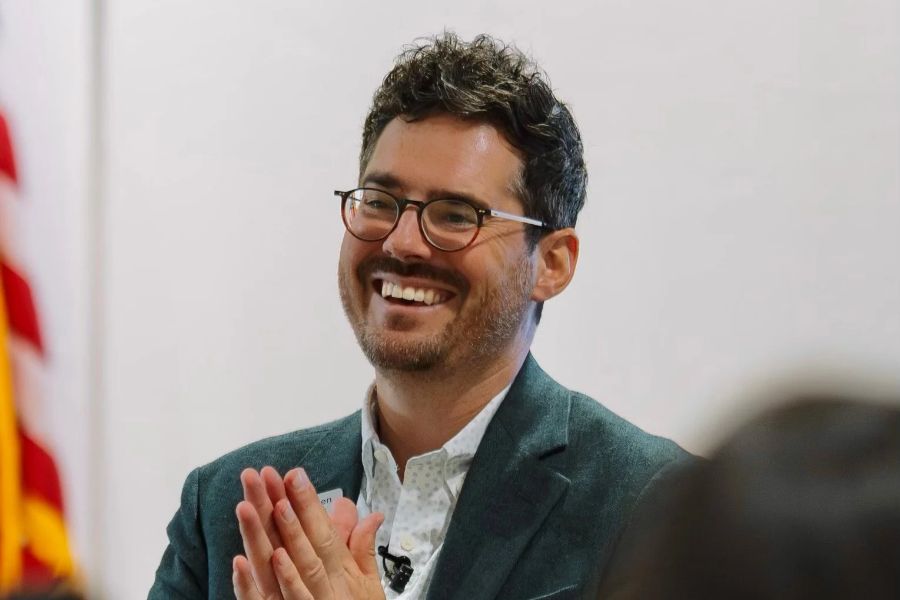
Construction Industry Speaker Series welcomed Stephen Evans from the Oklahoma City National Memorial & Museum to give a lecture on better conversations and relationship building.