NEWS


OKLAHOMA CITY – University of Oklahoma President Joseph Harroz Jr. today outlined the university’s record-setting momentum to the OU Board of Regents, highlighting how that progress has strengthened OU’s capacity to pursue greater opportunities at a scale that would have been difficult to envision just a few years ago, particularly through the expansion of its research enterprise.
“OU is a fundamentally different university than it was five years ago,” Harroz said. “We have made extraordinary progress together through a disciplined approach, and that progress has changed what is possible for OU. What we have accomplished is not the fulfillment of OU’s promise. It has given us the capacity to fulfill that promise at a level we could not have imagined just a few years ago – and to think much bigger about what comes next.”
OU’s momentum is evident across nearly every measure of the university. This fall, OU welcomed its sixth consecutive record freshman class, including a record number of Oklahoma residents and first-generation students. Enrollment on the OU Health Campus also surpassed 4,000 students for the first time in its history and has grown more than 31% in six years, reversing a 7% decline from 2015 to 2020.
At the same time, OU’s research enterprise has grown more than 70% in six years – its fastest pace in half a century – while annual philanthropic support surged to a record $427 million and OU’s historic $2 billion fundraising campaign nears completion.
This year also marks the five-year anniversary of OU Health, the state’s flagship academic health system, which has undergone a dramatic transformation. OU Health now serves more than 1 million patients annually, while annual revenue has grown from $1.4 billion to nearly $4 billion. The health system now provides more than $90 million annually to support the university’s academic and research enterprise.
Harroz said that collective progress has created the institutional strength for OU to pursue its next phase of growth and impact.
Project 200
Project 200 is one of the clearest examples of how OU is putting its capacity to work – strengthening the health of its people, growing the state’s economy and expanding opportunity for the future.
The initiative will recruit approximately 200 research faculty in four areas where OU’s strengths intersect with some of the most significant challenges facing Oklahoma and the nation: health, severe weather, national security and defense, and energy. Project 200 represents an investment in the university's intellectual capacity and, by extension, Oklahoma's intellectual and economic infrastructure.
The university is already recruiting researchers whose work reflects that ambition. As one example, Dr. John Kirwan, a world-leading translational scientist, recently joined OU as the executive director of the OU Health Harold Hamm Diabetes Center, vice provost for diabetes programs and Chickasaw Nation Endowed Chair in Diabetes Research to advance research addressing Oklahoma’s diabetes epidemic. Kirwan has secured more than $150 million in National Institutes of Health funding throughout his career and is bringing his research laboratory and team to OU.
By deliberately building concentrations of exceptional researchers, OU aims to create a compounding effect: leading researchers attract other top talent and federal investment, build research teams, create opportunities for students and produce discoveries that can lead to new technologies, treatments and industries.
Project 200’s impact will be widespread. By 2032, the initiative is projected to generate nearly $100 million annually in new federal research funding, and over the next decade is expected to support more than 2,000 new jobs, produce an estimated $95 million in new state and local tax revenue, and help train more than 1,000 scientists in Oklahoma.
About the University of Oklahoma
Founded in 1890, the University of Oklahoma is a public research university located in Norman, Oklahoma. As the state’s flagship university, OU serves the educational, cultural, economic and healthcare needs of the state, region and nation. For more information about the university, visit www.ou.edu.
Jensen Moore, Ph.D., an associate professor of public relations at the University of Oklahoma’s Gaylord College of Journalism and Mass Communication, has been elected to a three-year term on the Association for Education in Journalism and Mass Communication’s Standing Committee on Professional Freedom and Responsibility.
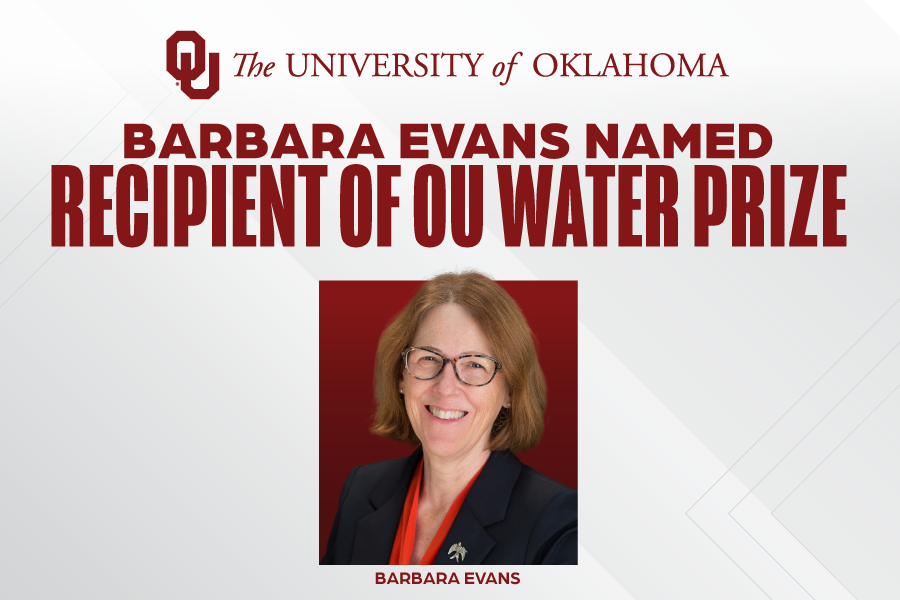
The OU Water Technologies for Emerging Regions (WaTER) Center has awarded Barbara Evans, a leader in public health engineering and urban sanitation, with the ninth International Water Prize. Her selection was announced at the 2026 OU WaTER Symoposium.
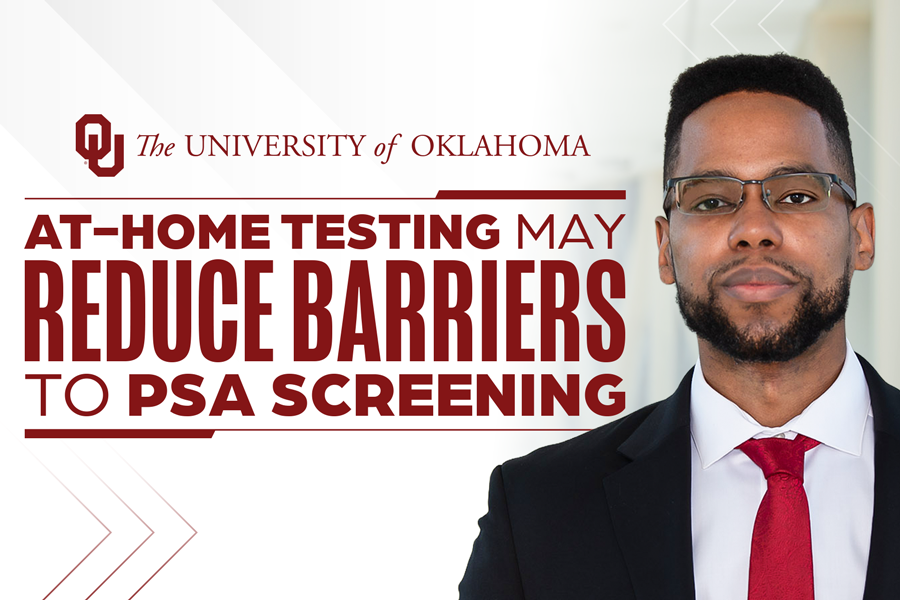
A newly funded study at the University of Oklahoma aims to increase prostate-specific antigen (PSA) screening among Black men in Oklahoma, who die from prostate cancer at rates two to four times higher than other racial groups.