
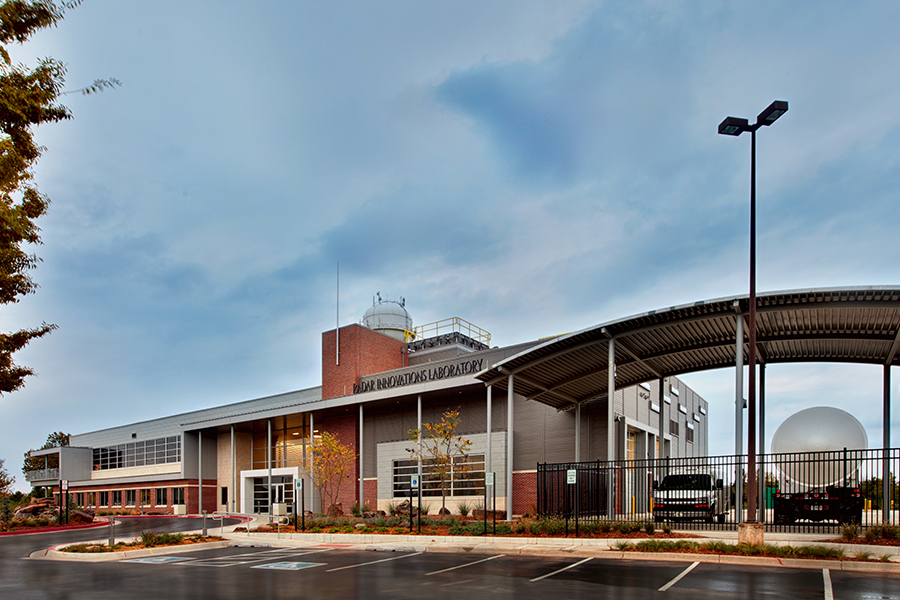
The ARRC’s mission is to create a confluence of science and engineering in radar and applied electromagnetics that empowers research, enhances collaboration, inspires discovery, and improves lives.
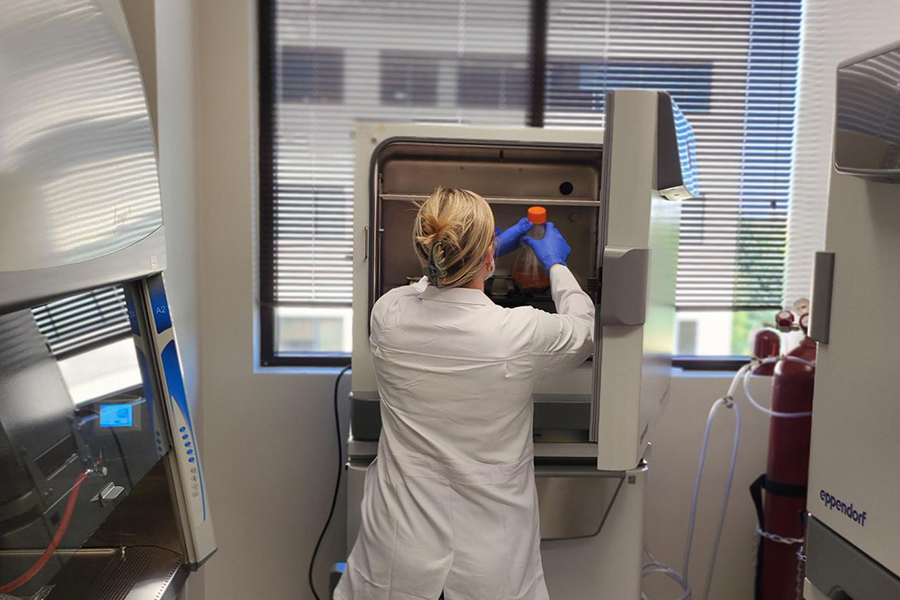
The OU Bioprocessing Core Facility prepares advanced engineers to enter the workforce and bridges academia to industry and the local community to advance the biotech industry in the state of Oklahoma.
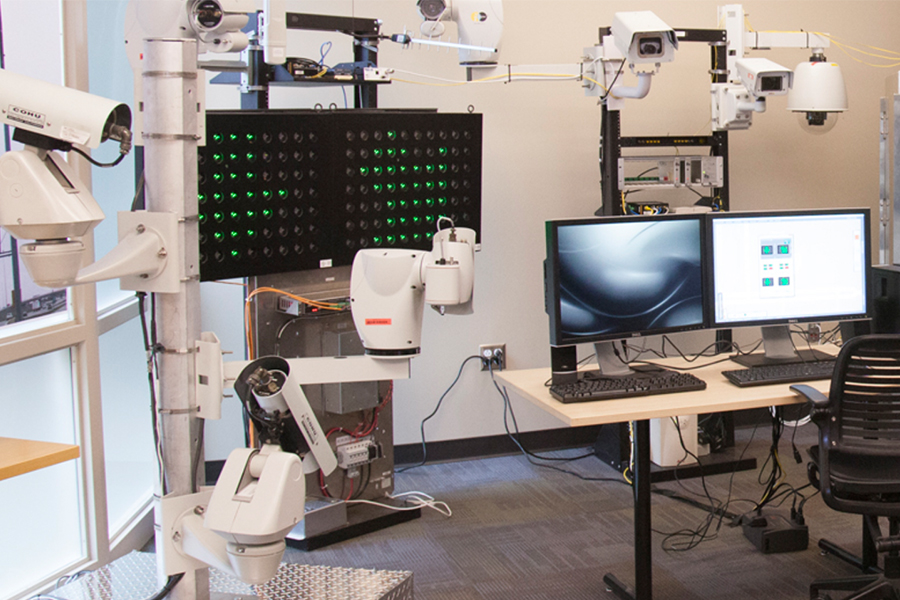
The Center for Intelligent Transportation Systems develops software and hardware solutions for Oklahoma agencies to address challenges in traffic control, reporting, and enforcement. Since 1997, the OU ITS lab has partnered with state and federal organizations to enhance highway safety and support law enforcement productivity across Oklahoma.
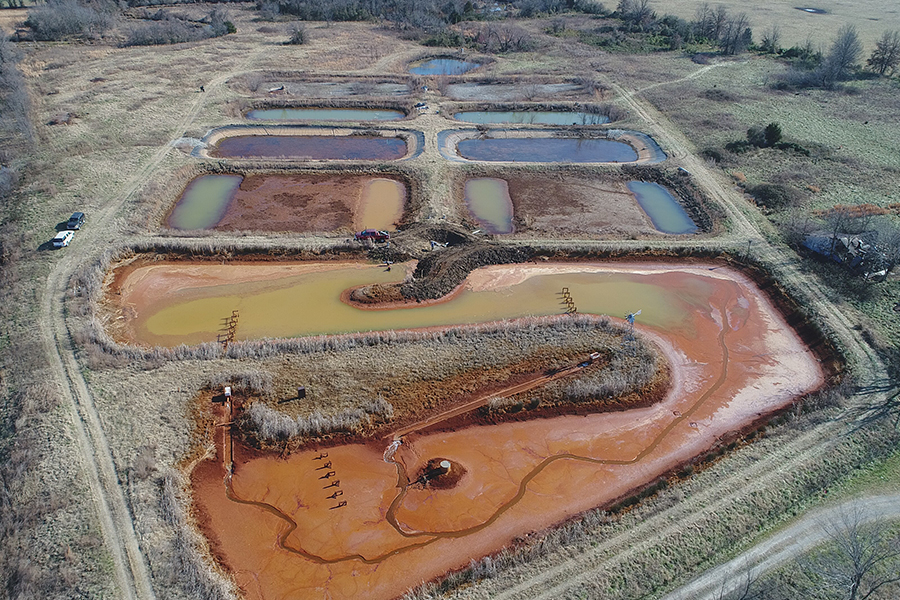
Center for Restoration of Ecosystems and Watersheds (CREW) conducts research focusing on watershed biogeochemistry and ecological engineering, with an emphasis on natural infrastructure, nature-based solutions, and ecosystem services provided through creation and restoration of human-made ecosystems.
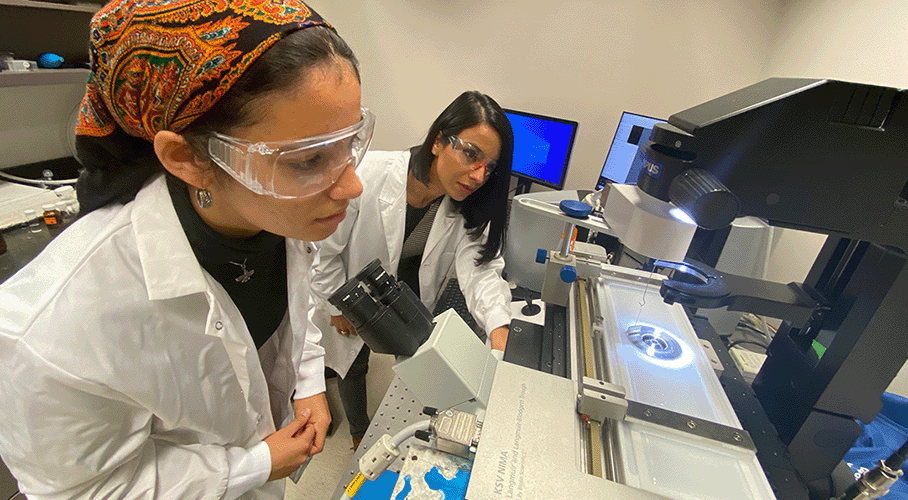
Institute for Applied Surfactant Research (IASR) was established in 1986 as the first Research Center/Institute/Consortia at the University of Oklahoma. Although research grants from Federal and State agencies are an important part of the Institute, our core mission is to provide our industrial sponsors with the highest quality applied surfactant research in their areas of interest.
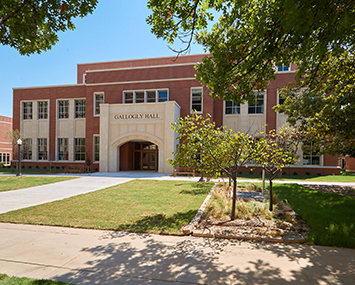
The Institute for Biomedical Engineering, Science and Technology (IBEST) connects research and education in bioscience and biomedical engineering across OU’s Norman and Oklahoma City campuses. Faculty from engineering and science departments collaborate with partners at the OU Health Sciences Center, Oklahoma Medical Research Foundation, and OU College of Arts and Sciences.

The Oklahoma Water Survey works to ensure sustainable water resources and protect aquatic and public health through leadership, research, and collaboration. Its mission is carried out through monitoring, outreach, research, and education (MORE), with goals to engage stakeholders, promote sustainable water management, and share Oklahoma-based solutions with the broader water community.

The Risk-Based Systems Analysis Laboratory focuses on the development of theory, methodology, and application towards risk-based decision making in engineering systems. Primary areas of interests lie in (i) modeling the reliability, resilience, and interdependent economic impacts of disruptions to critical infrastructure networks and (ii) enhancing data-driven decision making for large-scale system sustainment.
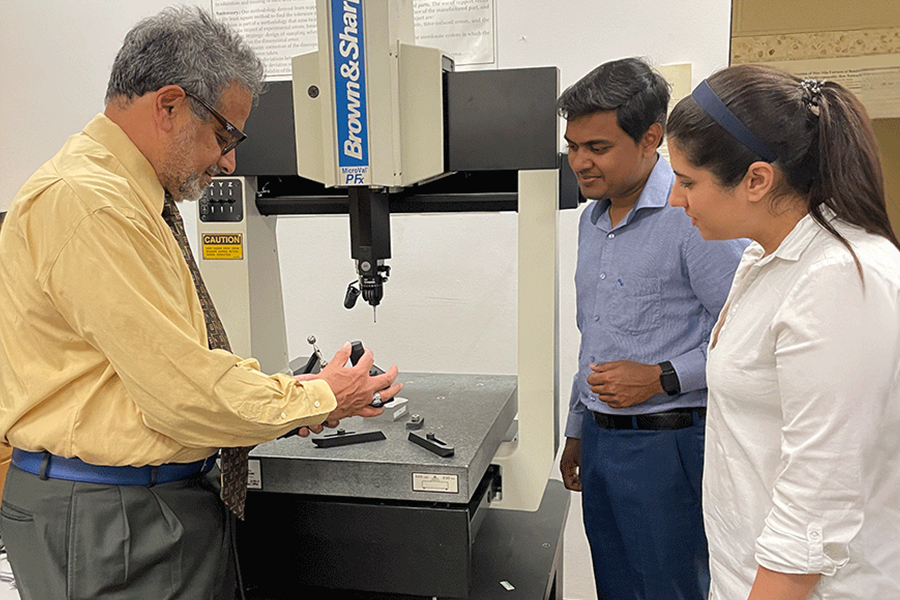
Shape engineering is the creation of data from physical components and assemblies through precision measurement, their preparation through mathematical models and computational methodology, and their transfer to manufacturing. SEAM seeks to provide cheaper, faster and better solutions for shape engineering, rapid manufacturing, and integrated information logistics.

The Southern Plains Transportation Center is a U.S. Department of Transportation Region 6 Regional University Transportation Center led by OU with 10 partner institutions across Oklahoma, Arkansas, Louisiana, New Mexico, and Texas. The Center was established in 2013 based on an award from the U.S. Department of Transportation's Office of the Assistant Secretary for Research and Technology to conduct a multidisciplinary program of transportation research, education, and technology transfer.
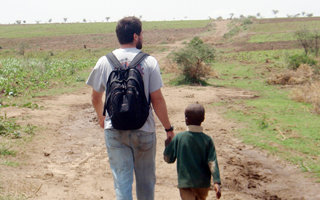
The WaTER Center, a faculty-led initiative launched in 2006, addresses global water and sanitation challenges through sustainable, university-driven solutions. Its mission is to promote peace by advancing health, education, and economic development in underserved regions through innovative teaching, research, service, and leadership.
| Lab | Location |
|---|---|
| Accelerated Materials Development Lab | FH 218 |
| Advanced Materials and Clean Energy Laboratory | FH 100 |
| Building Energy Efficiency Laboratory | EL159/160 |
| Mobility Intelligence Lab | FH 117 |
| Product Process Design Lab | FH 147 |
| Sooner Advanced Manufacturing Lab | |
| Sustainable Energy & Carbon Management Center | South campus |
| Systems Realization Laboratory | CEC 218 |
| Lab | Location |
|---|---|
| Asphalt Binders Laboratory | SEC E201 |
| Center for Restoration of Ecosystems and Watersheds | |
| Donald G. Fears Structural Engineering Laboratory | South campus |
| Han Nature-Based Solutions Lab | CEC 309D |
| Hydrometeorology and Remote Sensing Laboratory | |
| OU TRICS Lab | CEC S23 |
| Ray C. Broce Pavement Materials Laboratory | EL 158 |
| Lab | Location |
|---|---|
| AI2ES | |
| IDEA Lab | |
| Telecommunication and Network Research Lab | DEH 260 |
| Virtual Reality, Interactive Simulation, and Biomedical (VRISB) Lab | DEH 210 |
| Lab | Location |
|---|---|
| Data Institute for Societal Challenges | 5PP Suite 4600 |
| Moses Lab | NC 210 |
| Photonic Quantum Technologies Laboratory | Lin Hall 119 |
| Radar Innovations Laboratory | RIL |
| Lab | Location |
|---|---|
| Human Factors & Simulation Lab | CEC 23 |
| Systems Realization Laboratory | CEC 218 |
| Lab | Location |
|---|---|
| Biophotonics and ImmunoEngineering Laboratory | GLG 325 |
| Biophotonic Imaging Laboratory | GLG 411 |
| Computational Neuroimaging and Neuroengineering Lab | 2PP Suite 280 |
| Nano-Engineered Smart Theranostics (NEST) Lab | SRTC 2050 |
| Neuro-Immuno-Engineering Collective | SRTC 2050 |
| Translational Neuroimaging Laboratory | GLG 415 |
| Wilhelm Lab – Biomedical Nano-Engineering Laboratory | GLG 325 |
| Zhao Lab | SRTC 1145A |
| Lab | Location |
|---|---|
| Bajpai Lab | SEC D206 |
| Colloid and Interface Science Lab | SEC C208-C210 |
| Crossley Catalysis and Nanomaterials Group | SEC T-301 |
| Digital Materials and Catalysis for Sustainable Energy and Chemicals Lab | SEC T311 |
| Polymer and Surfactant Characterization Lab | SEC |
| SMaRT Lab | SEC C204 & C218 |
